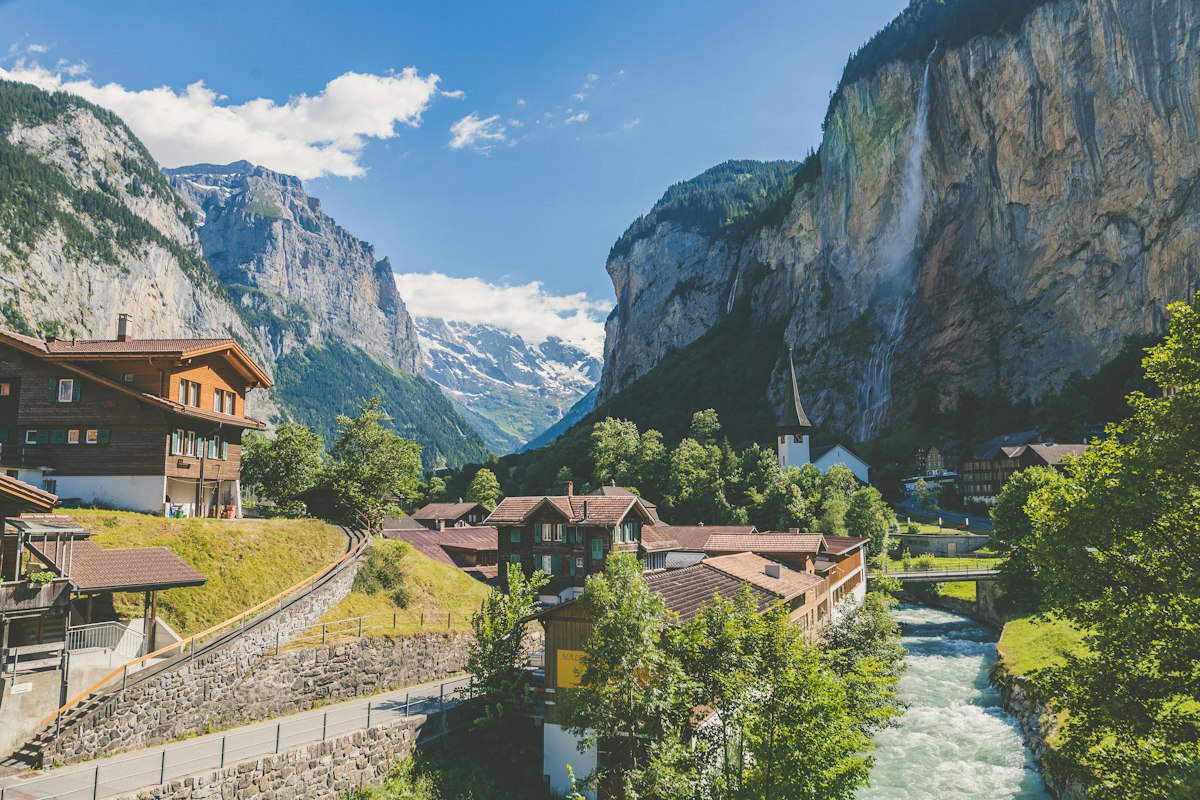
TL;DR: Switzerland has over 300 ski resorts with 7,300 km of groomed pistes, from beginner-friendly Grindelwald to expert-level Verbier. A day ski pass costs CHF 50-85, and the season runs from late November to mid-April (some glacier resorts are open year-round). Beyond skiing, Switzerland offers world-class winter hiking, tobogganing, cross-country skiing, and some of Europe's best Christmas markets. This guide covers everything: resort comparisons, costs, family options, off-piste terrain, and how to save money.
Quick Answer
For a first-time visitor, Grindelwald-Wengen-Murren (Jungfrau region) or Zermatt offer the best combination of scenery, skiing, and village charm. For experts, Verbier's 4 Vallees (412 km) and St. Moritz-Engadin (350 km) deliver world-class terrain. For families, Arosa-Lenzerheide, Adelboden-Lenk, and Villars-Gryon are excellent. Budget skiers should look at smaller resorts like Braunwald, Elm, or Melchsee-Frutt, where day passes cost CHF 40-55. The cheapest time to ski is January (excluding school holidays) — accommodation and lift passes drop significantly after New Year.
Table of Contents
- Top Ski Resorts Compared
- Resort Ranking by Category
- Ski Pass Prices 2025/26 Season
- Beginner vs Advanced — Choosing Your Resort
- Family-Friendly Resorts
- Snowboarding
- Cross-Country Skiing
- Winter Hiking
- Tobogganing and Sledding
- Ice Skating
- Off-Piste and Freeride
- Heli-Skiing
- Christmas Markets
- Budget Guide — Skiing on a Budget
- Insider Tips
- Frequently Asked Questions
Top Ski Resorts Compared {#top-resorts}
Master Comparison Table
| Resort | Altitude (village/top) | Piste km | Lifts | Day Pass (Adult) | Best For |
|---|---|---|---|---|---|
| Zermatt-Cervinia | 1,620/3,883 m | 360 km | 52 | CHF 85 | Scenery, high-altitude skiing, Matterhorn views |
| Verbier (4 Vallees) | 1,500/3,330 m | 412 km | 67 | CHF 79 | Expert terrain, freeride, nightlife |
| St. Moritz (Engadin) | 1,822/3,303 m | 350 km | 56 | CHF 78 | Luxury, sun, variety, cross-country |
| Jungfrau Region (Grindelwald-Wengen-Murren) | 1,034/2,971 m | 214 km | 44 | CHF 75 | Scenery, mixed abilities, village charm |
| Laax-Flims-Falera | 1,100/3,018 m | 224 km | 28 | CHF 79 | Snowboarding, freestyle, modern facilities |
| Davos-Klosters | 1,560/2,844 m | 300 km | 54 | CHF 75 | Variety, cross-country, town amenities |
| Saas-Fee | 1,800/3,600 m | 100 km | 22 | CHF 68 | Snow-sure, glacier skiing, car-free village |
| Arosa-Lenzerheide | 1,775/2,865 m | 225 km | 43 | CHF 72 | Families, cruising, sun |
| Crans-Montana | 1,500/3,000 m | 140 km | 25 | CHF 69 | Sun terrace, intermediate skiing, wine |
| Engelberg-Titlis | 1,000/3,238 m | 82 km | 25 | CHF 69 | Freeride, powder, Titlis glacier |
| Adelboden-Lenk | 1,353/2,362 m | 210 km | 70 | CHF 67 | Families, World Cup racing, traditional villages |
| Andermatt-Sedrun-Disentis | 1,444/2,963 m | 180 km | 28 | CHF 75 | Powder, freeride, new infrastructure |
| Villars-Gryon | 1,300/2,120 m | 100 km | 36 | CHF 62 | Families, beginners, Lake Geneva views |
| Gstaad (Glacier 3000) | 1,050/3,000 m | 220 km | 53 | CHF 69 | Luxury, charm, glacier link |
Resort Ranking by Category {#resort-ranking}
Best Resorts for Beginners
| Rank | Resort | Why |
|---|---|---|
| 1 | Villars-Gryon | Wide, gentle slopes, excellent ski schools, smaller and less intimidating |
| 2 | Arosa-Lenzerheide | Lots of easy blue runs, sunny slopes, family orientation |
| 3 | Adelboden-Lenk | Gentle terrain, multiple beginner areas, good value |
| 4 | Grindelwald-First | Wide, well-groomed runs, spectacular Eiger views |
| 5 | Saas-Fee | Good beginner area at village level, gentle glacier slopes |
Best Resorts for Advanced/Expert Skiers
| Rank | Resort | Why |
|---|---|---|
| 1 | Verbier (4 Vallees) | Mont Fort (3,330 m), legendary freeride, steep couloirs |
| 2 | Andermatt-Sedrun | Gemsstock face, powder, minimal crowds |
| 3 | Engelberg-Titlis | Laub freeride zone, guaranteed snow |
| 4 | Zermatt | Italian border runs, long vertical drops, high altitude |
| 5 | Davos-Klosters | Parsenn/Gotschna, varied terrain, Madrisa backcountry |
Best Resorts for Families
| Rank | Resort | Why |
|---|---|---|
| 1 | Arosa-Lenzerheide | Kids under 6 free, excellent kids' ski school, Arosa bears park |
| 2 | Adelboden-Lenk | Multiple family-designated areas, affordable, warm village atmosphere |
| 3 | Villars-Gryon | Manageable size, international school kids, gentle slopes |
| 4 | Braunwald | Car-free, tiny village, cheap, very family-oriented |
| 5 | Grindelwald-Wengen | Bodmi beginner area, train access (no car needed), stunning scenery |
Best Resorts for Snowboarding
| Rank | Resort | Why |
|---|---|---|
| 1 | Laax | Largest halfpipe in Europe, 4 snow parks, snowboard culture |
| 2 | Verbier | Freeride heaven, natural features, terrain variety |
| 3 | Saas-Fee | Glacier park open in summer, pipe and park |
| 4 | Davos-Klosters | Jakobshorn park, good halfpipe |
| 5 | Engelberg | Natural freeride terrain, powder |
Ski Pass Prices 2025/26 Season {#prices}
Day Pass Prices (Adult, Full Day)
| Price Range | Resorts |
|---|---|
| CHF 80-85 | Zermatt (CHF 85), Laax (CHF 79), Verbier (CHF 79) |
| CHF 70-79 | St. Moritz (CHF 78), Jungfrau (CHF 75), Davos-Klosters (CHF 75), Andermatt (CHF 75), Arosa-Lenzerheide (CHF 72) |
| CHF 60-69 | Saas-Fee (CHF 68), Crans-Montana (CHF 69), Engelberg-Titlis (CHF 69), Adelboden-Lenk (CHF 67), Villars-Gryon (CHF 62) |
| CHF 40-55 | Braunwald (CHF 48), Elm (CHF 45), Melchsee-Frutt (CHF 55), Stoos (CHF 52), Hoch-Ybrig (CHF 52) |
Multi-Day and Season Pass Options
| Pass Type | Price Range | Notes |
|---|---|---|
| 6-day pass | CHF 300-450 | Typically 10-15% savings vs daily rate |
| Season pass (single resort) | CHF 800-1,400 | Best value for 10+ ski days |
| Magic Pass | CHF 459 (season) | Covers 80+ resorts (mostly smaller/mid-sized) |
| Top4 Ski Pass | CHF 1,195 (season) | Adelboden-Lenk, Gstaad, Jungfrau, Hasliberg |
| Swiss Ski Pass (day) | CHF 20-85 | Dynamic pricing on some passes |
Children and Youth Prices
| Age Group | Typical Discount |
|---|---|
| Under 6 | Free at most resorts |
| 6-15 | 40-50% off adult price |
| 16-17 | 10-20% off adult price (youth rate) |
| Students (with ID) | 10-20% off at some resorts |
| Seniors (62+) | 10-15% off at some resorts |
Beginner vs Advanced — Choosing Your Resort {#choosing}
Terrain Distribution by Resort
| Resort | Blue (Easy) | Red (Intermediate) | Black (Expert) | Off-Piste |
|---|---|---|---|---|
| Zermatt | 20% | 55% | 25% | Extensive |
| Verbier | 15% | 40% | 45% | World-class |
| St. Moritz | 25% | 50% | 25% | Good |
| Jungfrau | 30% | 45% | 25% | Limited |
| Laax | 25% | 50% | 25% | Good |
| Arosa-Lenzerheide | 35% | 50% | 15% | Moderate |
| Adelboden-Lenk | 30% | 50% | 20% | Moderate |
| Villars-Gryon | 40% | 45% | 15% | Limited |
| Andermatt | 15% | 35% | 50% | Excellent |
| Engelberg | 20% | 40% | 40% | Excellent |
Family-Friendly Resorts {#family-resorts}
What Makes a Resort Family-Friendly
- Free or cheap lift passes for young children
- Dedicated kids' ski schools with English-speaking instructors
- Non-skiing activities (tobogganing, ice rink, snow gardens)
- Car-free or low-traffic village centers
- Affordable accommodation options
- Easy access by public transport
Family Resort Details
Arosa-Lenzerheide
- Kids under 6: Free lift pass
- Arosa bear sanctuary (open in summer, limited winter viewing)
- Kids' ski school: Arosa Bears Club (from age 3)
- Non-ski activities: Ice rink, horse-drawn sleigh rides, winter hiking
- Getting there: Direct train from Chur (1 hour from Zurich)
- Family day cost: ~CHF 250 (2 adults + 2 kids, lift passes + lunch)
Braunwald
- Car-free village, accessed by funicular from Linthal
- Day pass: CHF 48 (adult), free under 6
- Tiny, safe village perfect for young children
- Toboggan run, snow tubing, ice rink
- Budget: One of the cheapest family ski destinations in Switzerland
- Getting there: Train to Linthal + funicular (1h 30min from Zurich)
Grindelwald-Wengen (Jungfrau Region)
- Bodmi beginner area in Grindelwald: dedicated children's zone
- Wengen is car-free, reached by train
- Swiss Ski School in Wengen has excellent children's programs
- Non-ski: Jungfraujoch visit (Sphinx Observatory at 3,571 m)
- Getting there: Train from Interlaken Ost (35-45 min)
Snowboarding {#snowboarding}
Best Snow Parks
| Park | Resort | Features | Level |
|---|---|---|---|
| Freestyle Academy | Laax | Halfpipe (200 m, Europe's largest), 90+ obstacles, NoName Terrain Park | All levels |
| Snowpark Davos | Davos-Klosters | Located on Jakobshorn, halfpipe, kickers, rails | Intermediate-Advanced |
| Park Adelboden | Adelboden | Good variety of features, less crowded | Beginner-Intermediate |
| Glacier Park | Saas-Fee | Open summer and winter, pipe, jumps | All levels |
| Snowpark Grindelwald | Grindelwald-First | Medium park with great Eiger views | Beginner-Intermediate |
Equipment Rental (2026 Prices)
| Equipment | Day Rate | 6-Day Rate |
|---|---|---|
| Snowboard + boots | CHF 50-65 | CHF 200-280 |
| High-end snowboard + boots | CHF 75-95 | CHF 350-450 |
| Helmet | CHF 10-15 | CHF 40-60 |
Cross-Country Skiing {#cross-country}
Switzerland has 5,500 km of marked cross-country ski trails (Langlaufloipen), both classic and skating style.
Top Cross-Country Destinations
| Destination | Trail km | Altitude | Specialty | Day Pass |
|---|---|---|---|---|
| Engadin (Davos-St. Moritz Marathon route) | 220 km | 1,800 m | Home of the Engadin Ski Marathon (42 km). The most extensive network in Switzerland. | CHF 8-15 |
| Goms/Obergoms (Valais) | 100 km | 1,350 m | Sun-drenched valley, reliable snow, racing center | CHF 10 |
| Einsiedeln | 40 km | 880 m | Close to Zurich, reliable snow, stadium | CHF 10 |
| Kandersteg | 50 km | 1,170 m | Nordic center, biathlon, romantic valley | CHF 12 |
| Le Brassus / Vallee de Joux | 100 km | 1,010 m | Jura mountains, French-speaking, forested trails | CHF 8 |
Engadin Ski Marathon
The Engadine Ski Marathon is Switzerland's most famous cross-country race, held annually on the second Sunday of March. The 42 km classic-technique race runs from Maloja to S-chanf through the Upper Engadin valley, with 14,000+ participants. The shorter Halbmarathon (21 km) is available for less experienced skiers. Registration: CHF 150-200 (opens in October, sells out within weeks).
Winter Hiking {#winter-hiking}
Switzerland maintains over 4,000 km of marked winter hiking trails (Winterwanderwege), identified by pink signposts. These trails are compacted (not cleared) and require good winter footwear or snowshoes.
Top Winter Hikes
| Hike | Region | Distance | Duration | Altitude | Highlight |
|---|---|---|---|---|---|
| Rigi Panoramaweg | Central Switzerland | 6 km | 2h | 1,797 m | Sunrise above the fog, 360-degree views |
| Jungfraujoch to Monchsjochhutte | Bernese Oberland | 1 km | 0h 45min | 3,650 m | Highest winter trail in Switzerland |
| Murren Panorama Trail | Bernese Oberland | 5 km | 1h 30min | 1,650 m | Eiger-Monch-Jungfrau in snow |
| Niederhorn (Beatenberg) | Bernese Oberland | 4 km | 1h 30min | 1,950 m | Lake Thun views, ibex spotting |
| Stoos Ridge Trail | Central Switzerland | 3 km | 1h | 1,305 m | Car-free village, steepest funicular in the world |
| Engadin lakes walk | Engadin | 8 km | 2h 30min | 1,800 m | Frozen lakes, Engadin light |
Snowshoeing
Snowshoeing is booming in Switzerland, with over 1,000 km of marked snowshoe trails. Snowshoes can be rented at most mountain sport shops for CHF 15-25 per day. Popular areas include Toggenburg, Gantrisch (near Bern), Schwarzsee (Fribourg), and the Jura mountains.
Tobogganing and Sledding {#tobogganing}
Switzerland has some of the longest and most spectacular toboggan runs in Europe.
Top Toboggan Runs
| Run | Region | Length | Drop | Access | Sled Rental | Night Sledding? |
|---|---|---|---|---|---|---|
| Big Pintenfritz | Grindelwald | 15 km | 1,600 m | Faulhorn (via Bussalp) | CHF 15 | No |
| Preda-Bergun | Albula, Graubunden | 6 km | 400 m | Train to Preda | CHF 10 | Yes (selected evenings) |
| Eiger Run | Grindelwald | 6 km | 700 m | Pfingstegg gondola | CHF 12 | No |
| Schlittelbahn Saanenmöser | Gstaad | 6.5 km | 420 m | Train to Saanenmöser | CHF 12 | Yes |
| Fräkigaudi | Niederrickenbach | 3.5 km | 500 m | Cable car | CHF 10 | No |
| Madrisa Land | Klosters | 8.5 km | 600 m | Madrisa gondola | CHF 15 | No |
Big Pintenfritz (Grindelwald) is the longest toboggan run in Europe at 15 km, dropping 1,600 m from Faulhorn (2,681 m) to Grindelwald. The ascent takes 3-4 hours on foot (or stay overnight at the Faulhorn mountain hotel), and the descent takes 30-45 minutes. It is an unforgettable experience.
Preda-Bergun is the most famous family toboggan run: take the train up to Preda, sled 6 km down to Bergun, and take the train back up. Return train + sled rental: approximately CHF 30 per person.
Ice Skating {#ice-skating}
Natural Ice Rinks
| Location | Type | Season | Cost | Details |
|---|---|---|---|---|
| Dolder Ice Rink | Zurich | Nov-Feb | CHF 9 | Open-air rink with city views. Iconic. |
| BFB Ice Rink | Bern | Nov-Feb | CHF 7 | Parliament building backdrop, open-air |
| Lake Silvaplana / Lake St. Moritz | Engadin | Dec-Mar | Free | Natural frozen lakes, weather-dependent |
| Lake Davos | Davos | Dec-Feb | Free | Frozen lake ice skating |
| Schwarzsee | Fribourg | Dec-Feb | Free | Romantic frozen lake at 1,047 m |
Off-Piste and Freeride {#off-piste}
Switzerland is one of the world's premier freeride destinations. The combination of reliable snowfall, steep alpine terrain, and lift-accessed backcountry makes it a magnet for expert skiers and snowboarders.
Best Freeride Resorts
| Resort | Top Runs | Vertical Drop | Avalanche Risk | Guide Required? |
|---|---|---|---|---|
| Verbier | Mont Fort north face, Backside, Col des Mines, Bruson | 1,800+ m | High | Strongly recommended |
| Andermatt-Gemsstock | Gemsstock north face, Felsental, Gurschenstock | 1,500 m | High | Recommended |
| Engelberg-Titlis | Laub, Galtiberg, Jochpass | 2,000+ m | High | Recommended |
| Zermatt | Stockhorn, Triftji, Italian side | 2,200+ m | Moderate-High | Recommended |
| Davos-Klosters | Madrisa backcountry, Rinerhorn | 1,200 m | Moderate | Optional for experienced riders |
Avalanche Safety
Essential equipment for off-piste:
- Avalanche transceiver (Lawinenverschüttetensuchgerät / LVS)
- Probe (minimum 240 cm)
- Shovel (lightweight aluminum)
- Avalanche airbag backpack (recommended)
Avalanche bulletins: Check the SLF (WSL Institute for Snow and Avalanche Research) bulletin daily at slf.ch. The bulletin uses a 5-level danger scale: 1 (Low), 2 (Moderate), 3 (Considerable), 4 (High), 5 (Very High). Most avalanche accidents happen at level 3.
Mountain guides: For off-piste skiing, hire a certified IFMGA mountain guide. Cost: approximately CHF 500-800 per day for a guide (shared among 2-6 participants). Book through local guide bureaus or bergfuehrer.ch.
Heli-Skiing {#heli-skiing}
Heli-skiing is legal in Switzerland (unlike in France, where it is banned) and offers access to pristine, untracked alpine terrain.
Heli-Skiing Operators and Zones
| Area | Drop Zone Altitude | Vertical | Guide + Heli Cost | Highlights |
|---|---|---|---|---|
| Petit Combin (Verbier) | 3,663 m | 2,100 m | CHF 450-600/person | Longest heli-ski run in Switzerland |
| Mont Fort (Verbier) | 3,330 m | 1,800 m | CHF 350-500/person | Steep, exposed terrain |
| Monte Rosa area (Zermatt) | 4,200 m+ | 2,500+ m | CHF 500-700/person | Extreme altitude, glacier runs |
| Disentis-Sedrun | 3,000 m | 1,500 m | CHF 300-450/person | Less crowded, excellent powder |
Important: Heli-skiing in Switzerland requires a certified mountain guide. Groups are typically 4-6 people. Minimum 3-4 runs per day. The season runs from January to April, depending on snow conditions.
Christmas Markets {#christmas-markets}
Top Swiss Christmas Markets
| Market | City | Dates (typical) | Highlights |
|---|---|---|---|
| Montreux Noel | Montreux | Late Nov-Dec 24 | Lakeside setting, Chateau de Chillon, Santa's Grotto |
| Basel Christmas Market | Basel | Late Nov-Dec 23 | Largest in Switzerland, two locations (Barfüsserplatz + Münsterplatz) |
| Bern Christmas Market | Bern | Late Nov-Dec 24 | Waisenhausplatz + Münsterplatz, UNESCO old town |
| Zurich Christkindlimarkt | Zurich (Hauptbahnhof) | Late Nov-Dec 24 | Indoor market in train station, giant Swarovski tree |
| Lucerne Christmas Market | Lucerne | Late Nov-Dec 22 | Franciscan Church courtyard, intimate setting |
| Einsiedeln Christmas Market | Einsiedeln | Early Dec | Largest open-air nativity scene in Europe |
| St. Gallen Sternenstadt | St. Gallen | Late Nov-Dec 24 | 700 stars illuminating the old town |
What to eat at Christmas markets: Raclette (CHF 12-15), bratwurst (CHF 8-10), marroni (roasted chestnuts, CHF 6-8), Glühwein (mulled wine, CHF 5-7), Magenbrot (spiced gingerbread, CHF 4-6).
Budget Guide — Skiing on a Budget {#budget}
Cost Breakdown for a 5-Day Ski Trip (Per Person)
| Expense | Budget Option | Mid-Range | High-End |
|---|---|---|---|
| Accommodation (5 nights) | CHF 250 (hostel/Airbnb) | CHF 500 (3-star hotel) | CHF 1,500+ (4-5 star) |
| Lift pass (5 days) | CHF 200 (small resort) | CHF 330 (mid-range) | CHF 400 (major resort) |
| Equipment rental (5 days) | CHF 150 | CHF 250 | CHF 400+ |
| Food (5 days) | CHF 150 (self-catering) | CHF 300 (mix of restaurant/self) | CHF 600+ (restaurants) |
| Transport | CHF 50 (STP or car) | CHF 80 | CHF 150 |
| Total | CHF 800 | CHF 1,460 | CHF 3,050+ |
Money-Saving Strategies
- Magic Pass (CHF 459/season): Covers 80+ resorts including Villars-Gryon, Crans-Montana, Glacier 3000, Les Diablerets, and many smaller resorts. Pays for itself in 6-7 ski days.
- Buy lift passes online in advance. Most resorts offer 10-20% online discounts. Dynamic pricing means midweek is cheaper than weekends.
- Self-cater. Mountain restaurant meals cost CHF 18-30. A packed lunch from Migros/Coop costs CHF 5-8.
- Rent equipment in the valley, not at the resort. Valley rental shops are 20-30% cheaper than resort-base shops.
- Ski smaller resorts. Braunwald (CHF 48/day), Elm (CHF 45), Stoos (CHF 52), and Melchsee-Frutt (CHF 55) are excellent and far cheaper than the big names.
- Travel by train. The Swiss Travel Pass covers transport to most resorts. Ski buses from the train station to the resort are usually free.
- Book accommodation in a nearby town, not the resort village. Staying in Visp instead of Zermatt, or Spiez instead of Adelboden, can save 40-60% on accommodation.
Insider Tips
Ski in January for the best value. After the New Year rush and before February school holidays (Sportferien), January is the quietest and cheapest month for skiing. Snow conditions are usually excellent.
The Swiss Travel Pass gives 50% off many mountain railway lift passes. This effectively halves your ski pass cost for a one-day visit to resorts like Jungfrau, Engelberg-Titlis, or Pilatus.
Saas-Fee is the most snow-sure resort in Switzerland. At 1,800 m village altitude with glacier skiing to 3,600 m, it holds snow from November to April reliably. Its glacier area is open for skiing even in summer.
Zermatt is the only Swiss resort open 365 days a year. The Matterhorn Glacier Paradise (Klein Matterhorn, 3,883 m) has skiing in every month, including summer.
The Preda-Bergun toboggan run is one of Switzerland's best family experiences. Train up, sled down, train up, sled down — kids (and adults) never tire of it. Go on a clear evening for night sledding under the stars.
Bring your own gear if flying on a budget. Swiss rental prices are steep. If you can check ski/board bags (many airlines charge CHF 30-60), bringing your own equipment saves CHF 150-300 over a week.
Apres-ski in Switzerland is refined, not rowdy. Except in Verbier (which channels Austrian-style party energy), Swiss apres-ski tends toward mulled wine by a fireplace rather than table-dancing. Adjust expectations accordingly.
Cross-country skiing in the Engadin is magical. The valley gets 322 days of sunshine per year, and the flat, wide trails between St. Moritz, Pontresina, and Zuoz are surrounded by pristine mountain scenery. It is also far cheaper than downhill skiing (trail pass CHF 8-15/day).
If skiing Zermatt, take at least one run into Italy. The Zermatt-Cervinia connection lets you ski into Italy for lunch — Cervinia pasta is cheaper and arguably better than Zermatt mountain food. Make sure you have ID/passport for the border.
Buy Glühwein at the Christmas market, not at a restaurant. A mug of mulled wine at a market stall costs CHF 5-7 (plus CHF 2-4 refundable cup deposit). The same drink in a restaurant costs CHF 10-14.
Frequently Asked Questions
Q: When is the best time to ski in Switzerland? A: Late January to mid-March offers the best combination of snow conditions, daylight hours, and moderate temperatures. December and early January have good snow but short days and holiday crowds. Late March-April brings spring skiing with warm temperatures and corn snow — ideal for sun-lovers but the snowpack deteriorates at lower altitudes.
Q: Do I need a car to go skiing? A: No. Switzerland's train network reaches most major resorts, and free ski buses connect stations to lifts. Zermatt and Wengen are car-free. Verbier, Davos, St. Moritz, and Grindelwald are all accessible by train. A Swiss Travel Pass or Half Fare Card can save significantly on mountain transport.
Q: Is Switzerland more expensive than Austria or France for skiing? A: Yes, on average 20-40% more expensive. However, Swiss resort infrastructure, grooming, and reliability are generally superior. The key savings strategies are self-catering, choosing smaller resorts, and buying the Magic Pass.
Q: Can I ski if I have never skied before? A: Absolutely. Every Swiss resort has ski schools with English-speaking instructors. A group lesson costs CHF 50-80 per half-day, and private lessons cost CHF 150-250 per half-day. Beginners typically spend their first 2-3 days on dedicated nursery slopes before venturing onto blue runs.
Q: Are helmets required? A: Helmets are not legally required for adults in Switzerland, but they are strongly recommended and worn by the vast majority of skiers. Helmets are mandatory for children under 16 at most ski schools. Rental helmets cost CHF 10-15 per day.
Q: What is a "Magic Pass"? A: The Magic Pass is a season pass covering 80+ resorts across western and central Switzerland, including some well-known names (Crans-Montana, Villars-Gryon, Glacier 3000, Leysin, Les Diablerets, Ovronnaz, Nendaz) and many smaller resorts. At CHF 459 for the season, it is extraordinary value if you ski 6+ days.
Q: Can I combine skiing with city sightseeing? A: Yes, this is one of Switzerland's great strengths. You can ski in the morning in Grindelwald and be in Bern for dinner (1.5 hours by train). Engelberg is 1.5 hours from Zurich, and Villars is 1.5 hours from Geneva. Day-trip skiing from Swiss cities is common.
Q: Is off-piste skiing allowed everywhere? A: Off-piste skiing is legal on all Swiss mountains (unlike some French resorts with restricted areas). However, you are responsible for your own safety, and avalanche gear plus knowledge is essential. Some wildlife protection zones (Wildruhezonen) are closed in winter — these are marked on ski area maps.
Q: What about ski touring (skinning uphill)? A: Ski touring (Skitour) is hugely popular in Switzerland. Dedicated uphill routes are increasingly marked at resorts. For backcountry touring, avalanche safety equipment and knowledge are mandatory. The SAC publishes ski touring guidebooks and conditions reports.
Q: When do the ski resorts open and close? A: Most resorts open in late November to early December and close in mid- to late April. Glacier resorts (Zermatt, Saas-Fee, Engelberg-Titlis, Glacier 3000) open earlier and close later, with some offering summer skiing. The exact dates depend on snow conditions — check resort websites from October onward.
Related Guides
- The ULTIMATE Swiss Travel Pass Guide
- Switzerland on a Budget
- Traveling with Kids in Switzerland
- Swiss Cities Weekend Breaks
Source: ch.tours | Last updated: 2026-03-03 | Data: MySwitzerland.com, SLF (slf.ch), individual resort websites, Swiss Ski