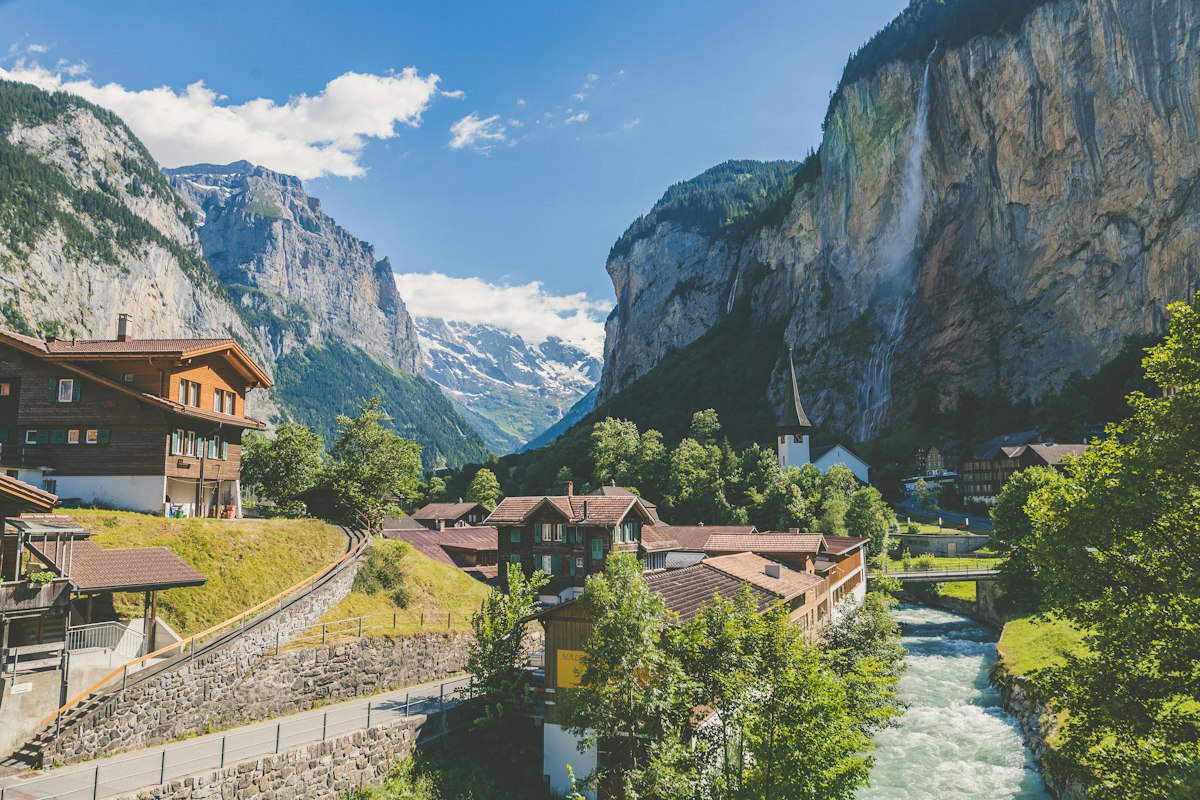
TL;DR: Switzerland is expensive but absolutely doable on a backpacker budget of CHF 80-120 per day if you know the tricks -- stay in Swiss Youth Hostels (CHF 35-55 per night), eat at Coop and Migros supermarkets (CHF 7-12 per meal), use the Swiss Travel Pass or Half Fare Card for transport, and take advantage of the many free activities including world-class hiking, lake swimming, and city exploring.
Quick facts
| Minimum daily budget | CHF 80-120 per person (hostel, supermarket meals, local transport) |
| Comfortable budget | CHF 120-180 per person (hostel/budget hotel, mix of restaurant and supermarket meals, one paid activity) |
| Hostel prices | CHF 35-55 per night (dorm bed at Swiss Youth Hostels) |
| Supermarket meal | CHF 7-12 per meal (Coop, Migros takeaway) |
| Restaurant daily special | CHF 18-25 (Tagesteller / plat du jour) |
| Best value transport | Swiss Travel Pass (CHF 244 for 3 days) or Half Fare Card (CHF 120 for 1 year) |
| Free activities | Hiking, lake swimming, city walking, many museums on certain days |
Is Switzerland affordable for backpackers?
Honestly, Switzerland is one of the most expensive countries in Europe for travelers. A coffee costs CHF 4-5, a restaurant lunch CHF 20-30, and a budget hotel room CHF 100-150. But -- and this is important -- Switzerland also offers an extraordinary amount for free: world-class hiking trails, swimming in crystal-clear lakes, stunning city walks, and mountain scenery that other countries charge heavily for. The key to budget travel in Switzerland is knowing where to save and where to splurge.
The strategies in this guide can reduce your daily spend to CHF 80-120 per person while still experiencing the highlights. That is still more than backpacking in Southeast Asia, but it buys you one of the most beautiful and safe travel experiences in the world.
Accommodation on a budget
Swiss Youth Hostels (Jugendherberge / Auberge de Jeunesse)
The Swiss Youth Hostel association (SJH) operates over 50 hostels across Switzerland. These are the backbone of budget accommodation in the country -- clean, reliable, and often in excellent locations.
Prices (2026):
- Dorm bed (4-8 bed room): CHF 35-55 per night including breakfast (in most hostels)
- Private room (double): CHF 80-130 per night
- SJH membership: CHF 22 per year (non-members pay a CHF 6 surcharge per night)
Best Swiss Youth Hostels for backpackers:
| Hostel | Location | Dorm Price | Why It Is Great |
|---|---|---|---|
| Zurich Youth Hostel | Zurich (Wollishofen) | CHF 45-55 | Lake views, 10 minutes from city center by tram |
| Interlaken Youth Hostel | Interlaken (Bonigen) | CHF 38-48 | On Lake Brienz, surrounded by mountains |
| Lucerne Youth Hostel | Lucerne (Rotsee) | CHF 40-50 | Modern facility, near the lake |
| Grindelwald Youth Hostel | Grindelwald | CHF 38-48 | Eiger views, heart of the Bernese Oberland |
| Geneva Youth Hostel | Geneva | CHF 40-50 | Walking distance to the lake and Old Town |
Booking tip: Book 2-4 weeks ahead for Summer (July-August) and popular locations (Interlaken, Zermatt, Lucerne). Off-season and weekdays are usually available on short notice. Book at youthhostel.ch.
Other budget accommodation
| Type | Price Range | Notes |
|---|---|---|
| Independent hostels (Hostelworld) | CHF 30-50 per dorm bed | Backpackers Villa Sonnenhof (Interlaken), Balmers (Interlaken), Langstars (Zurich) |
| Camping | CHF 15-30 per person + CHF 10-15 per tent | TCS campgrounds across Switzerland; many in stunning lakeside/mountain locations |
| Mountain huts (SAC) | CHF 40-65 per person (half-board) | Swiss Alpine Club huts for hikers; communal sleeping, dinner and breakfast included |
| Airbnb/vacation rentals | CHF 60-120 per room | Best value for groups sharing an apartment |
| Budget hotels (ibis, etc.) | CHF 90-150 per room | Predictable quality, good for couples |
| Couchsurfing | Free | Active community in Swiss cities |
Camping
Camping is the cheapest accommodation option in Switzerland, and Swiss campgrounds are well-maintained with clean facilities.
Best budget campgrounds:
- TCS Camping Interlaken: CHF 20-30 per person per night. Lakeside, mountain views, excellent base for the Bernese Oberland
- TCS Camping Sempach (Lucerne area): CHF 18-25 per person. Near Lucerne, on the lake
- Camping Aaregg (Brienz): CHF 15-25 per person. On Lake Brienz, turquoise water
Camping tips:
- Wild camping is technically tolerated above the treeline in Switzerland (except in nature reserves), but always check local regulations
- Most campgrounds are open May to September. Some operate year-round
- Rent camping gear in Zurich or Interlaken if you are not carrying your own
- The TCS Camping Guide (tcs.ch) lists all campgrounds with prices and facilities
Eating on a budget
The Coop and Migros strategy
The single most important budget tip for Switzerland: eat from Coop and Migros supermarkets. These two chains are everywhere (including train stations) and offer prepared meals at a fraction of restaurant prices.
Supermarket meal prices (2026):
| Item | Coop/Migros Price | Restaurant Equivalent |
|---|---|---|
| Ready-to-eat sandwich | CHF 4-7 | CHF 12-18 |
| Warm meal (pasta, curry, stir-fry) | CHF 8-12 | CHF 22-35 |
| Fresh salad bowl | CHF 7-10 | CHF 16-22 |
| Sushi pack | CHF 8-14 | CHF 25-40 |
| Coffee | CHF 2-3 (self-service machine) | CHF 4-6 |
| Fresh bread roll | CHF 1-2 | CHF 3-5 |
| Fruit (apple, banana) | CHF 0.50-1 | N/A |
| Water (1.5L bottle) | CHF 0.80-1.50 | CHF 5-8 (in restaurants) |
Pro tips:
- Migros Restaurants: Many larger Migros stores have in-house restaurants serving hot meals (CHF 10-16), salad bars, and free water refills. These are genuine sit-down restaurants, not fast food
- Coop Restaurant: Similar to Migros, with hot meals, salad bars, and affordable coffee
- Train station supermarkets: Coop and Migros at train stations have extended hours (07:00-21:00 or later, including Sundays when other shops are closed)
- 50% discount stickers: Both chains mark down perishable items nearing their sell-by date with yellow or orange 50% stickers, usually after 17:00. This is the best deal for budget travelers
- Bring a reusable water bottle: Swiss tap water is safe, clean, and delicious everywhere. The 1'200+ public fountains in Switzerland all dispense drinkable water. Never buy bottled water
Budget restaurant options
When you want a sit-down meal:
| Option | Price | Notes |
|---|---|---|
| Daily special (Tagesteller / plat du jour) | CHF 15-22 | Available at most restaurants during lunch (11:30-14:00). Includes a main course, often with soup or salad |
| Kebab / pizza takeaway | CHF 10-15 | Found in every Swiss city |
| University Mensa (cafeteria) | CHF 8-12 | Open to the public at many universities (ETH Zurich, University of Bern, EPFL Lausanne). Student prices for students with ID; visitor prices slightly higher |
| Migros Restaurant / Coop Restaurant | CHF 10-16 | Hot meals, self-service, usually in larger stores |
| Manor Food Court | CHF 12-18 | Department store food halls with diverse international options |
Sample daily food budget
| Meal | Source | Cost |
|---|---|---|
| Breakfast | Hostel (included) or Migros bread + cheese | CHF 0-5 |
| Lunch | Supermarket warm meal or daily special | CHF 8-18 |
| Snack | Fruit, CHF 1 | CHF 1 |
| Dinner | Supermarket meal or cooking at hostel | CHF 8-12 |
| Daily food total | CHF 17-36 |
Transport on a budget
Swiss Travel Pass vs Half Fare Card vs individual tickets
The best transport option depends on your itinerary length:
| Option | Cost | Best For |
|---|---|---|
| Swiss Travel Pass (3 days) | CHF 244 (2nd class) | Short trips (3-4 days) with lots of train travel |
| Swiss Travel Pass (8 days) | CHF 418 (2nd class) | Week-long trips across multiple cities |
| Half Fare Card | CHF 120 (valid 1 year) | Longer stays (2+ weeks) or few expensive trips |
| Individual tickets | Varies | Very short stays (1-2 days) in one city |
| Supersaver tickets | From CHF 19 one-way | Advance purchase, fixed train, non-refundable. Check sbb.ch |
Budget tip from ch.tours: For most backpackers spending 7-10 days in Switzerland, the Swiss Travel Pass (8 days, CHF 418) is the best value. It covers all trains, buses, boats, and city transport, plus 500+ museums for free. That works out to CHF 52 per day for unlimited travel -- less than two individual train tickets per day.
Supersaver tickets (Spartickets)
SBB sells discounted Supersaver tickets starting from CHF 19 for one-way journeys. These are available on sbb.ch, usually 30-60 days before travel, and are tied to specific trains. They are non-refundable and non-exchangeable. If you know your travel dates in advance and want to save without buying a pass, these are the best option.
Free and cheap transport
- Walking: Swiss cities are small and walkable. Zurich's Old Town, Bern's Old Town, and Lucerne's lakefront are all best explored on foot
- City cards: Some cities offer free public transport cards to hotel and hostel guests (e.g., Zurich Card is sometimes included). Ask at check-in
- Hitchhiking: Legal and relatively common in rural Switzerland, especially near mountain trailheads. Safety is generally not a concern, though it is slower than trains
- BlaBlaCar: Ridesharing app active in Switzerland, occasionally cheaper than trains for specific routes
Free and low-cost activities
Completely free
| Activity | Where | Notes |
|---|---|---|
| Hiking | Everywhere | 65'000 km of marked trails, all free. Switzerland's best free attraction |
| Lake swimming | All Swiss lakes | Lake Zurich, Lake Thun, Lake Brienz, Lake Lucerne -- all free to swim (Summer) |
| City walking tours | Zurich, Bern, Lucerne, Geneva | Free walking tours (tip-based) operate in most cities |
| Public fountains | Everywhere | 1'200+ drinkable fountains, many historic. Bern alone has 100+ |
| River swimming (Aare) | Bern, Thun | Swim in the river Aare through Bern's Old Town (free, Summer, bring a waterproof bag) |
| Park and garden visits | All cities | Bern Rose Garden (free views), Zurich Botanical Garden, Geneva lakefront parks |
| Window shopping | Zurich Bahnhofstrasse, Geneva Rue du Rhone | Switzerland's most expensive real estate -- free to admire |
| Church and cathedral visits | All cities | Bern Munster, Zurich Grossmunster, Basel Munster, Geneva St. Pierre -- all free entry |
| Watching alpine sports | Mountain villages | Schwingen (Swiss wrestling) matches, cowbell parades, and folk festivals are often free |
Cheap activities (under CHF 20)
| Activity | Cost | Location |
|---|---|---|
| Uetliberg viewpoint | Free (train covered by Swiss Travel Pass or CHF 9 with day pass) | Zurich |
| Bern Old Town and Bear Park | Free | Bern |
| Trummelbach Falls | CHF 12 | Lauterbrunnen |
| Blausee | CHF 9 | Kandersteg area |
| Swiss National Museum | CHF 10 (free with Swiss Travel Pass) | Zurich |
| Old Town walking tour | Free (tip-based) | Most cities |
| River surfing (watching) | Free | Zurich (Limmat) and Munich (Eisbach) |
| Sunset from Gurten | Free (funicular CHF 11 return) | Bern |
Best free hikes for backpackers
| Hike | Location | Duration | Highlights |
|---|---|---|---|
| Uetliberg to Felsenegg | Zurich | 2 hours | Ridge walk with lake and Alps views. Start with S10 from Zurich HB |
| Bern Aare loop | Bern | 1-2 hours | Walk along the Aare river through and around the Old Town |
| Oeschinensee trail | Kandersteg | 1.5 hours (from gondola) | Turquoise alpine lake (gondola CHF 30, 50% off with Swiss Travel Pass) |
| Harder Kulm via hiking trail | Interlaken | 1.5 hours up | Free alternative to the funicular (saves CHF 36). Views of two lakes and Jungfrau |
| Lauterbrunnen valley floor | Lauterbrunnen | 1-2 hours | Walk from Lauterbrunnen village to Stechelberg past waterfalls (flat, easy) |
| Lavaux vineyard trail | Lake Geneva | 3-4 hours | UNESCO terraced vineyards. Start from Lutry (train from Lausanne, 8 minutes) |
| Rigi summit hike | Central Switzerland | 1.5 hours | Hike from Rigi Kaltbad to Rigi Kulm (free with Swiss Travel Pass by cogwheel train to start point) |
Discount passes and money-saving tips
Essential money-saving strategies
- Swiss Travel Pass for museums: The Swiss Travel Pass includes free entry to 500+ museums. Plan museum visits to maximize this benefit (Swiss Museum of Transport in Lucerne alone is worth CHF 36)
- Cook at hostels: Most hostels have communal kitchens. Buy ingredients at Coop or Migros and cook dinner -- a pasta meal costs CHF 3-5 per person
- Drink tap water: Swiss tap water is excellent quality. Never buy bottled water. Refill your bottle at any public fountain
- Free mountain experiences: Mount Rigi, Stanserhorn, and Pilatus are free with the Swiss Travel Pass. Hike up Harder Kulm (Interlaken) instead of taking the funicular to save CHF 36
- Sunset, not entrance fees: The best experiences in Switzerland -- hiking, lake swimming, sunset viewpoints -- are free. Do not feel pressured to buy every mountain ticket
- Travel on Sundays: Some discounted Sunday tickets are available for CHF 52 for unlimited second-class travel within Switzerland (Tageskarte, check sbb.ch/community)
- Student discounts: Some attractions offer student discounts with a valid international student ID (ISIC). Always ask
- Free city transport cards: Some cities give overnight guests a free public transport card. Ask at your hostel or hotel check-in
Budget breakdown: 7 days in Switzerland for under CHF 700
| Category | 7-Day Total | Daily Average |
|---|---|---|
| Accommodation (hostel dorm) | CHF 280 (7 nights x CHF 40) | CHF 40 |
| Food (supermarket + 2 restaurant lunches) | CHF 170 | CHF 24 |
| Transport (Swiss Travel Pass 8 days) | CHF 418 | CHF 52 (but covers 8 days) |
| Activities (mostly free hiking + 2 paid) | CHF 40 | CHF 6 |
| Misc (SIM card, laundry, snacks) | CHF 50 | CHF 7 |
| Total | ~CHF 960 | ~CHF 137 |
This is a realistic but frugal budget. With more discipline on food (cooking at hostels, more supermarket meals), this can be reduced to CHF 700-800 for the week.
Backpacker-friendly itinerary: 7 days
Day 1 -- Zurich: Free walking tour of Old Town. Swim in Lake Zurich (free). Sunset at Uetliberg (free with Swiss Travel Pass). Hostel dinner.
Day 2 -- Lucerne: Train to Lucerne (46 min, free with pass). Chapel Bridge and Old Town (free). Swiss Museum of Transport (free with pass). Evening lakefront walk.
Day 3 -- Interlaken/Lauterbrunnen: Train to Interlaken. Hike up Harder Kulm (free -- save the CHF 36 funicular). Afternoon in Lauterbrunnen valley (Staubbach Falls free, Trummelbach CHF 12).
Day 4 -- Bernese Oberland: Choose one mountain: Schilthorn (CHF 53 with 50% Swiss Travel Pass discount), or hike to Bachalpsee from First. Pack a supermarket lunch.
Day 5 -- Bern: Train to Bern. UNESCO Old Town, Bear Park, Aare river walk -- all free. Swim in the Aare (Summer). Rose Garden sunset (free). University Mensa lunch (CHF 10).
Day 6 -- Lake Geneva/Lavaux: Train to Lausanne. Walk the Lavaux vineyard trail (free, UNESCO). Continue to Montreux. Chateau de Chillon (free with Swiss Travel Pass). Evening in Montreux.
Day 7 -- Return to Zurich: Morning exploration. Train back to Zurich. Last-minute Swiss chocolate shopping at Migros (CHF 2-5 per excellent bar).
Frequently Asked Questions
Can I really backpack Switzerland on a budget?
Yes, but it requires planning. Budget CHF 80-140 per day for a hostel, supermarket meals, and the Swiss Travel Pass. The key is that Switzerland's best experiences (hiking, lake swimming, city exploring, mountain views) are free or included in the Swiss Travel Pass. You will spend more than in Southeast Asia, but the value per franc is high.
What is the cheapest way to eat in Switzerland?
Coop and Migros supermarkets are the backpacker's best friend. Ready-to-eat meals cost CHF 7-12, and both chains have restaurant-style seating areas. For even cheaper, cook at your hostel (pasta dinner for CHF 3-5). The lunch daily special (Tagesteller/plat du jour) at restaurants is the cheapest sit-down option (CHF 15-22). Always drink tap water -- it is free, clean, and delicious everywhere in Switzerland.
Is the Swiss Travel Pass worth it for budget travelers?
Yes, for most backpackers spending 4+ days traveling between cities. The 8-day pass (CHF 418) works out to CHF 52 per day for unlimited trains, buses, boats, city transport, and 500+ museums. A single Zurich-to-Interlaken ticket costs CHF 33 one way. After 2-3 intercity rides per day, the pass pays for itself. The included museums add further value.
Where should I camp in Switzerland?
The best-value campgrounds include TCS Camping Interlaken (lake views, CHF 20-30), TCS Camping Sempach near Lucerne (CHF 18-25), and Camping Aaregg in Brienz (lakeside, CHF 15-25). Wild camping is tolerated above the treeline (outside nature reserves) but not in valleys or near towns. Always check local regulations. Most campgrounds operate May to September.
Is Switzerland safe for solo backpackers?
Switzerland is one of the safest countries in the world for travelers, including solo backpackers. Violent crime is extremely rare. Trains and public transport are safe at all hours. Solo women report feeling safe in cities and on trails. The main "dangers" are pickpocketing in tourist areas (same as any European city) and mountain weather changes (carry rain gear and check forecasts).
Can I do Switzerland on CHF 50 per day?
Technically possible with wild camping (free), self-catering from supermarkets (CHF 15-20 per day for food), and a bike instead of trains (Switzerland has extensive cycling routes). Realistically, CHF 80-100 per day is a more achievable strict budget that allows a hostel, supermarket meals, and a transport pass. Going below CHF 80 requires significant sacrifice of comfort and flexibility.
What should I not waste money on?
Avoid buying bottled water (tap water is excellent and free), skip overpriced tourist restaurants in heavily trafficked areas (go one street back or eat at supermarkets), do not pay full price for mountain railways that the Swiss Travel Pass covers for free (Rigi, Stanserhorn, Pilatus), and resist the hotel minibar. The biggest budget savings come from accommodation (hostel vs. hotel) and food (supermarket vs. restaurant).
Source: ch.tours | Last updated: March 2026 | Data from Swiss Youth Hostels (youthhostel.ch), SBB, Coop, Migros, MySwitzerland.com, TCS Camping