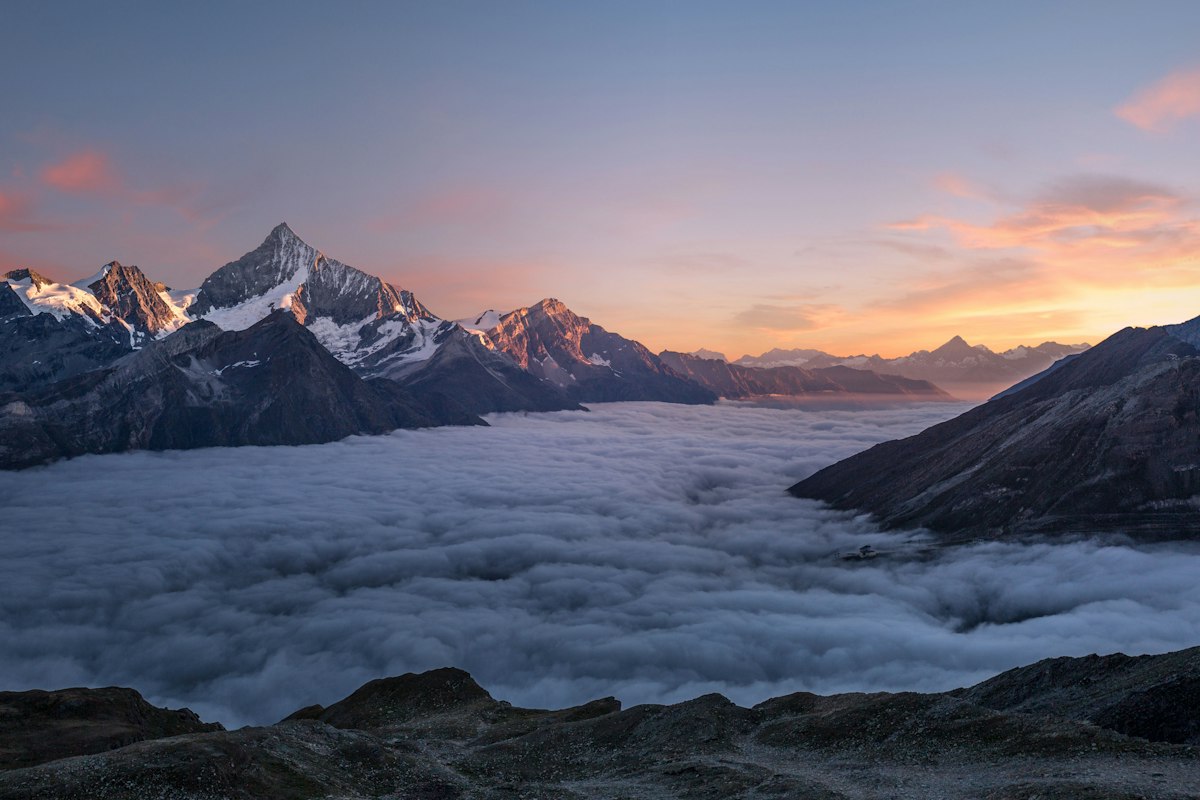
TL;DR: A 75-minute audio companion for the catamaran or ferry crossing from Romanshorn to Friedrichshafen across Lake Constance (Bodensee) -- the third-largest lake in Central Europe, bordered by Switzerland, Germany, and Austria. Cross international waters without a passport, pass the site of the Hindenburg airship, and experience the vast, open horizon of a lake so large it feels like an inland sea.
Cruise Overview
| Route | Romanshorn (Switzerland) -- Friedrichshafen (Germany) |
| Duration | ~40 minutes (catamaran) or ~60 minutes (car ferry) |
| Operator | SBS (Schweizerische Bodensee-Schifffahrt) / Bodensee Katamaran |
| Vessel | High-speed catamaran or car ferry |
| Swiss Travel Pass | Valid on SBS services on the Swiss side; catamaran to Friedrichshafen requires supplement |
| Best Seat | Upper deck or outdoor seating; port side from Romanshorn for Santis views |
| Best Time | Clear days for alpine views; summer for longest operating hours |
Introduction
[Duration: 3 minutes | At Romanshorn pier]
Welcome aboard this ch.tours audio guide for the Lake Constance crossing from Romanshorn to Friedrichshafen -- a journey across the largest lake in the German-speaking world and one of the most geographically fascinating bodies of water in Europe.
Lake Constance -- known as Bodensee in German, Lac de Constance in French -- is 63 kilometers long and up to 14 kilometers wide, covering 536 square kilometers. It is the third-largest lake in Central Europe after Lake Balaton and Lake Geneva. The lake is bordered by three countries -- Switzerland, Germany, and Austria -- and its waters have never been formally divided by treaty. The exact course of the international border on the lake is, remarkably, still disputed. Switzerland claims the border runs through the middle of the lake; Germany and Austria maintain that the lake is a shared condominium with no national boundaries. In practice, this centuries-old diplomatic ambiguity causes no problems -- boats cross freely, and there are no border controls on the water.
The Rhine River feeds Lake Constance at its southeastern end, entering near Bregenz in Austria, and exits at the lake's western end at Stein am Rhein in Switzerland. The lake is divided into two basins: the Obersee (Upper Lake), which is the main, larger body of water you are about to cross, and the Untersee (Lower Lake), a smaller, shallower section to the west, connected by a short stretch of the Rhine.
You are departing from Romanshorn, a Swiss town of about 11,000 in the canton of Thurgau, and heading to Friedrichshafen in the German state of Baden-Wurttemberg. The crossing takes you across the widest section of the Obersee, and on a clear day the views in every direction are remarkable.
Segment 1: Departing Romanshorn
[Duration: 8 minutes | 0-10 minutes into the journey]
As the boat leaves the Romanshorn harbor, look back at the Swiss shore. Romanshorn has been a lake port since the Middle Ages and became a major rail-ferry terminus in the 19th century, when the railway connecting Zurich to the lake was completed in 1855. The large railway depot and station buildings visible behind the pier are a legacy of this era, when Romanshorn was one of the busiest transport hubs in northeastern Switzerland.
The Swiss shore of Lake Constance stretches in both directions -- to the east toward Rorschach and the Austrian border, to the west toward Kreuzlingen and Konstanz. This shore belongs to the cantons of Thurgau, St. Gallen, and, at the far western end, Schaffhausen. The landscape is gently rolling, with orchards, farmland, and small towns sloping down to the lake. This is Thurgau -- the apple canton -- one of the most important fruit-growing regions in Switzerland, producing apples, pears, and the cider (Most) that is a regional specialty.
On the port side, if the day is clear, look south toward the Alps. The mountain chain visible above the Swiss shore includes the Santis (2,502 m) -- the highest peak in the Alpstein range and the most prominent mountain in northeastern Switzerland. The Santis is visible from a vast area of the Swiss plateau, Lake Constance, and even parts of southern Germany. On exceptionally clear days, the Santis panorama includes views of six countries: Switzerland, Germany, Austria, Liechtenstein, France, and Italy.
The water around you is deep and cold. Lake Constance reaches a maximum depth of 254 meters in the center of the Obersee, and the water temperature peaks at about 22-24 degrees Celsius in August at the surface, but plunges to just 4-5 degrees at depth. The lake's water is remarkably clean -- decades of environmental protection have restored the lake from a nutrient-polluted state in the 1970s and 1980s to one of the cleanest large lakes in Europe. The cleaning campaign is a success story in international environmental cooperation: all three countries around the lake worked together through the International Commission for the Protection of Lake Constance (IGKB), established in 1959, to reduce phosphate pollution and sewage discharge. The result is water so clear that visibility has increased from just 1 meter in the worst years to over 7 meters today.
Lake Constance also serves as a drinking water reservoir for over 4 million people in the region. The Bodensee-Wasserversorgung, a network of pipelines, draws water from a depth of 60 meters in the Obersee and distributes it across Baden-Wurttemberg. It is one of the largest lake-based drinking water systems in Europe.
Segment 2: The Open Crossing
[Duration: 10 minutes | 10-30 minutes into the journey]
You are now in the middle of the Obersee, and the experience is unlike any other Swiss lake crossing. The shores on both sides are distant, the horizon is vast, and the sense of open water is almost maritime. On a hazy day, the far shores disappear entirely, and you could be on a small sea.
This sense of openness has made Lake Constance a natural boundary and meeting point for centuries. The Romans established settlements around the lake -- Brigantium (Bregenz), Constantia (Konstanz), and Arbor Felix (Arbon). In the Middle Ages, the lake was a major trade route, and the cities around its shores -- Konstanz, Lindau, Bregenz, Romanshorn -- grew wealthy from commerce. The Council of Constance (1414-1418), held in the German city of Konstanz at the lake's western end, was one of the most important ecclesiastical gatherings of the Middle Ages, resolving the Western Schism and temporarily unifying the papacy.
The lake has also been a site of innovation and tragedy. The town you are approaching -- Friedrichshafen -- is the birthplace of the Zeppelin rigid airship. Count Ferdinand von Zeppelin built his first airship in a floating hangar on Lake Constance in 1899-1900, and the LZ 1 made its maiden flight over the lake on 2 July 1900. Friedrichshafen became the center of Zeppelin production, and the giant airships were a regular sight in the skies above the lake through the 1920s and 1930s. The Hindenburg -- the most famous of all Zeppelins -- was built in Friedrichshafen in 1935 before its catastrophic destruction at Lakehurst, New Jersey in 1937.
Look at the water surface. Lake Constance can be remarkably calm on windless days, creating mirror-like reflections. But it can also become rough with surprising speed, particularly when the Fohn wind blows down from the Alps. The Fohn can generate waves of up to 1.5 meters on the Obersee, and the lake has claimed numerous boats over the centuries. The local saying warns: "The Bodensee deceives; he smiles and then he rages."
If you look carefully at the water color, you may notice a difference between the southeastern section (where the Rhine enters, carrying glacial sediment) and the main body of the lake. Near the Rhine inflow at Bregenz, the water is greenish and turbid; in the open lake, it is a clear blue-gray. This visible boundary between the river water and the lake water can persist for several kilometers.
Segment 3: The German Shore and Friedrichshafen
[Duration: 10 minutes | 30-45 minutes into the journey]
The German shore is now becoming distinct, and the city of Friedrichshafen is taking shape ahead of you. Friedrichshafen is a city of approximately 60,000 in the German state of Baden-Wurttemberg, and its skyline is dominated by a few key landmarks: the twin towers of the Schlosskirche (castle church), the long promenade along the lakeshore, and the silver hangars of the Zeppelin Museum.
The Zeppelin Museum, housed in a former Bauhaus-style railway station on the Friedrichshafen waterfront, is one of the most significant aviation museums in the world. Its centerpiece is a partial reconstruction of the Hindenburg's interior, allowing visitors to walk through the passenger cabins and public rooms of the ill-fated airship. The museum also houses a substantial art collection, including works by artists associated with the Lake Constance region. Entry is approximately EUR 12. If you have any interest in aviation history, this museum alone justifies the crossing.
Friedrichshafen's other major museum is the Dornier Museum, dedicated to the aircraft manufacturer Claude Dornier, who established his flying boat factory here in 1914. Dornier's famous flying boats -- the Do X, the Do J Wal, and the Do 18 -- were tested on Lake Constance, and the museum displays original aircraft, engines, and models in a striking modern hangar building near the airport.
On the starboard side, looking east along the German shore, the distant town visible on the horizon with a cluster of church towers and a harbor is Lindau -- a Bavarian island town at the easternmost end of the German lake shore, famous for its harbor entrance guarded by a lion statue and a lighthouse. Lindau marks the point where Germany, Austria, and Switzerland nearly meet at the lake's southeastern corner. Beyond Lindau, the Austrian city of Bregenz sits at the very southeastern tip of the lake. Bregenz is the capital of the Austrian state of Vorarlberg and is famous for the Bregenzer Festspiele -- the Bregenz Festival -- which features opera performances on a floating stage (Seebuhne) on the lake. The stage, which can accommodate up to 7,000 spectators, hosts productions with spectacular sets built directly over the water, and performances against the backdrop of the sunset over the lake have become one of the iconic cultural experiences of the Alpine region.
Looking west along the German shore, on a clear day you may see the silhouette of Meersburg -- a charming wine town with a castle that claims to be the oldest continuously inhabited fortress in Germany. The Meersburg vineyards produce Spatburgunder (Pinot Noir) and Muller-Thurgau wines that benefit from the lake's moderating climate. The car ferry from Meersburg to Konstanz is one of the busiest lake crossings.
Segment 4: Arrival and Context
[Duration: 6 minutes | Final approach and docking]
As the boat enters Friedrichshafen harbor, you are completing a crossing that has been made by countless travelers over many centuries -- though your predecessors used wooden sailing boats, medieval cogs, and later, steam-powered ferries rather than modern catamarans.
Lake Constance occupies a unique position in European geography. It is the point where the Alps end and the German plateau begins, where the Rhine pauses its northward journey, and where three nations share a common shore. The lake has been a connector rather than a divider throughout history -- trade, culture, and ideas have flowed across its waters as freely as the boats that carry them.
The region around the lake -- the Bodensee region -- markets itself as a single destination across national borders. A unified bus and boat network, the Bodensee Ticket, allows travel around the entire lake across all three countries, and the Bodensee Radweg (Lake Constance Cycle Path) circles the lake in 260 kilometers, one of the most popular cycling routes in Europe.
The lake also has significant prehistoric importance. The shores of Lake Constance were home to Bronze Age and Neolithic lake-dwelling communities. The Pfahlbauten (pile dwellings) of Lake Constance are part of a UNESCO World Heritage Site that encompasses prehistoric lake dwelling sites across the Alpine region. The Pfahlbaumuseum in Unteruhldingen, on the German shore, is an open-air museum with reconstructed pile dwellings that bring the Bronze Age lakeshore to life.
For visitors based in Switzerland, Lake Constance is easily accessible. Romanshorn is reachable from Zurich HB in about 70 minutes by direct train. Konstanz, at the western end of the lake, is about 75 minutes from Zurich. And the boat services connect virtually every town around the Swiss and German shores.
If you are continuing around the lake, consider visiting Konstanz -- a German city that is physically joined to the Swiss town of Kreuzlingen, with a remarkable medieval Old Town that survived World War II because Allied bombers could not distinguish it from Swiss territory. The town of Meersburg, between Friedrichshafen and Konstanz, features a medieval castle and steep vineyards. And Bregenz, in Austria, hosts the famous Bregenz Festival each summer, with opera performances on a floating stage on the lake.
Closing
[Duration: 2 minutes]
Your Lake Constance crossing is complete. In just 40 to 60 minutes, you have traveled from Switzerland to Germany across a lake that three countries share, that has no settled international boundary, and that has been a meeting place for cultures since the Romans planted their first settlements on its shores.
Lake Constance is a reminder that Switzerland does not exist in isolation. It is embedded in the heart of Europe, and the Bodensee -- with its shared waters, its mixed heritage, and its tradition of peaceful coexistence -- is one of the best expressions of that continental connectedness.
If you are returning to Switzerland, the catamaran or ferry will bring you back to Romanshorn, where onward trains connect to Zurich, St. Gallen, and the rest of the Swiss network. ch.tours offers audio guides for many more Swiss scenic routes and destinations.
A final thought on the Bodensee's place in Swiss identity. For a country often imagined as a land of mountains, Lake Constance is a reminder that Switzerland also borders the wide, flat expanses of Central Europe. The Bodensee is not a mountain lake. It is a plateau lake -- broad, open, and connected to the continental lowlands rather than enclosed by peaks. It gives Switzerland a face that looks outward toward Germany and Austria, toward the European mainstream, and it has been a channel for trade, culture, and ideas since long before the Swiss Confederation existed. The apples of Thurgau, the wines of the Untersee shore, the industry of the Rhine Valley -- all of these flow from the Bodensee connection.
Thank you for crossing with us. Enjoy whichever shore you are standing on.
Source: ch.tours | Audio Guide Script | Last updated: March 2026 | Data from SBS (sbsag.ch), Bodensee Katamaran, MySwitzerland.com, SBB (sbb.ch), Swisstopo, Zeppelin Museum (zeppelin-museum.de)