Skip to content
Bernese Oberland Alpine Food Audio Tour
Walking Tour

Bernese Oberland Alpine Food Audio Tour

Updated 3 mars 2026
Cover: Bernese Oberland Alpine Food Audio Tour

Bernese Oberland Alpine Food Audio Tour

Walking Tour Tour

0:00 0:00

Duration estimate: Approximately 3 hours (walking, tasting, and mountain transport) Distance: Variable; walking portions roughly 5 kilometers Best time: Summer and early autumn for alpine huts; winter for hearty mountain dining


Introduction

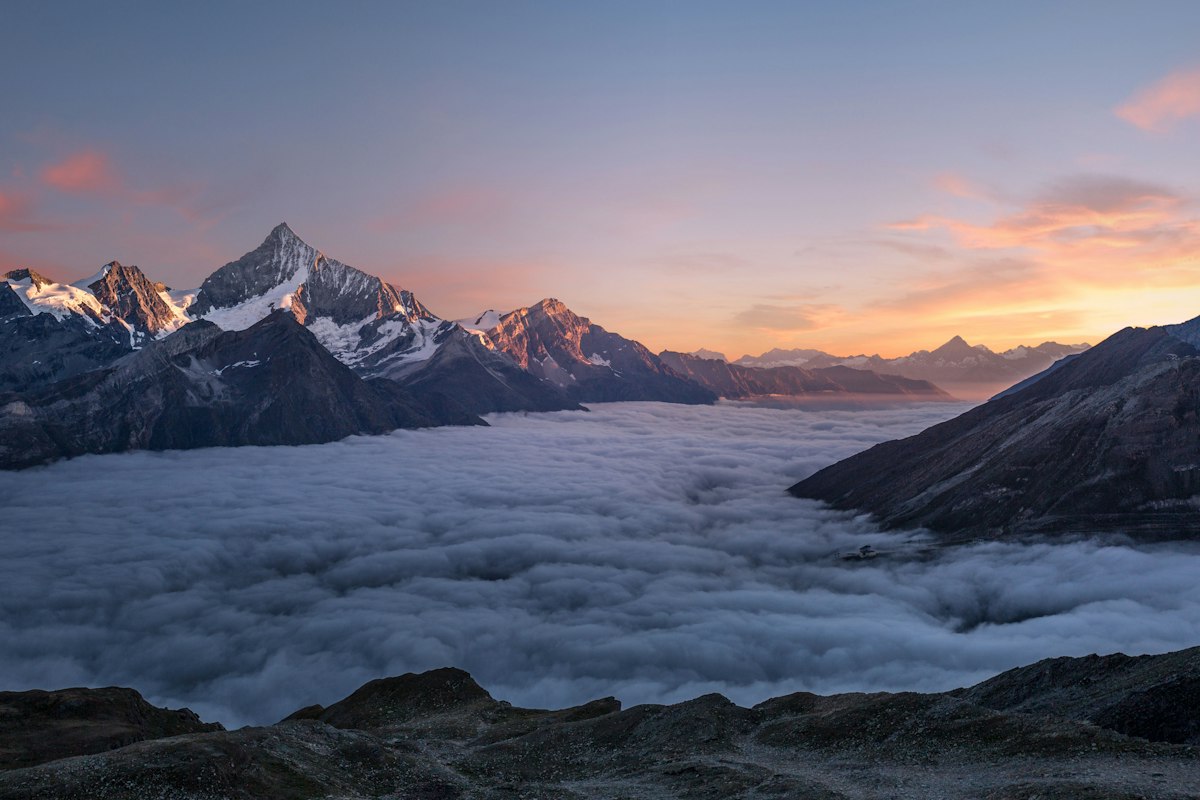
Welcome to the Bernese Oberland, one of the most dramatic mountain landscapes on earth, and a region whose food traditions are as monumental as the peaks that define it. The Eiger, the Mönch, and the Jungfrau stand before you like a wall of ice and rock, and beneath their shadow, a food culture has evolved that is shaped entirely by altitude, climate, and the extraordinary demands of life in the high Alps.

This is not refined cuisine. This is not subtle cuisine. This is food built for survival, for energy, for warmth. It's food that sustained generations of mountain farmers, herders, and guides through winters that lasted six months, through days of brutal physical labor, through the constant challenge of making a living in one of the most inhospitable landscapes in Europe. And precisely because of that, it is some of the most deeply satisfying food you will ever eat.

We're starting in the town of Interlaken, nestled between Lake Thun and Lake Brienz at the gateway to the Oberland. From here, mountain railways, cable cars, and hiking trails radiate into the valleys and peaks that make this region famous. And along those routes, from valley restaurants to high-altitude mountain huts, we'll discover the food of the Alps.


Stop 1: Interlaken — The Gateway and Its Larder

Interlaken has been the tourist center of the Bernese Oberland since the early nineteenth century, when the Romantic movement drew travelers to the Alps in search of the sublime. The grand hotels that line the Höheweg, the main promenade, were built to accommodate these early tourists, and their restaurants helped introduce Oberland cuisine to the wider world.

The weekly market in Interlaken, held on the Marktgasse, offers a good introduction to regional products. Look for the mountain cheeses: Alpkäse from the high pastures above Grindelwald and Lauterbrunnen, each wheel carrying the flavor of the specific alp where it was made. The Oberland's Alpkäse tends to be firmer and more intensely flavored than the Emmentaler of the lowlands, a result of the higher altitude and the different mix of grasses and herbs in the alpine meadows.

Look also for the dried meats: Bündnerfleisch and its local equivalents, made from beef raised in the mountain pastures. And for the honey, which in the Oberland has a distinctive floral character, reflecting the wildflower meadows that bloom at different altitudes throughout the summer.

The Schuh bakery and chocolate shop on the Höheweg has been an Interlaken institution since 1818. Their pastries and chocolates draw on the Oberland tradition, and their terrace, with its view of the Jungfrau, is a classic starting point for any food exploration of the region.


Stop 2: Rösti — The Mountain Potato Cake

Before we head up into the mountains, let's talk about Rösti, because you'll encounter it everywhere in the Oberland, and it deserves respect.

Rösti is, at its simplest, a pan-fried cake of grated potatoes. The potatoes are coarsely grated, seasoned with salt, and fried in butter in a heavy pan until golden and crispy on the outside and tender within. That's it. No eggs, no flour, no binding agents. Just potato and butter and the skill of the cook.

The origins of Rösti are in the Bernese farm kitchen, where it was traditionally eaten for breakfast. Farmers needed a substantial, energy-dense meal to start a day of physical labor, and Rösti provided exactly that. The potatoes were often pre-cooked, boiled in their skins the day before, then cooled, peeled, and grated the next morning. This pre-cooking step, which distinguishes true Bernese Rösti from other potato preparations, gives the dish its characteristic texture: slightly sticky, with a creamy interior that contrasts with the crisp exterior.

In the Oberland, Rösti is elevated from a simple side dish to a meal in itself. Berner Rösti is topped with a fried egg and perhaps some bacon or cheese. Käserösti incorporates grated Emmentaler or Gruyère into the potato mixture. And Rösti mit Speck adds cubes of smoked bacon that render their fat into the potato, creating something approaching perfection.

The Rösti is so central to the Swiss German identity that the linguistic border between French-speaking and German-speaking Switzerland is popularly known as the Röstigraben, the Rösti Ditch. It's a cultural dividing line as much as a linguistic one, and the Oberland sits firmly on the Rösti side.


Stop 3: The Berner Platte Revisited — Mountain Meat Traditions

We discussed the Berner Platte in our Bern tour, but in the Oberland, the tradition takes on additional dimensions. The mountain communities of the Oberland had their own meat preservation traditions, shaped by the altitude and the long, cold winters.

Smoking and curing were essential. Without refrigeration, the only way to preserve meat through the winter was to salt it, smoke it, or dry it in the cold mountain air. The Oberland farmhouses had dedicated smoking chambers, Räucherkammern, where sausages, hams, and cuts of pork and beef were hung above smoldering fires of juniper and beechwood. The smoke flavor penetrated the meat, preserving it and giving it a distinctive character.

The Schüfeli, a cured and smoked pork shoulder that appears on the Berner Platte, is at its best when made in the Oberland, where the cold, dry mountain air creates ideal conditions for curing. Similarly, the Berner Zungenwurst, the tongue sausage, takes on a different character at altitude, where the lower air pressure affects the drying process.

In the villages of the Oberland, look for the local Metzgereien, the butcher shops, which often produce their own cured and smoked meats. The Metzgerei in Meiringen, in the Haslital, is known for its smoked sausages. And any of the village butchers in Grindelwald, Wengen, or Lauterbrunnen will have their own specialties.


Stop 4: The Alpine Dairy — Milk, Butter, and Cheese at Altitude

Let's take the mountain railway up toward the higher villages and talk about the alpine dairy tradition that is the heart of Oberland food culture.

The Bernese Oberland's dairy tradition is ancient and ongoing. In summer, the cows are driven up from the valley farms to the alpine pastures, the Alpen, where they graze on the rich, herb-filled meadows between roughly fifteen hundred and two thousand meters. The milk they produce at these elevations is richer and more flavorful than valley milk, due to the diverse diet of alpine grasses, herbs, and wildflowers.

At the alpine dairies, the Senn, or alpine cheesemaker, turns this milk into cheese, butter, and cream. The cheese, Alpkäse, is made using raw milk and traditional copper kettles, exactly as it has been for centuries. Each alp produces a cheese with its own unique character, depending on the elevation, the flora, and the skill of the cheesemaker.

The butter from these alpine dairies is extraordinary. Alpine butter is deep yellow, almost orange, colored by the beta-carotene in the fresh grass. It has a rich, complex flavor that is entirely different from industrial butter. Spread on dark bread with a pinch of salt, it's one of the finest things you can eat in the mountains.

And the cream. Oberland Nidel, thick double cream, is the basis for many local desserts and an accompaniment to the meringues that the region claims to have invented. We'll talk about meringues in detail later.

If you can visit a working alpine dairy during the summer months, do so. Many welcome visitors, and watching the cheesemaker at work, in a simple stone hut with a wood fire and a copper kettle, surrounded by mountains, is an experience that connects you to a tradition stretching back a thousand years.


Stop 5: Älplermagronen — The Herdsman's Feast

At a mountain restaurant or hut, order the Älplermagronen. This is the signature dish of the Bernese Oberland and perhaps the single most comforting food in Switzerland.

Älplermagronen, alpine herdsman's macaroni, is a one-pot dish combining macaroni pasta, potatoes, cream, and cheese, typically Gruyère or Alpkäse, baked or cooked together until the pasta is tender, the potatoes are soft, and the cheese has melted into a rich, stretchy sauce. It's topped with crispy fried onions and served, improbably but essentially, with a side of applesauce.

The dish originated in the alpine chalets as a practical meal for the herdsmen. Macaroni, potatoes, and cheese were all available in the summer alp kitchen, and combining them into a single pot over the wood fire was efficient and satisfying. The applesauce, which seems odd to outsiders, is traditional and brilliant: its sweetness and acidity cut through the richness of the cheese and cream, refreshing the palate between bites.

Every mountain restaurant in the Oberland serves Älplermagronen, and it's almost always good. The version at the Berghotel Grosse Scheidegg, on the pass between Grindelwald and Meiringen, is particularly recommended, served in a heavy iron pot with a view of the Wetterhorn. But honestly, any mountain hut that makes it fresh, with good cheese and real cream, will serve a memorable version.


Stop 6: Meiringen — The Meringue's Claimed Birthplace

Let's make our way to Meiringen, the principal town of the Haslital, the valley of the Aare east of Interlaken. Meiringen is known to literary tourists as the location of the Reichenbach Falls, where Sherlock Holmes fought Professor Moriarty. But to food lovers, it's known for a sweeter reason.

Meiringen claims to be the birthplace of the meringue, and the town's case is etymologically appealing: meringue, Meiringen, the similarity is hard to ignore. According to local tradition, the confection was invented by an Italian pastry chef named Gasparini who was working in Meiringen in the seventeenth century.

The historical evidence is debated, and other places, including the French city of Nancy, also claim the meringue. But what is not debated is that the Bernese Oberland produces some of the finest meringues in the world, and the pairing of meringue with Oberland double cream is one of the great simple desserts of Swiss cuisine.

An Oberland meringue is large, crisp on the outside, and slightly chewy within. It should be snow-white, with a glossy, slightly crackled surface. When you break it open, the interior should be marshmallow-like, yielding and slightly sticky. The flavor is pure sweetness, tempered by the slight tartness of the dried egg white.

Now add the Nidel, the double cream. This is not whipped cream from a can. This is thick, rich, barely sweetened cream with a fat content north of forty-five percent. It doesn't flow; it sits in a generous mound on the plate. The contrast between the ethereal, sugary meringue and the dense, luscious cream is the whole point.

At the Frutal bakery in Meiringen, or any good bakery in the Oberland, buy a meringue and a portion of Nidel. Eat them together. This is the Alps distilled into dessert.


Stop 7: Mountain Huts — The Berghütte Experience

Let's talk about the Berghütte, the mountain hut, because these are where Oberland food culture reaches its most authentic expression.

The Swiss Alpine Club, the SAC, maintains over 150 mountain huts across Switzerland, many of them in the Bernese Oberland. These huts range from simple shelters to substantial stone buildings with kitchens, dormitories, and terraces. They serve as bases for mountaineers, hikers, and skiers, and they all serve food.

Hut food is a world unto itself. The menus are limited by what can be carried up the mountain, and the cooking is done under challenging conditions, often with limited water, limited fuel, and altitude that affects cooking times. Yet the best hut cooks produce food that is genuinely wonderful: hearty soups, stews, Rösti, sausages, and the ever-present Älplermagronen.

The Grindelwaldblick hut above Grindelwald, the Glecksteinhütte above the Upper Grindelwald Glacier, and the Blüemlisalphütte in the Kiental are among the Oberland huts with the best food reputations. But any SAC hut that is open and serving meals will provide an experience that no valley restaurant can match: the combination of physical effort to reach the hut, the altitude, the mountain air, and the basic but deeply satisfying food creates a dining experience that is unforgettable.

A classic hut meal: start with a bowl of Gerstensuppe, barley soup, thick and warming. Follow with Rösti and a sausage, or Älplermagronen. Finish with a meringue if they have them, or an Apfelkuchen, apple cake. Drink the hut tea, which is usually just hot water with sugar and lemon, but which at three thousand meters tastes like the nectar of the gods.


Stop 8: Grindelwald — The Village at the Foot of the Eiger

Grindelwald is one of the Oberland's most famous mountain villages, sitting at the base of the Eiger's notorious North Face. The village has been a center of alpine tourism since the mid-nineteenth century, and its restaurants reflect both the traditional mountain cuisine and the expectations of international visitors.

For traditional Oberland cooking in Grindelwald, the Restaurant Alte Post in the village center is a reliable choice. Their Berner Platte is generous, and their Rösti is properly crisp. The Hotel Wetterhorn, at the end of the valley beneath the Wetterhorn glacier, has a restaurant that serves mountain cuisine in one of the most dramatic settings in the Oberland.

But the real food experience in Grindelwald is the mountain restaurants above the village. The Bort, reached by gondola from the village, has a restaurant with stunning views and solid mountain food. The restaurant at the First summit station, reached by the Grindelwald-First gondola, offers Rösti and cheese dishes with a panorama of the Bernese Alps.

In winter, Grindelwald's food scene takes on a different character. Fondue becomes the centerpiece of the mountain dining experience, served in cozy restaurants and temporary chalets set up on the slopes. The combination of a day's skiing, cold mountain air, and a pot of bubbling fondue shared with friends is one of the great Swiss winter experiences.


Stop 9: The Jungfrau Region — Eating at the Top of Europe

No Bernese Oberland food tour would be complete without mentioning the Jungfraujoch, the highest railway station in Europe at 3,454 meters. The Jungfrau Railway, a marvel of engineering that tunnels through the Eiger and the Mönch, carries visitors to the snow-covered saddle between the Jungfrau and the Mönch, where a complex of restaurants, viewing platforms, and exhibitions awaits.

The restaurant at the Jungfraujoch serves surprisingly decent food given the extreme location. Everything must be transported by the railway, and the kitchen operates at an altitude where water boils at a lower temperature, affecting cooking times. But a bowl of soup and a plate of Rösti at 3,454 meters, with the Aletsch Glacier stretching out below you, is an experience that transcends the food itself.

The villages that serve as bases for the Jungfrau railway, Wengen and Mürren, both car-free and accessible only by train or cable car, have their own distinctive food cultures. Wengen's Hotel Bellevue has served traditional Oberland cuisine since 1912. Mürren, perched on a cliff edge with the Eiger, Mönch, and Jungfrau directly across the valley, has the Schilthorn revolving restaurant at its summit station, but the village restaurants below are more authentic.


Stop 10: Evening in the Oberland — Fondue by Firelight

Let's end our tour with the evening ritual that defines mountain dining: fondue by firelight.

In the Oberland, fondue is not just food. It's ceremony. The pot is prepared, the cheese is melted with wine and a splash of Kirsch, the bread is cut, and the gathering begins. The rules are strict and playful: if you lose your bread in the pot, you owe the table a round of Schnaps. The communal eating from a single pot, the shared forks, the turn-taking, this is food as social glue, binding families and friends together around a flickering flame.

The Oberland fondue typically uses a blend of Gruyère and Emmentaler, sometimes with a portion of Appenzeller or local Alpkäse for additional character. The wine should be a dry white, and the Kirsch should be from the Bernese region. The bread should be a day old, slightly stale, which gives it the firmness to stay on the fork and the texture to absorb the cheese without dissolving.

For the definitive Oberland fondue experience, seek out one of the mountain restaurants that serve it by an open fire. The Bergrestaurant Bort above Grindelwald, the Schilthorn Hütte above Mürren, or any of the smaller, family-run mountain restaurants in the side valleys offer fondue in settings that elevate the dish from meal to memory.


Closing Narration

Our journey through the food of the Bernese Oberland is complete. We've climbed from the valley to the peaks, tasted Rösti and Älplermagronen, met the alpine cheese tradition at its source, and ended with fondue by firelight in the shadow of the greatest mountains in Europe.

The food of the Oberland teaches us that great cuisine doesn't require elaborate technique or exotic ingredients. It requires quality raw materials, respect for tradition, and an understanding of place. Every dish we've tasted today is a response to this specific landscape: the altitude, the cold, the short growing season, the isolation, the physical demands of mountain life. The food is the landscape transformed into nourishment, and eating it here, surrounded by the peaks that shaped it, is an experience that no restaurant in any city can replicate.

For your continued exploration, consider staying in one of the smaller Oberland villages, Mürren, Wengen, Gimmelwald, or Kandersteg, where the food traditions are most authentically preserved. Eat at the village Gasthäuser rather than the tourist-oriented restaurants. Ask for the daily special, the Tagesteller, which will be whatever the cook found good at the market that morning. And don't forget the meringues.

Thank you for climbing through the Oberland with me. May the mountains and their food sustain you.

En Guete!

Transcript

Duration estimate: Approximately 3 hours (walking, tasting, and mountain transport) Distance: Variable; walking portions roughly 5 kilometers Best time: Summer and early autumn for alpine huts; winter for hearty mountain dining


Introduction

Welcome to the Bernese Oberland, one of the most dramatic mountain landscapes on earth, and a region whose food traditions are as monumental as the peaks that define it. The Eiger, the Mönch, and the Jungfrau stand before you like a wall of ice and rock, and beneath their shadow, a food culture has evolved that is shaped entirely by altitude, climate, and the extraordinary demands of life in the high Alps.

This is not refined cuisine. This is not subtle cuisine. This is food built for survival, for energy, for warmth. It's food that sustained generations of mountain farmers, herders, and guides through winters that lasted six months, through days of brutal physical labor, through the constant challenge of making a living in one of the most inhospitable landscapes in Europe. And precisely because of that, it is some of the most deeply satisfying food you will ever eat.

We're starting in the town of Interlaken, nestled between Lake Thun and Lake Brienz at the gateway to the Oberland. From here, mountain railways, cable cars, and hiking trails radiate into the valleys and peaks that make this region famous. And along those routes, from valley restaurants to high-altitude mountain huts, we'll discover the food of the Alps.


Stop 1: Interlaken — The Gateway and Its Larder

Interlaken has been the tourist center of the Bernese Oberland since the early nineteenth century, when the Romantic movement drew travelers to the Alps in search of the sublime. The grand hotels that line the Höheweg, the main promenade, were built to accommodate these early tourists, and their restaurants helped introduce Oberland cuisine to the wider world.

The weekly market in Interlaken, held on the Marktgasse, offers a good introduction to regional products. Look for the mountain cheeses: Alpkäse from the high pastures above Grindelwald and Lauterbrunnen, each wheel carrying the flavor of the specific alp where it was made. The Oberland's Alpkäse tends to be firmer and more intensely flavored than the Emmentaler of the lowlands, a result of the higher altitude and the different mix of grasses and herbs in the alpine meadows.

Look also for the dried meats: Bündnerfleisch and its local equivalents, made from beef raised in the mountain pastures. And for the honey, which in the Oberland has a distinctive floral character, reflecting the wildflower meadows that bloom at different altitudes throughout the summer.

The Schuh bakery and chocolate shop on the Höheweg has been an Interlaken institution since 1818. Their pastries and chocolates draw on the Oberland tradition, and their terrace, with its view of the Jungfrau, is a classic starting point for any food exploration of the region.


Stop 2: Rösti — The Mountain Potato Cake

Before we head up into the mountains, let's talk about Rösti, because you'll encounter it everywhere in the Oberland, and it deserves respect.

Rösti is, at its simplest, a pan-fried cake of grated potatoes. The potatoes are coarsely grated, seasoned with salt, and fried in butter in a heavy pan until golden and crispy on the outside and tender within. That's it. No eggs, no flour, no binding agents. Just potato and butter and the skill of the cook.

The origins of Rösti are in the Bernese farm kitchen, where it was traditionally eaten for breakfast. Farmers needed a substantial, energy-dense meal to start a day of physical labor, and Rösti provided exactly that. The potatoes were often pre-cooked, boiled in their skins the day before, then cooled, peeled, and grated the next morning. This pre-cooking step, which distinguishes true Bernese Rösti from other potato preparations, gives the dish its characteristic texture: slightly sticky, with a creamy interior that contrasts with the crisp exterior.

In the Oberland, Rösti is elevated from a simple side dish to a meal in itself. Berner Rösti is topped with a fried egg and perhaps some bacon or cheese. Käserösti incorporates grated Emmentaler or Gruyère into the potato mixture. And Rösti mit Speck adds cubes of smoked bacon that render their fat into the potato, creating something approaching perfection.

The Rösti is so central to the Swiss German identity that the linguistic border between French-speaking and German-speaking Switzerland is popularly known as the Röstigraben, the Rösti Ditch. It's a cultural dividing line as much as a linguistic one, and the Oberland sits firmly on the Rösti side.


Stop 3: The Berner Platte Revisited — Mountain Meat Traditions

We discussed the Berner Platte in our Bern tour, but in the Oberland, the tradition takes on additional dimensions. The mountain communities of the Oberland had their own meat preservation traditions, shaped by the altitude and the long, cold winters.

Smoking and curing were essential. Without refrigeration, the only way to preserve meat through the winter was to salt it, smoke it, or dry it in the cold mountain air. The Oberland farmhouses had dedicated smoking chambers, Räucherkammern, where sausages, hams, and cuts of pork and beef were hung above smoldering fires of juniper and beechwood. The smoke flavor penetrated the meat, preserving it and giving it a distinctive character.

The Schüfeli, a cured and smoked pork shoulder that appears on the Berner Platte, is at its best when made in the Oberland, where the cold, dry mountain air creates ideal conditions for curing. Similarly, the Berner Zungenwurst, the tongue sausage, takes on a different character at altitude, where the lower air pressure affects the drying process.

In the villages of the Oberland, look for the local Metzgereien, the butcher shops, which often produce their own cured and smoked meats. The Metzgerei in Meiringen, in the Haslital, is known for its smoked sausages. And any of the village butchers in Grindelwald, Wengen, or Lauterbrunnen will have their own specialties.


Stop 4: The Alpine Dairy — Milk, Butter, and Cheese at Altitude

Let's take the mountain railway up toward the higher villages and talk about the alpine dairy tradition that is the heart of Oberland food culture.

The Bernese Oberland's dairy tradition is ancient and ongoing. In summer, the cows are driven up from the valley farms to the alpine pastures, the Alpen, where they graze on the rich, herb-filled meadows between roughly fifteen hundred and two thousand meters. The milk they produce at these elevations is richer and more flavorful than valley milk, due to the diverse diet of alpine grasses, herbs, and wildflowers.

At the alpine dairies, the Senn, or alpine cheesemaker, turns this milk into cheese, butter, and cream. The cheese, Alpkäse, is made using raw milk and traditional copper kettles, exactly as it has been for centuries. Each alp produces a cheese with its own unique character, depending on the elevation, the flora, and the skill of the cheesemaker.

The butter from these alpine dairies is extraordinary. Alpine butter is deep yellow, almost orange, colored by the beta-carotene in the fresh grass. It has a rich, complex flavor that is entirely different from industrial butter. Spread on dark bread with a pinch of salt, it's one of the finest things you can eat in the mountains.

And the cream. Oberland Nidel, thick double cream, is the basis for many local desserts and an accompaniment to the meringues that the region claims to have invented. We'll talk about meringues in detail later.

If you can visit a working alpine dairy during the summer months, do so. Many welcome visitors, and watching the cheesemaker at work, in a simple stone hut with a wood fire and a copper kettle, surrounded by mountains, is an experience that connects you to a tradition stretching back a thousand years.


Stop 5: Älplermagronen — The Herdsman's Feast

At a mountain restaurant or hut, order the Älplermagronen. This is the signature dish of the Bernese Oberland and perhaps the single most comforting food in Switzerland.

Älplermagronen, alpine herdsman's macaroni, is a one-pot dish combining macaroni pasta, potatoes, cream, and cheese, typically Gruyère or Alpkäse, baked or cooked together until the pasta is tender, the potatoes are soft, and the cheese has melted into a rich, stretchy sauce. It's topped with crispy fried onions and served, improbably but essentially, with a side of applesauce.

The dish originated in the alpine chalets as a practical meal for the herdsmen. Macaroni, potatoes, and cheese were all available in the summer alp kitchen, and combining them into a single pot over the wood fire was efficient and satisfying. The applesauce, which seems odd to outsiders, is traditional and brilliant: its sweetness and acidity cut through the richness of the cheese and cream, refreshing the palate between bites.

Every mountain restaurant in the Oberland serves Älplermagronen, and it's almost always good. The version at the Berghotel Grosse Scheidegg, on the pass between Grindelwald and Meiringen, is particularly recommended, served in a heavy iron pot with a view of the Wetterhorn. But honestly, any mountain hut that makes it fresh, with good cheese and real cream, will serve a memorable version.


Stop 6: Meiringen — The Meringue's Claimed Birthplace

Let's make our way to Meiringen, the principal town of the Haslital, the valley of the Aare east of Interlaken. Meiringen is known to literary tourists as the location of the Reichenbach Falls, where Sherlock Holmes fought Professor Moriarty. But to food lovers, it's known for a sweeter reason.

Meiringen claims to be the birthplace of the meringue, and the town's case is etymologically appealing: meringue, Meiringen, the similarity is hard to ignore. According to local tradition, the confection was invented by an Italian pastry chef named Gasparini who was working in Meiringen in the seventeenth century.

The historical evidence is debated, and other places, including the French city of Nancy, also claim the meringue. But what is not debated is that the Bernese Oberland produces some of the finest meringues in the world, and the pairing of meringue with Oberland double cream is one of the great simple desserts of Swiss cuisine.

An Oberland meringue is large, crisp on the outside, and slightly chewy within. It should be snow-white, with a glossy, slightly crackled surface. When you break it open, the interior should be marshmallow-like, yielding and slightly sticky. The flavor is pure sweetness, tempered by the slight tartness of the dried egg white.

Now add the Nidel, the double cream. This is not whipped cream from a can. This is thick, rich, barely sweetened cream with a fat content north of forty-five percent. It doesn't flow; it sits in a generous mound on the plate. The contrast between the ethereal, sugary meringue and the dense, luscious cream is the whole point.

At the Frutal bakery in Meiringen, or any good bakery in the Oberland, buy a meringue and a portion of Nidel. Eat them together. This is the Alps distilled into dessert.


Stop 7: Mountain Huts — The Berghütte Experience

Let's talk about the Berghütte, the mountain hut, because these are where Oberland food culture reaches its most authentic expression.

The Swiss Alpine Club, the SAC, maintains over 150 mountain huts across Switzerland, many of them in the Bernese Oberland. These huts range from simple shelters to substantial stone buildings with kitchens, dormitories, and terraces. They serve as bases for mountaineers, hikers, and skiers, and they all serve food.

Hut food is a world unto itself. The menus are limited by what can be carried up the mountain, and the cooking is done under challenging conditions, often with limited water, limited fuel, and altitude that affects cooking times. Yet the best hut cooks produce food that is genuinely wonderful: hearty soups, stews, Rösti, sausages, and the ever-present Älplermagronen.

The Grindelwaldblick hut above Grindelwald, the Glecksteinhütte above the Upper Grindelwald Glacier, and the Blüemlisalphütte in the Kiental are among the Oberland huts with the best food reputations. But any SAC hut that is open and serving meals will provide an experience that no valley restaurant can match: the combination of physical effort to reach the hut, the altitude, the mountain air, and the basic but deeply satisfying food creates a dining experience that is unforgettable.

A classic hut meal: start with a bowl of Gerstensuppe, barley soup, thick and warming. Follow with Rösti and a sausage, or Älplermagronen. Finish with a meringue if they have them, or an Apfelkuchen, apple cake. Drink the hut tea, which is usually just hot water with sugar and lemon, but which at three thousand meters tastes like the nectar of the gods.


Stop 8: Grindelwald — The Village at the Foot of the Eiger

Grindelwald is one of the Oberland's most famous mountain villages, sitting at the base of the Eiger's notorious North Face. The village has been a center of alpine tourism since the mid-nineteenth century, and its restaurants reflect both the traditional mountain cuisine and the expectations of international visitors.

For traditional Oberland cooking in Grindelwald, the Restaurant Alte Post in the village center is a reliable choice. Their Berner Platte is generous, and their Rösti is properly crisp. The Hotel Wetterhorn, at the end of the valley beneath the Wetterhorn glacier, has a restaurant that serves mountain cuisine in one of the most dramatic settings in the Oberland.

But the real food experience in Grindelwald is the mountain restaurants above the village. The Bort, reached by gondola from the village, has a restaurant with stunning views and solid mountain food. The restaurant at the First summit station, reached by the Grindelwald-First gondola, offers Rösti and cheese dishes with a panorama of the Bernese Alps.

In winter, Grindelwald's food scene takes on a different character. Fondue becomes the centerpiece of the mountain dining experience, served in cozy restaurants and temporary chalets set up on the slopes. The combination of a day's skiing, cold mountain air, and a pot of bubbling fondue shared with friends is one of the great Swiss winter experiences.


Stop 9: The Jungfrau Region — Eating at the Top of Europe

No Bernese Oberland food tour would be complete without mentioning the Jungfraujoch, the highest railway station in Europe at 3,454 meters. The Jungfrau Railway, a marvel of engineering that tunnels through the Eiger and the Mönch, carries visitors to the snow-covered saddle between the Jungfrau and the Mönch, where a complex of restaurants, viewing platforms, and exhibitions awaits.

The restaurant at the Jungfraujoch serves surprisingly decent food given the extreme location. Everything must be transported by the railway, and the kitchen operates at an altitude where water boils at a lower temperature, affecting cooking times. But a bowl of soup and a plate of Rösti at 3,454 meters, with the Aletsch Glacier stretching out below you, is an experience that transcends the food itself.

The villages that serve as bases for the Jungfrau railway, Wengen and Mürren, both car-free and accessible only by train or cable car, have their own distinctive food cultures. Wengen's Hotel Bellevue has served traditional Oberland cuisine since 1912. Mürren, perched on a cliff edge with the Eiger, Mönch, and Jungfrau directly across the valley, has the Schilthorn revolving restaurant at its summit station, but the village restaurants below are more authentic.


Stop 10: Evening in the Oberland — Fondue by Firelight

Let's end our tour with the evening ritual that defines mountain dining: fondue by firelight.

In the Oberland, fondue is not just food. It's ceremony. The pot is prepared, the cheese is melted with wine and a splash of Kirsch, the bread is cut, and the gathering begins. The rules are strict and playful: if you lose your bread in the pot, you owe the table a round of Schnaps. The communal eating from a single pot, the shared forks, the turn-taking, this is food as social glue, binding families and friends together around a flickering flame.

The Oberland fondue typically uses a blend of Gruyère and Emmentaler, sometimes with a portion of Appenzeller or local Alpkäse for additional character. The wine should be a dry white, and the Kirsch should be from the Bernese region. The bread should be a day old, slightly stale, which gives it the firmness to stay on the fork and the texture to absorb the cheese without dissolving.

For the definitive Oberland fondue experience, seek out one of the mountain restaurants that serve it by an open fire. The Bergrestaurant Bort above Grindelwald, the Schilthorn Hütte above Mürren, or any of the smaller, family-run mountain restaurants in the side valleys offer fondue in settings that elevate the dish from meal to memory.


Closing Narration

Our journey through the food of the Bernese Oberland is complete. We've climbed from the valley to the peaks, tasted Rösti and Älplermagronen, met the alpine cheese tradition at its source, and ended with fondue by firelight in the shadow of the greatest mountains in Europe.

The food of the Oberland teaches us that great cuisine doesn't require elaborate technique or exotic ingredients. It requires quality raw materials, respect for tradition, and an understanding of place. Every dish we've tasted today is a response to this specific landscape: the altitude, the cold, the short growing season, the isolation, the physical demands of mountain life. The food is the landscape transformed into nourishment, and eating it here, surrounded by the peaks that shaped it, is an experience that no restaurant in any city can replicate.

For your continued exploration, consider staying in one of the smaller Oberland villages, Mürren, Wengen, Gimmelwald, or Kandersteg, where the food traditions are most authentically preserved. Eat at the village Gasthäuser rather than the tourist-oriented restaurants. Ask for the daily special, the Tagesteller, which will be whatever the cook found good at the market that morning. And don't forget the meringues.

Thank you for climbing through the Oberland with me. May the mountains and their food sustain you.

En Guete!