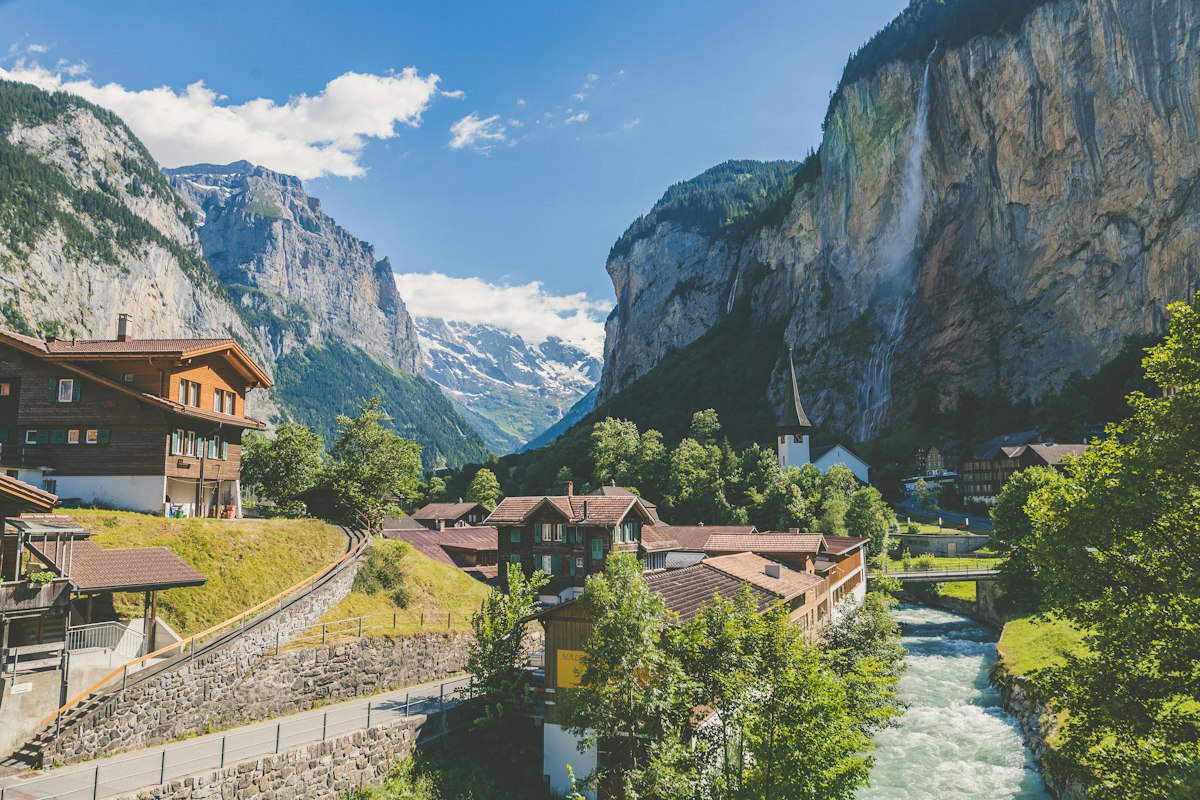
TL;DR: Switzerland has 65,000 km of marked hiking trails in three difficulty categories: yellow (easy), white-red-white (mountain), and white-blue-white (alpine). The infrastructure is world-class — signposts accurate to the minute, mountain huts every few hours, and public transport to almost every trailhead. The best hiking season is June through October. This guide covers the trail system, top 30 hikes, SAC huts, gear, safety, and apps you need.
Quick Answer
You can hike in Switzerland at any fitness level. Start with yellow-marked trails (Wanderwege), which are well-maintained paths suitable for sturdy walking shoes. For mountain scenery, graduate to white-red-white trails (Bergwege), which require hiking boots and a reasonable fitness level. White-blue-white trails (Alpinwege) are for experienced mountaineers only. The Swiss Travel Pass gets you to most trailheads for free, and the combination of SchweizMobil app + SBB Mobile app is all you need for planning and navigation.
Table of Contents
- The Swiss Trail Marking System
- How to Read Swiss Trail Signposts
- Top 30 Hikes by Difficulty
- SAC Huts — The Swiss Alpine Club System
- Essential Gear
- Best Hiking Apps
- Safety and Mountain Rescue
- Seasonal Conditions
- Multi-Day Treks
- Hiking with Public Transport
- Insider Tips
- Frequently Asked Questions
The Swiss Trail Marking System {#trail-marking-system}
Switzerland uses a standardized, nationally regulated trail marking system maintained by the Swiss Hiking Federation (Schweizer Wanderwege / Suisse Rando). Understanding the three categories is essential for safe hiking.
Yellow Trails — Wanderwege (Hiking Trails)
Marking: Solid yellow diamond blazes on rocks, trees, and poles. Yellow signposts at junctions.
Difficulty: Easy to moderate. Suitable for anyone with reasonable fitness.
Terrain: Well-maintained paths, gravel roads, forest tracks, gentle slopes. No exposed sections.
Footwear: Sturdy walking shoes or light hiking shoes. Sneakers are acceptable on many routes.
Requirements: No special skills. Suitable for families with children.
Total network: Approximately 42,000 km across Switzerland.
White-Red-White Trails — Bergwege (Mountain Trails)
Marking: White-red-white paint blazes (horizontal stripes) on rocks and posts. Signposts have red-white tips.
Difficulty: Moderate to difficult. Requires mountain hiking experience.
Terrain: Narrow paths, steep ascents/descents, loose rock, exposed ridges, scree, occasional fixed chains or cables. Sections may require scrambling.
Footwear: Hiking boots with ankle support and good grip. Mandatory.
Requirements: Sure-footedness, head for heights, good physical condition. Not suitable for young children or inexperienced hikers on exposed sections.
Total network: Approximately 21,000 km.
White-Blue-White Trails — Alpinwege (Alpine Trails)
Marking: White-blue-white paint blazes. Signposts have blue-white tips.
Difficulty: Very difficult to expert. Reserved for experienced alpinists.
Terrain: Glaciers, snow fields, via ferrata, rock scrambling, unmarked or poorly marked sections, crevasse zones. May require rope, crampons, and ice axe.
Footwear: Mountaineering boots compatible with crampons.
Requirements: Alpine experience, rope skills, glacier travel skills, navigation ability. Self-rescue capability expected. These are NOT hiking trails — they are mountaineering routes.
Total network: Approximately 2,000 km.
Additional Markings
| Marking | Meaning |
|---|---|
| Pink signposts | Winterwanderweg (winter hiking trail, groomed) |
| Green signposts | Langlaufloipe (cross-country ski trail) |
| Brown signs with bicycle | Veloroute (cycling route) |
| Brown signs with mountain bike | Mountainbike route |
How to Read Swiss Trail Signposts {#reading-signposts}
Swiss trail signposts are yellow metal signs found at every trail junction. They are remarkably informative:
Information on every signpost:
- Current location name (in bold, with altitude in meters above sea level)
- Destination names with arrows pointing in the trail direction
- Estimated walking time in hours (h) and minutes (min)
- Trail category indicated by the signpost color and markings
Walking time calculations: Swiss signpost times are calculated by Schweizer Wanderwege using a standard formula:
- Horizontal speed: 4.2 km/h
- Vertical ascent: 400 m/h
- Vertical descent: 600 m/h
- The longer component (horizontal or vertical) is taken in full; the shorter component is added at 50%
These times are remarkably accurate for an average-fitness hiker carrying a light daypack. If you are very fit, expect to be 10-20% faster. If carrying heavy packs or hiking with children, add 20-40%.
Top 30 Hikes by Difficulty {#top-30-hikes}
Easy Hikes (Yellow Trails) — Suitable for Everyone
| # | Hike | Region | Distance | Duration | Elevation +/- | Highlight |
|---|---|---|---|---|---|---|
| 1 | Lauterbrunnen Valley | Bernese Oberland | 4 km | 1h 00min | +50/-50 m | 72 waterfalls, stroller-friendly |
| 2 | Oeschinensee Lake Loop | Kandersteg | 3.5 km | 1h 00min | +80/-80 m | Turquoise alpine lake at 1,578 m |
| 3 | Lavaux Vineyard Trail | Lake Geneva | 11 km | 3h 30min | +200/-200 m | UNESCO vineyards, wine tasting |
| 4 | Uetliberg Panorama Trail | Zurich | 7 km | 2h 00min | +100/-400 m | City views, easy access by S-Bahn |
| 5 | Seealpsee from Wasserauen | Appenzell | 3 km | 1h 15min | +300/-0 m | Iconic alpine lake at 1,143 m |
| 6 | Panoramaweg Mannlichen-Kleine Scheidegg | Grindelwald | 4.5 km | 1h 30min | -260 m | Eiger-Monch-Jungfrau panorama |
| 7 | Cresta Trail (Muottas Muragl) | Engadin | 5 km | 1h 30min | -300 m | View of Upper Engadin lakes |
| 8 | Gorner Gorge | Zermatt | 1 km | 0h 25min | +40/-40 m | 64 m deep gorge, wooden walkways |
| 9 | Sunnegga to Leisee | Zermatt | 1.5 km | 0h 30min | -100 m | Matterhorn reflected in lake |
| 10 | Blausee Nature Park | Kandertal | 2 km | 0h 45min | flat | Crystal-clear blue lake (entry CHF 9) |
Medium Hikes (White-Red-White Mountain Trails)
| # | Hike | Region | Distance | Duration | Elevation +/- | Highlight |
|---|---|---|---|---|---|---|
| 11 | Five Lakes Hike | Zermatt | 9.5 km | 2h 30min | +200/-600 m | Matterhorn reflected in 5 lakes |
| 12 | Schynige Platte to First | Bernese Oberland | 15 km | 6h 00min | +900/-900 m | Ridge walk, Eiger-Monch-Jungfrau |
| 13 | Aletsch Glacier Trail | Riederalp | 12 km | 4h 00min | +400/-500 m | Longest glacier in the Alps (22 km) |
| 14 | Creux du Van | Neuchatel | 14 km | 4h 30min | +650/-650 m | 160 m vertical rock amphitheater |
| 15 | Grindelwald First to Bachalpsee | Grindelwald | 6 km | 1h 45min | +200/-200 m | Mirror lake at 2,265 m, Eiger views |
| 16 | Murren to Gimmelwald | Bernese Oberland | 4.5 km | 1h 30min | -400 m | Car-free village, Jungfrau views |
| 17 | Rigi Panorama Trail | Central Switzerland | 7 km | 2h 30min | +200/-400 m | 360-degree lake and mountain views |
| 18 | Oeschinensee to Heuberg | Kandersteg | 8 km | 3h 30min | +500/-500 m | Bluemlisalp massif panorama |
| 19 | Val Verzasca (Lavertezzo to Sonogno) | Ticino | 12 km | 3h 30min | +350/-100 m | Emerald pools, Roman bridges |
| 20 | Pizol 5-Lakes Hike | Heidiland | 11 km | 4h 30min | +500/-1,100 m | Five glacial lakes, Pizol glacier |
Difficult Hikes (Advanced Mountain and Alpine Trails)
| # | Hike | Region | Distance | Duration | Elevation +/- | Highlight |
|---|---|---|---|---|---|---|
| 21 | Eiger Trail | Grindelwald | 6 km | 2h 15min | -500 m | Base of the Eiger North Face |
| 22 | Hardergrat | Interlaken | 24 km | 10h 00min | +1,600/-1,600 m | Knife-edge ridge, two lakes |
| 23 | Hohturli Pass (Griesalp) | Kandersteg | 14 km | 7h 00min | +1,200/-1,300 m | Bluemlisalp views at 2,778 m |
| 24 | Augstmatthorn | Brienz | 9 km | 5h 00min | +1,200/-1,200 m | Lake Brienz from 2,137 m summit |
| 25 | Europaweg (Grachen to Zermatt) | Valais | 31 km | 10h 00min | +900/-1,200 m | Charles Kuonen Suspension Bridge (494 m) |
| 26 | Haute Route (Chamonix-Zermatt) | Valais | 180 km | 12-14 days | +12,000 m total | Mont Blanc to Matterhorn |
| 27 | Via Alpina Stage 3 (Adelboden-Lenk) | Bernese Oberland | 16 km | 6h 00min | +900/-800 m | Alpine meadows, Engstligen Falls |
| 28 | Sefinenfurgge Pass | Bernese Oberland | 12 km | 6h 30min | +1,000/-1,100 m | Wild alpine pass at 2,612 m |
| 29 | Tour du Mont Blanc (Swiss stages) | Valais | 45 km | 3-4 days | +3,500 m total | Swiss portion of the TMB |
| 30 | Matterhorn Hornlihutte | Zermatt | 10 km | 5h 00min | +1,100/-0 m | Base camp of the Matterhorn at 3,260 m |
SAC Huts — The Swiss Alpine Club System {#sac-huts}
The Swiss Alpine Club (Schweizer Alpen-Club / SAC), founded in 1863, operates 152 mountain huts across the Swiss Alps. These huts provide overnight accommodation, meals, and shelter for hikers and mountaineers in remote alpine locations.
What to Expect
- Dormitory sleeping: Most huts have Matratzenlager (mattress dormitories) with blankets provided. You sleep in communal rooms with other hikers.
- Meals: Huts serve dinner (typically a hearty stew, pasta, or rosti with meat), breakfast, and packed lunches. The food is simple but plentiful and calorie-rich.
- Facilities: Running water (cold), basic toilets, common dining room. Most huts do NOT have showers (to conserve water at altitude).
- No electricity for guests at many remote huts. Bring a headlamp and portable charger.
- Hut wardens (Huttwart): Each hut has a warden who manages operations during the season (typically June-October). Some huts have a winter room (Winterraum) that remains open year-round.
SAC Hut Prices (2026)
| Item | SAC Members | Non-Members |
|---|---|---|
| Overnight (dormitory) | CHF 30-40 | CHF 55-75 |
| Half-board (dinner + breakfast) | CHF 65-85 | CHF 95-125 |
| Dinner only | CHF 22-30 | CHF 22-30 |
| Breakfast | CHF 16-20 | CHF 16-20 |
| Packed lunch | CHF 12-15 | CHF 12-15 |
SAC membership: Annual membership costs CHF 135 (adult) and pays for itself after 2-3 hut nights. Members of alpine clubs in other countries (DAV, CAI, CAF, AAC) receive the member rate through reciprocal agreements.
Top 10 SAC Huts
| Hut | Altitude | Region | Beds | Access Time | Highlight |
|---|---|---|---|---|---|
| Hornlihutte | 3,260 m | Zermatt | 50 | 5h from Schwarzsee | Matterhorn base camp |
| Cabane du Mont Fort | 2,457 m | Verbier | 80 | 4h from Verbier | Haute Route stage |
| Hollandiahütte | 3,238 m | Lotschental | 60 | 3h from Blatten | Aletsch Glacier access |
| Konkordiahütte | 2,850 m | Aletsch | 106 | 4h from Fiesch | Center of Aletsch Glacier |
| Blüemlisalphütte | 2,840 m | Kandersteg | 80 | 4h from Hohtürli | Blüemlisalp massif |
| Capanna Margherita | 4,554 m | Monte Rosa | 70 | 9h from Zermatt | Highest hut in Europe |
| Doldenhornhütte | 1,915 m | Kandersteg | 60 | 2h 30min | Family-friendly, views |
| Cabane de Moiry | 2,825 m | Val d'Anniviers | 100 | 2h 30min | Moiry Glacier panorama |
| Tierberglihütte | 2,795 m | Susten | 76 | 3h 30min | Glacier access |
| Planurahutte | 2,947 m | Glarus | 80 | 4h from Linthal | Todi massif views |
How to Book SAC Huts
- Online: Most SAC huts can now be booked through sac-cas.ch or individual hut websites
- Phone: Call the hut directly (numbers listed on sac-cas.ch)
- Walk-in: Not recommended in summer — popular huts fill up. Always book ahead, especially for weekends in July-August.
- Cancellation: Cancel as early as possible. Some huts charge for no-shows.
Bring your own:
- Sleeping bag liner (Hüttenschlafsack) — required at all SAC huts
- Headlamp
- Cash (many huts do not accept cards)
- Hut slippers (Hüttenschuhe) or lightweight sandals
Essential Gear {#essential-gear}
For Yellow Trails (Day Hikes)
| Item | Notes |
|---|---|
| Walking shoes | Sturdy, broken-in, with good grip |
| Daypack (20-30L) | Comfortable, with rain cover |
| Rain jacket | Weather changes fast in the mountains |
| Water bottle (1L minimum) | Refill at mountain restaurants and fountains |
| Sun protection | Sunscreen SPF 50+, sunglasses, hat |
| Snacks and lunch | Carry more than you think you need |
| Phone (charged) | For navigation, emergency calls (112/1414) |
| Cash | Mountain restaurants and huts often do not accept cards |
| Map or app | SchweizMobil or SwitzerlandMobility app |
For White-Red-White Trails (Mountain Hikes)
All of the above, plus:
| Item | Notes |
|---|---|
| Hiking boots | Ankle support, waterproof, vibram sole |
| Trekking poles | Highly recommended for steep descents |
| Warm layer | Fleece or down jacket (even in summer) |
| First aid kit | Basic: blister plasters, bandage, painkillers |
| Emergency blanket | Lightweight foil blanket |
| Headlamp | If there is any chance of being out after dark |
For White-Blue-White Trails (Alpine Routes)
All of the above, plus:
| Item | Notes |
|---|---|
| Mountaineering boots | Crampon-compatible |
| Crampons | For glacier travel and snow fields |
| Ice axe | For steep snow slopes |
| Rope and harness | For glacier travel and exposed sections |
| Helmet | For rockfall zones and via ferrata |
| GPS device | As backup to phone |
Best Hiking Apps {#hiking-apps}
| App | Platform | Cost | Best For |
|---|---|---|---|
| SchweizMobil (SwitzerlandMobility) | iOS, Android | Free (basic) / CHF 35/year (full) | Official Swiss hiking maps, route planning, GPS tracking |
| SBB Mobile | iOS, Android | Free | Train/bus schedules to trailheads |
| swisstopo | iOS, Android | Free | Topographic maps (1:25,000), offline maps |
| MeteoSwiss | iOS, Android | Free | Swiss weather forecasts, mountain weather |
| SAC-CAS | iOS, Android | Free | SAC hut information, conditions, booking |
| Rega | iOS, Android | Free | Emergency rescue (sends GPS location to Rega helicopter) |
| PeakFinder | iOS, Android | CHF 5 | Identifies mountain peaks from your camera view |
Essential combination: SchweizMobil (routes) + swisstopo (maps) + MeteoSwiss (weather) + SBB Mobile (transport). Install all four before your trip.
Safety and Mountain Rescue {#safety}
Emergency Numbers
| Number | Service |
|---|---|
| 1414 | Rega (Swiss Air-Rescue) — for mountain emergencies |
| 112 | European emergency number (works everywhere) |
| 117 | Police |
| 144 | Ambulance |
| 140 | Road assistance (TCS) |
Mountain Safety Rules
- Check the weather before every hike. MeteoSwiss provides mountain-specific forecasts. Afternoon thunderstorms are common in summer — plan to be below treeline by 2pm.
- Tell someone your route and expected return time. Leave details at your hotel or with a friend.
- Start early. Most experienced Swiss hikers are on the trail by 7-8am. This avoids afternoon storms and gives time buffer for delays.
- Turn back if conditions deteriorate. There is no shame in retreating. Lightning, sudden fog, and rockfall kill hikers every year.
- Stay on marked trails. Shortcuts across alpine meadows damage vegetation that takes decades to recover. Off-trail travel also increases rockfall and crevasse risk.
- Carry enough water. Mountain hut taps and natural springs are not always available. Plan for 1-2 liters minimum per person.
- Know your limits. White-red-white trails require fitness and mountain experience. White-blue-white trails require alpine skills. Do not overestimate your ability.
Rega Patronage
The Rega (Swiss Air-Rescue) offers a patronage subscription for CHF 40/year (individual) or CHF 80/year (family). As a patron, Rega will not bill you for rescue costs that are not covered by your insurance — a potential savings of CHF 3,000-10,000. This is the single best investment for anyone hiking in the Swiss Alps.
Note: The Rega app sends your GPS coordinates directly to the rescue center with one button press. Download it before your trip.
Insurance
Swiss mountain rescue is NOT free. A helicopter rescue costs CHF 3,500-5,000 for a simple extraction, and a full search-and-rescue operation can exceed CHF 20,000. Ensure your travel insurance covers:
- Mountain rescue and helicopter evacuation
- Repatriation
- Activities at altitude (some policies exclude hiking above 3,000 m or 4,000 m)
Swiss residents are covered by their health insurance (Grundversicherung) for medically necessary rescue, but not for rescue due to exhaustion or poor planning. Supplementary insurance is recommended.
Seasonal Conditions {#seasonal-conditions}
Monthly Overview
| Month | Conditions | Trail Access | Best For |
|---|---|---|---|
| January-March | Deep snow above 1,200 m | Winter hiking trails only | Snowshoe hikes, winter trails |
| April | Snow melting, trails muddy | Low-altitude trails open | Valley walks, lakeside |
| May | Snow above 2,000 m, wildflowers starting | Mid-altitude trails opening | Spring flowers, gorges |
| June | Snow above 2,500 m, SAC huts opening | Most trails open by late June | Alpine meadows, waterfalls |
| July | Peak season, minimal snow above 3,000 m | All trails open | High alpine routes, SAC huts |
| August | Peak season, warmest temperatures | All trails open | High passes, glacier routes |
| September | First snow possible above 3,000 m, autumn colors | Most trails open | Larch colors, stable weather |
| October | Snow possible above 2,000 m, SAC huts closing | Mid-altitude trails | Autumn foliage, fewer crowds |
| November | Snow increasing, short days | Low-altitude trails | Valley walks |
| December | Winter conditions above 1,000 m | Winter hiking trails | Snowshoe hikes |
When Snow Melts (Average by Altitude)
| Altitude | Snow-Free From | Snow Returns |
|---|---|---|
| 1,000 m | Mid-April | December |
| 1,500 m | Mid-May | November |
| 2,000 m | Mid-June | October |
| 2,500 m | Early July | Late September |
| 3,000 m+ | Late July (if at all) | September |
Pro tip: Check current trail conditions on the SchweizMobil app or schweizmobil.ch. Trail wardens update conditions regularly, including snow reports and closures.
Multi-Day Treks {#multi-day-treks}
The Classics
1. Haute Route (Walker's) — Chamonix to Zermatt
- Duration: 12-14 days
- Distance: 180 km
- Max altitude: 2,964 m (Col de Tsofeiret)
- Accommodation: Mountain huts and village hotels
- Best season: Late June to mid-September
- Difficulty: Demanding (white-red-white, some blue-white sections)
2. Via Alpina — National Route 1
- Duration: 20 stages (can be done in sections)
- Distance: 390 km
- Route: Vaduz (Liechtenstein) to Montreux via the Bernese Oberland
- Max altitude: 2,778 m (Hohturli Pass)
- Best season: July to September
3. Tour du Mont Blanc (Swiss Stages)
- Duration: 3-4 days for the Swiss section (Champex to Col de Balme)
- Total TMB: 170 km, 10-12 days
- Crosses France, Italy, and Switzerland
4. Bernese Oberland Trek
- Duration: 8-10 days
- Route: Meiringen to Kandersteg via Grindelwald
- Highlights: Eiger, Oeschinen, Bluemlisalp
- Accommodation: Mix of SAC huts and village inns
5. Tour de Matterhorn
- Duration: 8-10 days
- Route: Circuit around the Matterhorn through Switzerland and Italy
- Max altitude: 3,317 m (Theodulpass)
- Difficulty: Demanding (some glacier travel)
Hiking with Public Transport {#public-transport}
Switzerland's public transport network reaches virtually every trailhead. This is one of the biggest advantages of hiking in Switzerland compared to other Alpine countries.
How to Plan
- Open the SBB Mobile app or sbb.ch
- Search for the trailhead station/stop (mountain cable cars and PostBus stops are included)
- Note the last return service — missing the last bus is a common mistake
- Buy a ticket or activate your Swiss Travel Pass
Key Transport Connections
| Trailhead | Nearest Station | Travel From Nearest City |
|---|---|---|
| Grindelwald First | Grindelwald + gondola | Interlaken Ost, 35 min |
| Mannlichen | Wengen + gondola | Interlaken Ost, 45 min |
| Kleine Scheidegg | Grindelwald/Wengen + cog train | Interlaken Ost, 1h |
| Schynige Platte | Wilderswil + cog train | Interlaken Ost, 45 min |
| Zermatt (car-free) | Zermatt | Visp, 1h 06min |
| Rothorn (5 Lakes Hike) | Zermatt + funicular + cable car | Visp, 1h 30min |
| Oeschinensee gondola | Kandersteg | Spiez, 28 min |
| Rigi | Vitznau + cog train / Arth-Goldau + cog train | Lucerne, 1h |
| Pilatus | Alpnachstad + cog train / Kriens + gondola | Lucerne, 20-40 min |
| Seealpsee | Wasserauen | Appenzell, 15 min |
| Creux du Van | Noiraigue | Neuchatel, 25 min |
PostBus (Postauto): The yellow PostBuses reach remote valleys that trains cannot. Routes over the Grimsel, Furka, Susten, and Klausen passes are scenic journeys in their own right and are fully covered by the Swiss Travel Pass.
Insider Tips
Download offline maps before your hike. The swisstopo app allows free offline downloads of 1:25,000 topographic maps for all of Switzerland. Mobile reception is unreliable above 2,000 m.
The Bergrestaurant is your friend. Mountain restaurants (Bergrestaurants) are found throughout the Swiss Alps, even at remote locations. They serve hearty food, cold drinks, and provide shelter if weather turns. Budget CHF 15-25 for a meal.
Cow crossings are real. In summer, Swiss alps (mountain pastures) are full of cattle. They are generally docile, but keep your distance from cows with calves. If a herd blocks the trail, walk calmly around them with a wide berth.
Fill your water bottle at every opportunity. Mountain springs and fountain troughs (Brunnen) with running water are generally safe to drink. Water from streams below pastures should be treated.
Swiss hiking trail times are precise, not optimistic. Unlike in some countries where signpost times are wildly inaccurate, Swiss times are calculated scientifically. Trust them for planning.
Gondola operators announce last-ride times. Missing the last gondola down is a serious (and expensive) problem. Note the last departure time when you arrive, and plan your hike to return 30 minutes early.
Book SAC huts for weekends well in advance. Friday and Saturday nights in July-August fill up weeks ahead. Midweek stays are much easier to book.
The best wildflowers are in June. Alpine meadows explode with color in late June and early July. The Schynige Platte Alpine Garden (entrance free with Swiss Travel Pass) has 700 labeled species.
September is the secret best month. The crowds thin dramatically after school starts (mid-August in most cantons), weather is stable, temperatures are comfortable, and larch trees turn gold at altitude.
Carry CHF 10-20 in coins. Some mountain huts, cable car stations, and toilets at trailheads require small change. Many remote locations do not accept cards.
Frequently Asked Questions
Q: Is it safe to hike alone in Switzerland? A: Yellow and white-red-white trails are generally safe for solo hiking if you are experienced, tell someone your plans, and carry a charged phone. White-blue-white trails should not be attempted solo unless you are an experienced alpinist. The Rega app is essential for solo hikers.
Q: Do I need a guide? A: Not for yellow or most white-red-white trails. For glacier routes (white-blue-white), via ferrata, or any route involving crevasse risk, hire a certified mountain guide. The Swiss Mountain Guide Association (SBV) maintains a directory at 4000plus.ch.
Q: How fit do I need to be? A: For yellow trails, basic walking fitness is sufficient. For white-red-white mountain trails, you should be able to walk uphill for 3-4 hours, handle 500+ meters of elevation gain, and be comfortable on steep, uneven terrain. If you regularly walk/jog for exercise, you are fit enough for most mountain trails.
Q: Can I hike with a dog? A: Yes, dogs are welcome on most trails. Keep dogs on a leash near cattle, through nature reserves, and in villages. Carry water for your dog. Some cable cars charge a fee for dogs (typically CHF 5-10).
Q: Where can I refill water? A: Mountain restaurants, SAC huts, and village fountains. Many villages have public drinking fountains (Brunnen) with fresh spring water. Water from streams above 2,500 m in uninhabited areas is generally safe, but use caution below pastures.
Q: What if I get caught in a thunderstorm? A: Descend immediately below treeline. Avoid ridges, summits, isolated trees, and metallic objects. If caught in the open, crouch low (do not lie flat) away from clifftops. Lightning is the leading cause of weather-related hiking fatalities in Switzerland.
Q: Are trails marked well enough that I do not need a map? A: On yellow and white-red-white trails, the marking is extremely reliable. However, you should always carry a map or GPS app as backup. Fog, snow, and trail closures can make navigation difficult. The swisstopo app (free) provides excellent topographic maps.
Q: When are SAC huts open? A: Most SAC huts are open from mid-June to mid-October, with wardens present. Some lower huts open earlier (May) or stay open later. Many huts have an emergency winter room (Winterraum) that is always accessible, with basic sleeping facilities and no warden.
Q: How much does a typical hiking day cost? A: If you carry a picnic lunch and hike from public transport: CHF 0 (with Swiss Travel Pass) to CHF 40 (cable car + train without pass). If eating at a mountain restaurant: add CHF 15-25. If staying at an SAC hut: CHF 65-125 for half-board.
Q: Can I wild camp in Switzerland? A: Bivouacking (sleeping in a tent or bivouac for one night above treeline, not in nature reserves) is generally tolerated in Switzerland, though not explicitly legal in all cantons. Camping with a tent in established campgrounds is the safe option. Wild camping is prohibited in nature reserves, national parks, and many cantons at lower elevations.
Q: What about altitude sickness? A: Most Swiss hiking occurs below 3,000 m, where altitude sickness is unlikely for healthy people. Above 3,000 m, ascend gradually (no more than 500 m sleeping altitude gain per day). Symptoms include headache, nausea, and dizziness. Descend if symptoms worsen.
Q: Are there bears or dangerous wildlife? A: Switzerland has a small number of brown bears that occasionally cross from Italy into Graubunden, but encounters are extremely rare. There are no dangerous predators. The main wildlife hazard is startling marmots (which can cause you to stumble) and bee/wasp stings. Vipers (Kreuzotter) exist but are shy and rarely bite.
Related Guides
- The ULTIMATE Swiss Travel Pass Guide
- Photography Guide to Switzerland
- Swiss Lakes Guide
- Family Travel in Switzerland
Source: ch.tours | Last updated: 2026-03-03 | Data: SchweizMobil, SAC-CAS, MeteoSwiss, Schweizer Wanderwege