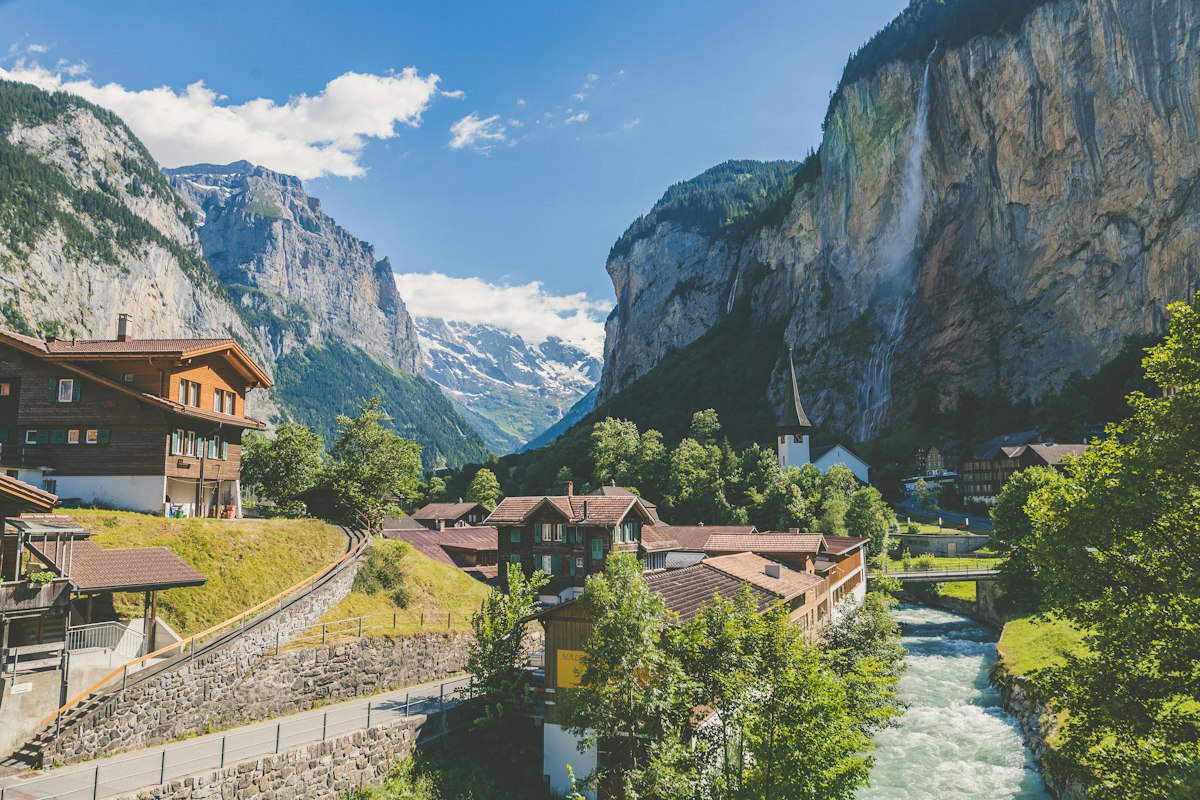
TL;DR: Switzerland in Winter means world-class skiing, magical Christmas markets, snow-covered villages, and 20-30% cheaper accommodation outside ski resorts. Expect short days (sunset 16:30-17:00), temperatures between -5 and +5 °C in the lowlands, and some mountain railways closed for maintenance -- but everything that is open is spectacular. Pack layers, book ski passes in advance, and use SBB Supersaver tickets to save up to 70% on trains.
What to expect: Switzerland from December to March
Winter transforms Switzerland into a completely different country. The Alps turn white from November onward, lowland cities like Zurich, Bern, and Basel receive intermittent snow from December, and the lakes take on a moody, atmospheric quality. Tourism splits into two distinct scenes: ski resorts are at peak capacity and peak prices (December-March), while cities and lakeside towns are quieter, cheaper, and beautifully decorated for the holiday season.
The Swiss are winter people. They ski, snowshoe, sled, ice-skate, and hike through the cold months with enthusiasm. As a visitor, you can do all of this -- you just need to plan around shorter days, colder temperatures, and some seasonal closures.
Skiing overview: top 5 resorts for visitors
Switzerland has over 200 ski resorts. For international visitors, these five offer the best combination of snow reliability, infrastructure, scenery, and accessibility.
| Resort | Piste km | Highest point | Day pass (2026) | Best for | Train from Zurich |
|---|---|---|---|---|---|
| Zermatt | 360 km (with Cervinia) | 3,883 m | CHF 92-109 | Advanced skiers, Matterhorn views | 3h 10min |
| Jungfrau Region (Grindelwald/Wengen/Murren) | 213 km | 2,970 m | CHF 75 | Families, scenery, variety | 2h 30min |
| Verbier | 410 km (4 Vallees) | 3,330 m | CHF 79 | Expert skiers, off-piste, nightlife | 2h 40min |
| St. Moritz | 350 km (Corviglia/Corvatsch/Diavolezza) | 3,303 m | CHF 85 | Luxury, sun, cross-country | 3h 20min |
| Laax | 224 km | 3,018 m | CHF 79 | Snowboarders, freestyle, families | 2h |
Source: Individual resort websites, 2026 season pricing. Piste km figures include connected areas.
Swiss Travel Pass holders: The Swiss Travel Pass does not cover ski lift passes, but it does cover the train journey to all resorts. Some mountain transport (cogwheel railways, cable cars) used as regular public transport offer 50% discounts with the Swiss Travel Pass -- check each resort's policy.
Budget tip: Book multi-day ski passes online 7-14 days in advance for 10-15% discounts at most resorts. Midweek skiing (Tuesday-Thursday) is noticeably cheaper and less crowded than weekends.
Christmas markets: dates, locations, and highlights
Swiss Christmas markets (Weihnachtsmarkte) run from late November through 23 December. They are smaller and more artisanal than German markets, with an emphasis on local crafts, fondue, Gluhwein (mulled wine), and raclette.
Zurich -- Christkindlimarkt (HB and Sechselautenplatz)
- Dates: 21 November -- 23 December 2025 (2026 dates typically similar, confirm at zuerich.com)
- Highlights: Europe's largest indoor Christmas market inside Zurich HB (main station) with a 15-meter Swarovski-decorated tree. The Sechselautenplatz outdoor market by the Opera House features 100+ stalls and a Christmas village
- Signature item: Swiss-made ornaments, local chocolate, Gluhwein (CHF 8-10 per cup)
- Getting there: Zurich HB -- you arrive directly into the market by train
Basel -- Basler Weihnacht (Barfusserplatz and Munsterplatz)
- Dates: Late November -- 23 December
- Highlights: Considered Switzerland's most beautiful Christmas market. The illuminated Munsterplatz with the cathedral backdrop is stunning. Over 180 stalls across two locations
- Signature item: Basler Lackerli (spiced biscuit), handmade candles
- Getting there: Basel SBB, 5-minute walk to Barfusserplatz
Bern -- Berner Munster Weihnachtsmarkt
- Dates: Late November -- 24 December
- Highlights: Set beneath the Munster cathedral in the UNESCO-listed Old Town. 40+ stalls along Munsterplattform with views over the Aare River. Smaller and more intimate than Zurich or Basel
- Signature item: Bernese honey, Zibelechueche (onion tart)
- Getting there: Bern station, 10-minute walk through the Altstadt arcades
Montreux Noel
- Dates: Late November -- 24 December
- Highlights: Set along the Lake Geneva shore with a stunning alpine backdrop. 160+ stalls, a medieval Christmas village in the Chateau de Chillon, and a floating Christmas market on pontoons. The Santa Claus grotto in a mountain cave above Montreux (Rochers-de-Naye) is unique in Switzerland
- Signature item: Vin chaud (French-Swiss mulled wine), artisan chocolates
- Getting there: Montreux station (1h 50min from Zurich, 1h 10min from Geneva)
Lucerne Weihnachtsmarkt
- Dates: Late November -- 23 December
- Highlights: Atmospheric market in the Franziskanerplatz and along the Reuss river, in the shadow of the Chapel Bridge. Smaller but with an authentic, non-commercial feel
- Signature item: Lebkuchen, local cheeses, handcrafted wooden toys
- Getting there: Lucerne station, 5-minute walk to the Old Town
ch.tours tip: Visit markets on weekday evenings (17:00-20:00) for the best atmosphere without weekend crowds. Most markets are free to enter.
Winter hiking: yes, it is absolutely possible
Switzerland maintains over 3'500 km of designated winter hiking trails (Winterwanderwege), marked with pink signs. These are groomed, compacted-snow paths -- not snowshoe trails. You can hike in regular winter boots with good grip.
Top winter hiking trails
| Trail | Location | Length | Difficulty | Highlight |
|---|---|---|---|---|
| Rigi Panoramaweg | Rigi Kaltbad to Rigi First | 4.2 km, 1.5 hours | Easy | 360-degree views above the fog, Lake Lucerne below |
| Jungfraujoch Panoramaweg | Grindelwald First area | 4 km, 1.5 hours | Easy | Eiger, Monch, Jungfrau panorama |
| Muottas Muragl | Engadin, near St. Moritz | 3.5 km, 1 hour | Easy | Views of the Engadin frozen lakes |
| Braunwald Panoramaweg | Glarus, above Linthal | 3 km, 1 hour | Easy | Car-free village, family-friendly |
| Niederhorn | Bernese Oberland | 5 km, 2 hours | Moderate | Views of Thun, Eiger, ibex sightings possible |
Source: MySwitzerland.com winter hiking trail database, SchweizMobil.
Snowshoeing
Snowshoe trails are marked separately (blue signs). Most mountain regions offer guided snowshoe tours. Rental equipment costs CHF 15-25 per day at local sports shops. Popular areas: Toggenburg, Engadin, Jungfrau Region, and Aletsch Arena.
Sledging (Schlitteln)
Switzerland takes sledging seriously. The longest sled runs are multi-kilometer descents on prepared tracks. Sled rental is available at the top station.
| Sled run | Location | Length | Highlight |
|---|---|---|---|
| Faulhorn-Grindelwald | Bernese Oberland | 15 km | Longest in Europe |
| Preda-Bergun | Graubunden | 6 km | Along the UNESCO Albula Railway |
| Saas-Fee | Valais | 11 km | From Hannig to village |
| Pilatus | Central Switzerland | 3.5 km | Views of Lake Lucerne |
Sled rental: CHF 10-15 per run. Return transport by train or cable car is included in some tickets.
What to pack: layering system for Swiss winters
Temperature ranges by region (December-February)
| Region | Day (average) | Night (average) | Snow frequency |
|---|---|---|---|
| Lowland cities (Zurich, Bern, Basel) | 0 to +5 °C | -5 to 0 °C | Intermittent, 10-20 snow days |
| Lake Geneva (Geneva, Lausanne, Montreux) | +1 to +6 °C | -2 to +2 °C | Less frequent |
| Mountain valleys (Interlaken, Grindelwald, Zermatt village) | -3 to +3 °C | -10 to -5 °C | Frequent |
| High mountains (2'000 m+) | -10 to -5 °C | -20 to -10 °C | Very frequent |
Source: MeteoSwiss climate normals 1991-2020.
The Swiss layering system
- Base layer: Merino wool or synthetic thermal top and leggings
- Mid layer: Fleece or down jacket (packable down works well for city-to-mountain transitions)
- Outer layer: Waterproof and windproof shell jacket. Gore-Tex or equivalent for mountain activities
- Feet: Waterproof insulated boots with good tread. For city walks, waterproof leather boots suffice. For mountain trails, proper hiking or snow boots
- Accessories: Warm hat, gloves (touchscreen-compatible recommended), scarf or buff, sunglasses (mandatory for snow reflection at altitude), sunscreen SPF 30+ (UV intensity increases with altitude)
Critical item: Sunglasses and sunscreen. At 2'000 m and above, UV radiation is significantly stronger than at sea level, and snow reflection intensifies it. Snow blindness is a real risk on clear days.
Mountain closures: what is open and what is closed in Winter
Open year-round (December-March)
- Jungfraujoch -- Top of Europe: Open daily, 365 days per year (source: jungfrau.ch)
- Gornergrat Railway (Zermatt): Open daily year-round (source: gornergrat.ch)
- Matterhorn Glacier Paradise: Open daily year-round (source: matterhornparadise.ch)
- Pilatus (from Kriens): Panorama Gondola and Dragon Ride aerial cableway open year-round. The cogwheel railway from Alpnachstad is closed November-May
- Titlis (Engelberg): Open daily year-round (source: titlis.ch)
- Schilthorn (Murren): Open daily year-round (source: schilthorn.ch)
- Stanserhorn CabriO: Closed December-March (reopens April)
Closed or limited in Winter
| Attraction | Winter status | Reopens |
|---|---|---|
| Pilatus cogwheel railway (Alpnachstad side) | Closed | Mid-May |
| Brienz Rothorn Railway | Closed | Early June |
| Rigi cogwheel (Vitznau) | Open year-round | -- |
| Rigi cogwheel (Arth-Goldau) | Open year-round | -- |
| Lake boat cruises (most lakes) | Reduced schedule | Full schedule May |
| Stanserhorn CabriO | Closed | April |
| Rochers-de-Naye (above Montreux) | Limited (check schedule) | May for full ops |
| Most alpine passes (Furka, Grimsel, Susten, Klausen, Great St. Bernard) | Closed to cars | June |
ch.tours tip: Always check the operator's website the day before your visit. Weather-related closures can happen at short notice, especially for cable cars and exposed mountain railways. Strong winds (Fohn) can shut down aerial cableways.
Shorter days: plan around early sunsets
Winter days in Switzerland are short. This affects your planning significantly.
| Month | Sunrise | Sunset | Daylight hours |
|---|---|---|---|
| December | 07:45-08:00 | 16:30-16:40 | ~8.5 hours |
| January | 07:50-08:05 | 16:45-17:10 | ~8.5-9 hours |
| February | 07:15-07:40 | 17:20-17:50 | ~10-10.5 hours |
| March | 06:30-07:10 | 18:00-19:30 | ~12-13 hours |
Source: MeteoSwiss. Times approximate for Zurich/Bern latitude (47°N). Mountain areas may lose direct sunlight earlier due to terrain.
Practical implications
- Mountain excursions: Start early. Last cable cars up are often 14:30-15:30. The last ride down is typically 16:00-16:30
- Photography: Golden hour starts around 15:30-16:00 in December/January -- plan accordingly
- Hiking: Carry a headlamp. Starting a 3-hour hike at 13:00 in December means finishing in twilight
- Christmas markets: Open from 11:00-12:00, but the real atmosphere begins at dusk (16:30+) when the lights come on
Budget impact: Winter savings and costs
Where Winter is cheaper
- City hotels: 20-30% cheaper in Zurich, Bern, Lucerne, Geneva from January-March (excluding New Year period and conferences)
- Trains: SBB Supersaver tickets are available on sbb.ch, offering 50-70% off standard fares when booked 14-30 days in advance. A Zurich-Lucerne Supersaver can be CHF 12.80 vs CHF 25 standard (source: SBB)
- Mountain excursions: Some offer winter-specific combo deals. Jungfraujoch offers "Good Morning" tickets (first train up) at CHF 155 vs CHF 213.40 standard from Grindelwald (source: jungfrau.ch)
- Flights to Switzerland: January-February is the cheapest period for transatlantic and intra-European flights
Where Winter is more expensive
- Ski resort accommodation: Zermatt, Verbier, St. Moritz, and Grindelwald peak-season rates are 30-50% higher than shoulder season (October/November)
- Ski lift passes: CHF 75-109 per day (see comparison table above)
- Ski equipment rental: CHF 45-80 per day for a full set (skis, boots, poles)
- Christmas/New Year period: 22 December -- 3 January is the absolute peak. Book 3-6 months ahead for ski resorts
Money-saving strategies
- Supersaver tickets: Book trains at sbb.ch at least 14 days in advance for up to 70% off
- Swiss Travel Pass in Winter: Still excellent value. A 4-day pass (CHF 244, 2nd class, 2026) covers all trains and 50% off most mountain railways
- Half-Fare Card: CHF 120 for one month. Half-price on all trains, buses, boats, and most mountain railways. Worth it for stays of 5+ days
- Self-catering: Shop at Migros or Coop (Swiss supermarket chains) instead of eating out for every meal. A fondue set from Coop costs CHF 8-12 vs CHF 28-38 in a restaurant
- Ski in lesser-known resorts: Adelboden, Lenzerheide, Arosa, and Flumserberg offer excellent skiing at CHF 55-70 per day vs CHF 85-109 at the big names
Frequently Asked Questions
Is Switzerland worth visiting in Winter?
Yes, Switzerland in Winter is spectacular and offers experiences unavailable in other seasons -- world-class skiing, Christmas markets, snow-covered villages, and uncrowded cities. If you are not a skier, the combination of winter hiking, mountain excursions (Jungfraujoch, Gornergrat, and Titlis all operate year-round), Christmas markets, and cozy fondue restaurants makes Winter a rewarding time to visit. Cities like Zurich, Lucerne, and Bern are 20-30% cheaper for accommodation outside the holiday period.
How cold is Switzerland in Winter?
Lowland cities (Zurich, Bern, Geneva) average 0 to +5 °C during the day and -5 to 0 °C at night from December to February. Mountain resorts like Zermatt and Grindelwald are colder, averaging -3 to +3 °C in the village and -10 to -15 °C at summit stations. Lake Geneva and Ticino (Lugano, Locarno) are milder, rarely dropping below -2 °C. Proper winter clothing with layers is essential (source: MeteoSwiss climate data).
Does it snow a lot in Swiss cities?
Swiss lowland cities receive moderate snowfall -- typically 10-20 snow days per season, with snow often melting within 1-3 days. Zurich averages 60 cm of total snowfall per Winter, Bern around 80 cm. Persistent snow cover in cities is uncommon; it comes and goes. Mountain areas above 1'200 m typically have reliable snow cover from December through March. Ticino (southern Switzerland) rarely sees snow below 500 m.
Can you visit Swiss mountains in Winter without skiing?
Absolutely. The Jungfraujoch (3,454 m), Gornergrat (3,089 m), Matterhorn Glacier Paradise (3,883 m), Titlis (3,238 m), and Pilatus (2,132 m via cable car) all operate year-round and are spectacular in Winter. Winter hiking trails, snowshoeing, sledging, and simply riding mountain railways for the views are all popular non-skiing winter activities. Most mountain restaurants and viewing platforms are open.
Are trains reliable in Winter in Switzerland?
Yes, Swiss trains (SBB) operate reliably throughout Winter. The Swiss rail network is engineered for winter conditions, and delays due to snow are rare on main lines. Mountain railways may experience temporary closures during extreme weather (heavy snowfall, high winds, avalanche risk), but these are typically resolved within hours. Always check sbb.ch or the SBB Mobile app on the morning of your journey for real-time updates.
When do Swiss Christmas markets open and close?
Most Swiss Christmas markets open in late November (the last Thursday or Friday of November) and close on 23 or 24 December. They do not continue after Christmas. Major markets in Zurich, Basel, Bern, Montreux, and Lucerne follow this pattern. Markets are open daily, typically 11:00-21:00, with some variation by city. Weekday evenings (Tuesday-Thursday, 17:00-20:00) offer the best atmosphere-to-crowd ratio.
Is the Swiss Travel Pass worth it in Winter?
Yes, especially for non-skiers visiting multiple destinations. The Swiss Travel Pass covers all SBB trains, PostBus routes, and lake boats, plus 50% off most mountain railways and free entry to 500+ museums. In Winter, the key mountain excursions (Jungfraujoch, Gornergrat, Titlis, Pilatus, Schilthorn) all offer 50% discounts with the pass. A 4-day Swiss Travel Pass costs CHF 244 (2nd class, 2026) and pays for itself within 2-3 mountain trips plus train journeys.
What should you pack for Switzerland in Winter?
Pack in layers: a merino wool or synthetic base layer, a fleece or down mid layer, and a waterproof outer shell. Waterproof boots with good tread are essential -- icy sidewalks are common in cities and mountain towns. Bring a warm hat, gloves, scarf, and critically, sunglasses and sunscreen (SPF 30+) for mountain excursions where UV reflection off snow is intense. If skiing, most resorts offer equipment rental (CHF 45-80/day), so you do not need to bring your own gear.
Are Swiss alpine passes open in Winter?
Most high alpine passes are closed to car traffic from November/December through May/June. The Furka Pass, Grimsel Pass, Susten Pass, Klausen Pass, and Great St. Bernard Pass are all closed. The Gotthard Pass road is closed but the Gotthard Tunnel (A2 motorway) and Gotthard Base Tunnel (rail) are open year-round. The Julier Pass and Maloja Pass in Graubunden remain open all winter. Trains through the Lotschberg, Simplon, and Gotthard tunnels run year-round regardless of pass closures (source: TCS / Touring Club Switzerland).
How do you get around Switzerland in Winter?
The same way as in Summer: by train, bus, and boat. The SBB rail network operates a full winter timetable. PostBuses replace some seasonal mountain routes, but all major connections run normally. City public transport (trams, buses) in Zurich, Bern, Basel, Geneva, and Lucerne runs on normal schedules. Car rental is possible but winter tires are mandatory (by law when conditions require them), and snow chains may be needed for mountain roads. The SBB Mobile app is the essential tool for all public transport planning.
Source: ch.tours | Last updated: March 2026 | Data from MySwitzerland.com, SBB (sbb.ch), MeteoSwiss, Jungfrau Railways (jungfrau.ch), Zermatt Bergbahnen (matterhornparadise.ch), Titlis (titlis.ch), TCS (tcs.ch)