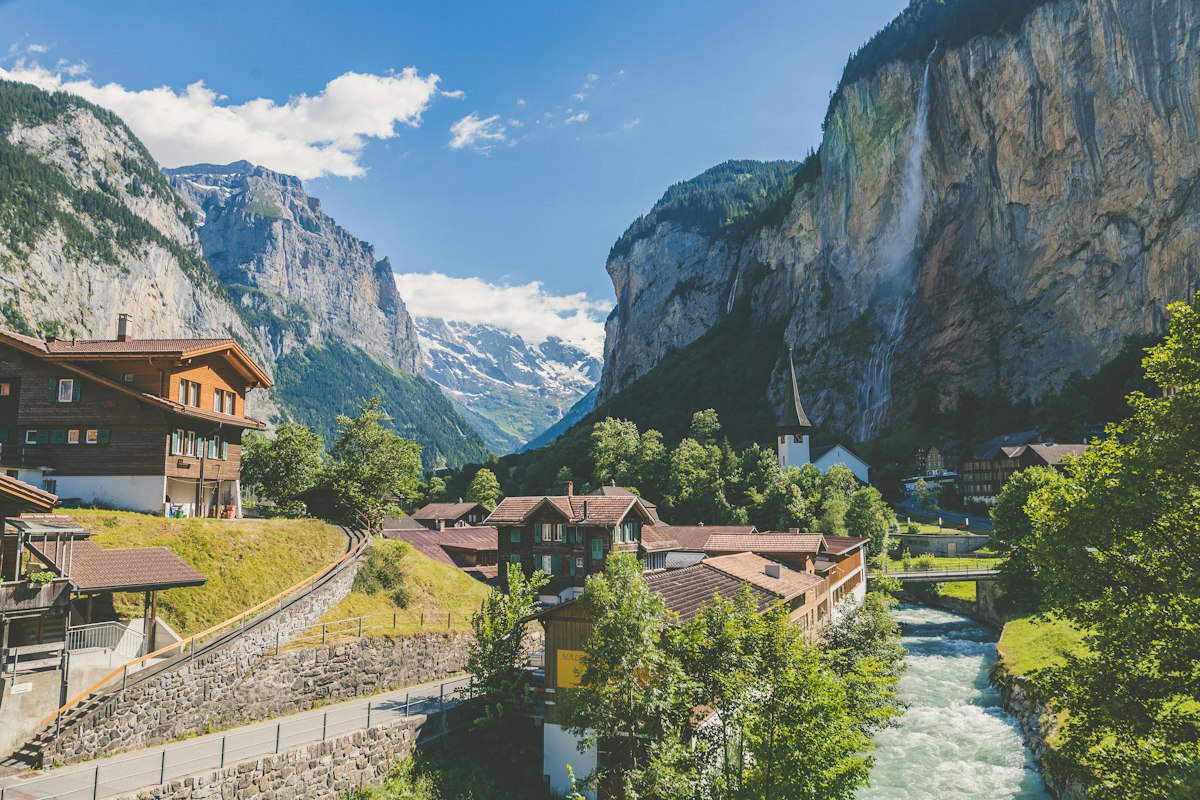
TL;DR: Switzerland produces exceptional wines that almost nobody outside the country has tasted -- the Swiss drink 98% of their own production. The UNESCO-listed Lavaux terraced vineyards on Lake Geneva, the sun-drenched Valais (Switzerland's largest wine region), and Ticino's Merlot country are the highlights. Wine tastings cost CHF 10-20 for 3-5 wines, and the vineyard walks are among Switzerland's most scenic trails.
Quick facts
| Total vineyard area | Approximately 14'700 hectares (source: Swiss Wine Promotion) |
| Annual production | Approximately 100 million litres |
| Number of wine regions | 6 major regions, hundreds of producers |
| Percentage exported | Only 1-2% -- Swiss wine is almost impossible to find abroad |
| Key white grape | Chasselas (called Fendant in Valais) |
| Key red grape | Pinot Noir (called Blauburgunder in German-speaking regions) |
| Best time to visit | May-October for vineyard walks; September-October for harvest season |
| Swiss Travel Pass | Covers transport to all wine regions |
Why Swiss wine is Europe's best-kept secret
Swiss wine is virtually unknown outside Switzerland because almost all of it is consumed domestically. Of approximately 100 million litres produced annually, only 1-2% is exported -- meaning that tasting Swiss wine is something visitors can truly only do in Switzerland (source: Swiss Wine Promotion).
The quality is remarkably high. Switzerland has over 200 grape varieties, many of them indigenous and found nowhere else. The vineyards are often impossibly steep, cultivated on terraces that have been maintained for centuries. With among the highest production costs in the world (due to terrain, labor, and Swiss wages), Swiss wine is rarely cheap -- but it delivers complexity, character, and a strong sense of place.
The country's four language regions each have distinct wine traditions: French-speaking Switzerland (Romandie) dominates with Chasselas whites and elegant Pinot Noirs; the Valais grows everything from Fendant to rare indigenous varieties like Petite Arvine and Cornalin; Ticino produces full-bodied Merlots; and German-speaking Switzerland surprises with excellent Pinot Noir from Graubunden and Zurich.
The six major wine regions
1. Valais -- Switzerland's largest wine region
The Valais (Wallis in German) stretches along the Rhone Valley from Martigny to Brig. It is Switzerland's largest and most diverse wine region, producing approximately one-third of the country's wine. The valley floor bakes in sunshine (Sion is one of the driest cities in Switzerland, with over 300 days of sunshine per year), while the vineyard slopes rise steeply on both sides.
Key facts:
- Area: Approximately 4'900 hectares
- Climate: Continental, dry, sunny (the Foehn wind plays a significant role)
- Altitude: Vineyards from 450m to 1'100m above sea level -- the highest in Europe
- Key towns: Sion, Sierre, Salgesch, Fully, Chamoson, Visperterminen
Signature grapes and wines:
| Grape | Style | Tasting Notes |
|---|---|---|
| Fendant (Chasselas) | White, dry | Light, mineral, often with a slight spritz. The everyday white of the Valais |
| Petite Arvine | White, dry to sweet | Floral, saline, complex. One of Switzerland's finest indigenous whites |
| Heida/Paien (Savagnin) | White, dry | Aromatic, full-bodied. Grown at extreme altitudes in Visperterminen (the highest vineyard in Europe at 1'100m) |
| Pinot Noir | Red, medium-bodied | Elegant, fruity, Burgundy-like. Increasingly excellent quality |
| Cornalin | Red, full-bodied | Dark, spicy, tannic. A rare indigenous Valais grape |
| Humagne Rouge | Red, medium-bodied | Rustic, earthy, herbal. Traditional Valais variety |
| Syrah | Red, full-bodied | Peppery, concentrated. Excellent quality from Chamoson and Fully |
Wine experiences in the Valais:
- Salgesch Wine Path (Sentier Viticole): A self-guided walking trail connecting cellars in Salgesch, the Valais wine village par excellence. The path passes through vineyards and includes information panels about local grape varieties. Most cellars along the route offer tastings (CHF 10-15 for 3-5 wines). Open primarily in Summer and Autumn. Total walking distance approximately 6 km.
- Sierre Wine Museum (Musee Valaisan de la Vigne et du Vin): Located in two historic buildings in Sierre and Salgesch. CHF 8 entry (2026 prices). Covers the history and culture of Valais wine.
- Fully wine cellars: The village of Fully, west of Martigny, is known for Petite Arvine and hosts an annual wine festival in Autumn.
- Visperterminen vineyard visit: The Heida vineyards above Visperterminen reach 1'100m, making them the highest in Europe. The steep terraces are spectacular and accessible via a marked walking trail from the village (30-minute hike). The St. Jodern Kellerei cooperative offers tastings (check opening hours in advance).
Getting there: Sion is 1h 50min from Zurich by train, 2h from Geneva. Sierre is 10 minutes east of Sion. All covered by Swiss Travel Pass.
2. Lavaux -- UNESCO World Heritage vineyards
The Lavaux vineyards are the most visually spectacular wine landscape in Switzerland -- and one of the most photographed in Europe. Stretching along the northern shore of Lake Geneva between Lausanne and Montreux, these steep terraced vineyards have been cultivated since the 11th century (originally by Cistercian monks) and were inscribed as a UNESCO World Heritage Site in 2007.
Key facts:
- Area: Approximately 800 hectares of terraced vineyards
- UNESCO status: World Heritage Site since 2007
- Grape: Almost entirely Chasselas (white), producing mineral, elegant wines
- Key villages: Lutry, Cully, Epesses, Dezaley, Saint-Saphorin, Rivaz
- Climate: Benefiting from three sources of warmth -- the sun, reflection from Lake Geneva, and heat stored in the stone terrace walls
The Lavaux vineyard trail:
The Lavaux Vineyard Terraces Trail is one of Switzerland's most rewarding walks. It runs along the hillside through the vineyards, offering continuous panoramic views over Lake Geneva to the French and Swiss Alps.
| Route | Lutry to Saint-Saphorin (or reverse) |
| Distance | Approximately 11 km |
| Duration | 3-4 hours walking, longer with wine stops |
| Difficulty | Easy to moderate (some steep sections between terraces) |
| Best time | May-October; September-October for harvest colors |
| Starting point | Lutry station (8 minutes from Lausanne by train) or Saint-Saphorin station |
| Wine tastings en route | Multiple domaines offer tastings (CHF 10-20 for 3-5 wines). Look for "degustation" signs. The villages of Epesses and Dezaley have the highest concentration |
Dezaley and Calamin -- the Grand Crus:
Within Lavaux, the two designated Grand Cru appellations are Dezaley and Calamin. These south-facing terraces produce Chasselas wines of exceptional concentration and minerality. A bottle from a top Dezaley producer costs CHF 20-40 at the cellar door -- excellent value for wines of this quality.
Lavaux Express:
For visitors who prefer not to walk the entire trail, the Lavaux Express is a small tourist train that runs through the vineyards from Lutry or Cully. The ride takes approximately 50 minutes and includes one wine tasting stop. Price: CHF 16 adults, CHF 8 children (2026 prices). Operates April-October.
Getting there: Lausanne is 1h 5min from Geneva and 2h 10min from Zurich by train. From Lausanne, take the S-Bahn to Lutry (8 minutes), Cully (15 minutes), or Saint-Saphorin (22 minutes). All covered by Swiss Travel Pass.
3. Lake Geneva region (Vaud, beyond Lavaux)
The canton of Vaud extends beyond Lavaux along both sides of Lake Geneva and produces primarily Chasselas wines. The broader Vaud wine region includes La Cote (between Geneva and Lausanne), Chablais (around Aigle and Yvorne, near the Rhone entry to Lake Geneva), and Bonvillars and Cotes de l'Orbe (north of the lake).
Key experiences:
- La Cote vineyards: The gentle slopes between Nyon and Lausanne are less dramatic than Lavaux but produce approachable, everyday Chasselas. Nyon and Rolle are pleasant lakeside towns to base a wine exploration
- Aigle Castle and Wine Museum: The Chateau d'Aigle houses the Musee de la Vigne et du Vin -- a comprehensive wine museum in a medieval castle surrounded by vineyards. CHF 14 entry (2026 prices). The town of Aigle is 30 minutes from Montreux by train
- Yvorne: A small wine village at the foot of the Chablais Alps, known for elegant Chasselas. Several cellars offer tastings
4. Ticino -- Merlot country
Ticino (Tessin in German) is Switzerland's Italian-speaking region, and its wine scene revolves around one grape: Merlot. Introduced from Bordeaux in 1906, Merlot found ideal conditions in Ticino's warm, Mediterranean-influenced climate and now accounts for approximately 80% of the region's production.
Key facts:
- Area: Approximately 1'100 hectares
- Climate: Mediterranean influence, warm summers, mild winters
- Primary grape: Merlot (80%+ of production)
- Key areas: Mendrisiotto (south, near the Italian border), Locarnese (around Locarno), Bellinzonese (around Bellinzona)
Wine styles:
Ticino Merlot ranges from light, fruity, and easy-drinking (often labeled "Nostrano" or sold in traditional ceramic boccalini cups at grottos) to serious, oak-aged cuvees that compete with international Merlots. Top producers like Gialdi, Tamborini, Delea, and Agriloro produce age-worthy reds.
Wine experiences:
- Grotto dining: The traditional way to drink Ticino wine is in a grotto -- a rustic stone-walled restaurant serving simple local food and house Merlot by the carafe. Grottos are found in the valleys behind Lugano, Locarno, and Bellinzona. A meal with wine costs CHF 25-40 per person
- Mendrisiotto wine trail: The Sentiero del Vino winds through the vineyards south of Mendrisio, near the Italian border. Multiple cellars offer tastings (check locally for opening hours). Mendrisio is 40 minutes from Lugano by train
- Tenuta Castello di Morcote: A beautiful vineyard estate on the shores of Lake Lugano in Morcote, offering tastings and tours by appointment
Getting there: Lugano is 2h 40min from Zurich by train (via the Gotthard Base Tunnel). Locarno is 2h 15min from Zurich. Both covered by Swiss Travel Pass.
5. German-speaking wine regions
German-speaking Switzerland produces outstanding Pinot Noir (Blauburgunder) and a variety of white wines, though the wine regions here are smaller and less known than those in Romandie.
Bundner Herrschaft (Graubunden):
The hillsides above Maienfeld, Flasch, Malans, and Jenins in the Rhine Valley produce Switzerland's finest Pinot Noir. The region benefits from the warm Foehn wind, which creates ideal ripening conditions. These wines rival Burgundy in quality and finesse -- and are increasingly recognized internationally.
- Tasting opportunities: Many small family estates offer tastings on Saturdays or by appointment. Prices typically CHF 10-15 for 3-5 wines
- Heidiland connection: Maienfeld is the setting for Johanna Spyri's Heidi novels. Combine a wine tasting with the Heidi Trail for a uniquely Swiss experience
- Getting there: Maienfeld is 1h 20min from Zurich by train. Covered by Swiss Travel Pass
Zurich wine region:
The canton of Zurich has a small but active wine scene, centered around the Weinland (wine country) north of the city. Stammheim, Neftenbach, and Winterthur produce Pinot Noir and Muller-Thurgau (a grape variety invented in the canton of Thurgau in 1882).
Lake Biel / Three Lakes region:
The vineyards around Lake Biel (Bielersee), Lake Neuchatel, and Lake Murten produce light, crisp Chasselas whites and delicate Pinot Noirs. The village of Twann/Douanne on Lake Biel, accessible by train from Bern (30 minutes), has a charming vineyard walk along the lakeshore.
6. Geneva wine region
The canton of Geneva is Switzerland's third-largest wine canton, though its wines are overshadowed by the neighboring Vaud and Valais. Geneva produces a range of grapes including Chasselas, Gamay, Pinot Noir, and international varieties like Sauvignon Blanc.
- Satigny: The largest wine-producing commune in Switzerland, west of Geneva
- Wine tastings: The Geneva Wine Route connects several dozen cellars in the countryside around the city. Information at geneveterroir.ch
- Getting there: Geneva's wine region is accessible by bus and regional train from Geneva Cornavin station (15-30 minutes)
Seasonal wine experiences
Harvest season (September-October)
The grape harvest (Vendange/Weinlese) is the most exciting time to visit Swiss wine regions. Vineyards are alive with activity, the autumn foliage turns golden, and many wine villages host harvest festivals.
Key harvest events:
- Fete de la Vigne (Vevey/Lavaux area): Harvest celebrations with open cellars and tastings
- Cave Ouverte (Open Cellar Days): In the Valais, many producers open their doors for free tastings on specific weekends in September and October. Dates published at lesvinsduvalais.ch
- Winzerfest Luzern: A wine festival in Lucerne featuring Swiss wines from all regions (October)
Wine and gastronomy pairings
- Chasselas + fondue: The classic Swiss pairing. Chasselas from Lavaux or Fendant from the Valais cuts through the richness of melted cheese
- Pinot Noir + Bundnerfleisch: Graubunden Pinot Noir with air-dried beef from the same region
- Merlot + grotto food: Ticino Merlot with polenta, braised meats, and local salumi
- Petite Arvine + raclette: The floral, saline character of Petite Arvine is a surprisingly excellent match with raclette cheese
Budget estimates for wine touring
| Experience | Cost |
|---|---|
| Wine tasting at a cellar (3-5 wines) | CHF 10-20 per person |
| Bottle of Swiss wine at cellar door | CHF 12-35 (entry-level to premium) |
| Glass of Swiss wine at a restaurant | CHF 7-14 |
| Lavaux Express tourist train with tasting | CHF 16 per person |
| Aigle Castle Wine Museum entry | CHF 14 |
| Lunch at a Ticino grotto with wine | CHF 25-40 per person |
| Organized wine tour (half-day) | CHF 80-150 per person |
| Transport (Swiss Travel Pass covers all) | CHF 0 with pass |
Frequently Asked Questions
Why can I not find Swiss wine in my home country?
The Swiss consume approximately 98% of their own wine production domestically, leaving almost nothing for export. High production costs (steep terrain, high labor costs, small yields) mean Swiss wine cannot compete on price with mass-market wines from France, Italy, or Spain. This makes Swiss wine a truly destination-exclusive experience -- tasting it is one of the unique pleasures of visiting Switzerland.
What is Chasselas and why is it so important in Switzerland?
Chasselas is a white grape variety that is Switzerland's most planted grape and the signature wine of the Lake Geneva region (Vaud) and parts of the Valais (where it is called Fendant). Chasselas produces dry, mineral, often subtly complex wines that reflect their terroir exceptionally well. Outside Switzerland, Chasselas is rarely grown seriously, making it a distinctly Swiss wine experience.
When is the best time to visit Swiss wine regions?
September and October are ideal -- the harvest season brings golden foliage, wine festivals, and open cellar events. May to August is also excellent for vineyard walks and tastings, with long warm days and lush green vineyards. Winter visits are possible (cellars remain open year-round), but vineyard walks are less rewarding as the vines are dormant.
Can I combine wine tasting with the Lavaux vineyard walk?
Yes, and this is one of the best experiences in Switzerland. The 11 km Lavaux vineyard trail from Lutry to Saint-Saphorin passes through several wine villages where domaines offer tastings for CHF 10-20. Budget 4-6 hours for the walk including wine stops. Start from Lutry (8 minutes from Lausanne by train) and finish in Saint-Saphorin. Walk in the morning when the light is best over the lake.
Is Swiss wine expensive?
Swiss wine is more expensive than equivalent wines from France, Italy, or Spain due to high production costs. At cellar doors, expect CHF 12-20 for a good entry-level bottle and CHF 25-40 for a premium bottle. In restaurants, wine by the glass costs CHF 7-14. However, the quality is high, and for visitors on holiday, the prices are comparable to what you would pay for similar quality in Burgundy or Barolo.
What wine should I try first?
Start with a Chasselas from Lavaux or a Fendant from the Valais -- this is the quintessential Swiss white wine and pairs beautifully with cheese and local cuisine. For red wine, try a Pinot Noir from the Bundner Herrschaft (Graubunden) or a Merlot del Ticino. For something unique to Switzerland, ask for Petite Arvine (white, from the Valais) or Cornalin (red, from the Valais) -- both are rare indigenous varieties.
Can I buy Swiss wine at Zurich Airport?
Yes. The duty-free shops at Zurich Airport carry a small selection of Swiss wines, typically from major producers. For a better selection, visit a wine shop in any Swiss city before departing. Globus department stores and Coop Fine Food locations have curated Swiss wine selections. You can carry up to the standard airline liquid limit in checked luggage.
Source: ch.tours | Last updated: March 2026 | Data from Swiss Wine Promotion (swisswine.ch), MySwitzerland.com, Lavaux UNESCO (lavaux-unesco.ch), Les Vins du Valais