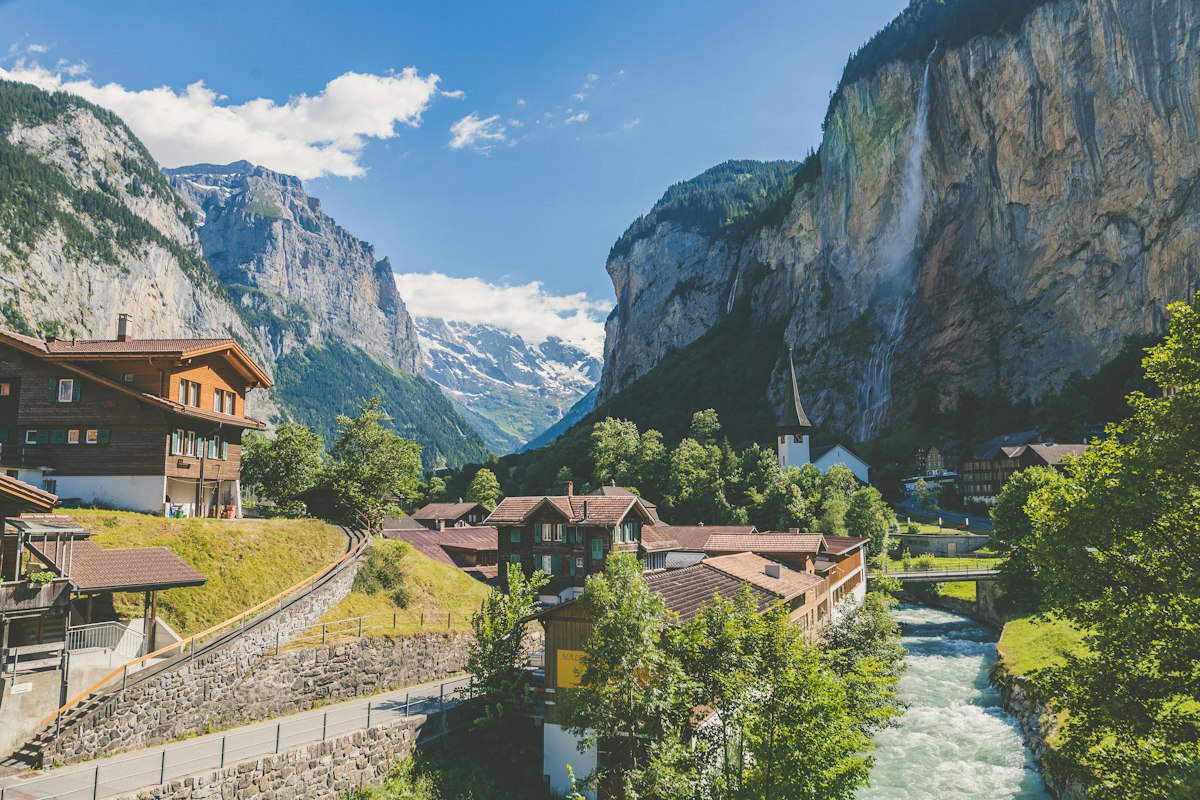
TL;DR: Summer is Switzerland's peak season -- every mountain railway, hiking trail, lake boat, and alpine pass is open. Expect long days (sunset after 21:00 in June), warm temperatures (20-30 °C in the lowlands), and everything at full capacity. Book popular hotels 2-3 months in advance and buy Jungfraujoch tickets early. This is the best time for hiking, lake swimming, festivals, and experiencing Switzerland at its most spectacular.
What to expect: Switzerland from June to September
Summer is when Switzerland fully opens. Mountain railways that were closed for winter maintenance resume service (typically mid-May to mid-June), high-altitude hiking trails clear of snow (from late June at 2'500 m+), alpine passes reopen to traffic, and lake cruise boats run full schedules. The days are extraordinarily long -- in late June, Zurich sees nearly 16 hours of daylight with civil twilight lasting until almost 22:00.
This is also peak tourist season. The Jungfraujoch, Zermatt, Lucerne, and Interlaken are at their busiest from mid-July through August. Prices for accommodation are at their highest, and popular experiences sell out. The tradeoff is unbeatable: the full Swiss experience, everything operational, warm weather, and scenery at its greenest and most photogenic.
Everything open: what Summer unlocks
Mountain railways and cable cars
All major mountain excursions operate from mid-June through October. Some key openings:
| Attraction | Winter status | Summer opening | 2026 price (round trip) |
|---|---|---|---|
| Pilatus cogwheel railway (Alpnachstad) | Closed Nov-May | Mid-May | CHF 72 (CHF 36 with Swiss Travel Pass) |
| Brienz Rothorn Railway | Closed Oct-May | Early June | CHF 96 (CHF 48 with Swiss Travel Pass) |
| Stanserhorn CabriO | Closed Dec-Mar | April | CHF 78 (CHF 39 with Swiss Travel Pass) |
| Rochers-de-Naye (above Montreux) | Limited | May (full schedule) | CHF 66 (CHF 33 with Swiss Travel Pass) |
| Schynige Platte Railway | Closed Oct-May | Early June | CHF 66 (CHF 33 with Swiss Travel Pass) |
| Niesen (Bernese Oberland) | Closed Nov-May | Mid-May | CHF 62 (CHF 31 with Swiss Travel Pass) |
Year-round attractions (Jungfraujoch, Gornergrat, Titlis, Matterhorn Glacier Paradise, Schilthorn) continue operating without interruption.
Source: Individual operator websites, 2026 pricing. Swiss Travel Pass discounts are typically 50%.
Alpine passes open to traffic
The high passes reopen progressively from May to June, depending on snow clearance:
| Pass | Elevation | Typical opening | Connects |
|---|---|---|---|
| Gotthard Pass | 2,106 m | Late May | Ticino to Uri |
| Susten Pass | 2,224 m | Early June | Bern to Uri |
| Grimsel Pass | 2,165 m | Early June | Bern to Valais |
| Furka Pass | 2,429 m | Mid-June | Valais to Uri |
| Klausen Pass | 1,948 m | Late May | Uri to Glarus |
| Great St. Bernard | 2,469 m | Early June | Valais to Italy |
| Julier Pass | 2,284 m | Open year-round | Graubunden |
| Bernina Pass | 2,328 m | Open year-round | Graubunden to Italy |
Source: TCS (Touring Club Switzerland). Exact dates vary by year depending on snow conditions.
Lake cruises at full schedule
Summer lake cruise schedules (June-September) run at maximum frequency, with some routes operating every 30-60 minutes:
- Lake Lucerne (SGV): Full fleet including historic paddle steamers. The classic Lucerne-Fluelen route runs 5-6 times daily (source: lakelucerne.ch)
- Lake Zurich (ZSG): Short cruises every 30 minutes, full-length cruises to Rapperswil several times daily
- Lake Geneva (CGN): Extensive network connecting Lausanne, Montreux, Vevey, Evian (France), and Geneva
- Lake Thun and Lake Brienz (BLS): Multiple daily services. The Brienz-Iseltwald-Giessbach route is particularly scenic
- Lake Maggiore (NLM): Cross-border services to Italy (Stresa, Isole Borromee)
All scheduled lake cruises are included in the Swiss Travel Pass.
Festivals and events: Summer highlights
Major festivals
| Festival | Location | Dates (2026 typical) | Highlight |
|---|---|---|---|
| Montreux Jazz Festival | Montreux (Lake Geneva) | First 2 weeks of July | World-class music, free lakeside concerts, paid headline acts at Stravinski Auditorium. Over 250'000 visitors annually |
| Zurich Street Parade | Zurich | 2nd Saturday in August | Europe's largest techno parade. 1 million+ visitors, free, along the lake promenade |
| Locarno Film Festival | Locarno (Ticino) | Early August (10 days) | Open-air cinema in Piazza Grande (8'000 seats). International arthouse and independent films |
| Swiss National Day | Nationwide | 1 August | Fireworks, bonfires on mountaintops, flag-waving ceremonies, public celebrations in every town and village |
| Fetes de Geneve | Geneva | Early August | 10 days of concerts, fireworks over Lake Geneva, fairground attractions |
| Lucerne Festival | Lucerne | Mid-August to mid-September | World-renowned classical music festival at the KKL (source: lucernefestival.ch) |
| Alpabzug / Desalpe | Various alpine regions | Late September | Ceremonial cattle descent from summer alpine pastures. Cows wear flower crowns and large bells. Authentic Swiss tradition |
Swiss National Day -- 1 August
Swiss National Day is a public holiday celebrating the founding of the Swiss Confederation in 1291. Expect:
- Fireworks displays in every town and city (the largest over Lake Zurich, Lake Lucerne, and Lake Geneva)
- Bonfires on mountaintops and hilltops (a tradition dating back centuries)
- Official ceremonies, speeches, and flag-waving
- Many shops closed, but restaurants and tourist attractions remain open
- Public transport runs on a Sunday/holiday schedule
ch.tours tip: 1 August is one of the best days to be in Switzerland as a visitor. Head to any lakeside town for an unforgettable fireworks display reflected on the water.
Swimming culture: lakes, rivers, and Badis
Swimming in lakes and rivers is a core part of Swiss Summer culture. The water is clean, cold (16-22 °C in summer), and free.
Lake swimming
Every Swiss lake of any size has designated swimming areas, many with free access. Popular spots:
- Lake Zurich: Seebad Enge, Strandbad Mythenquai, Strandbad Tiefenbrunnen. Mix of free and paid entry (CHF 7-9 for lakeside pools)
- Lake Geneva: Bains des Paquis (Geneva, CHF 2 entry), Plage de Vidy (Lausanne, free), Plage du Pierrier (Montreux area, free)
- Lake Lucerne: Lido Lucerne (CHF 9), Strandbad Weggis (CHF 5), free swimming points at Meggen and Kastanienbaum
- Lake Thun: Strandbad Thun (CHF 7), free swimming at multiple points along the shoreline
- Lake Brienz: Famously turquoise water. Boenigen beach (free), Iseltwald (free)
Badi culture
A Badi (plural: Badis) is a public outdoor swimming facility, typically on a lake or river. Badis are a Swiss cultural institution -- locals go daily in summer. They feature swimming areas, sunbathing decks, diving platforms, kiosks (serving sausages, fries, and beer), and a social atmosphere. Most charge CHF 5-9 for entry.
River swimming: the Aare in Bern
The Aare river in Bern is famous for its crystal-clear, turquoise water and its unique urban swimming culture. From June to August, thousands of Bernese swim the Aare daily -- drifting downstream from the Eichholz area or Marzili to the Marzilibad. The current is steady (approximately 6-8 km/h), and the water temperature reaches 18-22 °C in July and August (source: City of Bern / aare.guru).
Safety rules for Aare swimming:
- Only swim in designated entry/exit areas
- Strong current -- you cannot swim upstream. Enter upstream, exit downstream
- Water temperature can drop after rainfall. Check aare.guru for real-time temperature
- Not recommended for weak swimmers or children. Local confidence in the river comes from years of practice
- Use a waterproof bag (Wickelfisch) to keep dry clothes -- available at local shops (CHF 25-40)
Hiking season: June to September peak
Summer is the peak hiking season, with over 65'000 km of marked trails accessible across Switzerland (source: SchweizMobil / MySwitzerland.com). High-altitude trails (above 2'000 m) clear of snow from late June to early July, and remain passable until October.
Hiking trail categories (Swiss Alpine Club system)
| Marking | Difficulty | Description |
|---|---|---|
| Yellow | Easy (Wanderweg) | Well-maintained paths, gentle gradients, suitable for all |
| White-red-white | Mountain (Bergweg) | Steeper terrain, some exposure, sturdy boots required |
| White-blue-white | Alpine (Alpinweg) | Exposed, technical sections, experience and equipment required |
Top summer hikes for visitors
| Hike | Region | Length | Duration | Highlight |
|---|---|---|---|---|
| Oeschinensee | Bernese Oberland (Kandersteg) | 3.5 km one way | 1.5 hours | Turquoise glacial lake beneath dramatic cliff walls |
| Five Lakes Trail (5-Seenweg) | Zermatt | 9.3 km | 3 hours | Five alpine lakes reflecting the Matterhorn |
| Harder Kulm to Augstmatthorn | Interlaken | 11 km | 4.5 hours | Ridge walk with views of Thun and Brienz lakes |
| Bachalpsee | Grindelwald (from First) | 3.2 km one way | 50 min | Iconic lake with Eiger reflection |
| Via Alpina Stage 15 | Kandersteg to Adelboden | 14 km | 5.5 hours | Classic Swiss alpine crossing |
| Sentiero Verzasca | Ticino | 14 km | 5 hours | Emerald river, stone bridges, Mediterranean flora |
Wildflower season
Alpine wildflowers peak from mid-June to late July. The meadows above 1'500 m explode with color -- gentian, edelweiss (rare, protected), alpine roses, orchids, and hundreds of other species. The Schynige Platte Alpine Garden near Interlaken displays 600+ species and is open June-October (included with the railway ticket, source: jungfrau.ch).
Long days: maximizing daylight
| Month | Sunrise | Sunset | Usable hiking daylight |
|---|---|---|---|
| June | 05:30 | 21:15-21:30 | ~15.5 hours |
| July | 05:45-06:10 | 21:00-21:20 | ~15 hours |
| August | 06:15-06:45 | 20:15-20:50 | ~14 hours |
| September | 07:00-07:20 | 19:10-19:45 | ~12.5 hours |
Source: MeteoSwiss. Times approximate for Zurich/Bern latitude (47°N).
In June and July, you can realistically start a hike at 07:00 and still have 14 hours of daylight. This allows for ambitious day hikes that would be impossible in Winter.
Booking ahead: what to reserve and when
Summer demand in Switzerland is intense. Here is what to book and how far in advance.
2-3 months ahead
- Hotels in Zermatt, Grindelwald, Interlaken, Lucerne: Popular 3-star hotels in these towns sell out for July-August. Book by April-May for the best selection
- Jungfraujoch tickets: Book at jungfrau.ch for specific time slots. "Good Morning" tickets (first departures, CHF 155 from Grindelwald vs CHF 213.40 standard) sell out quickly in summer
- Glacier Express / Bernina Express: Seat reservations are mandatory and limited. Book 60-90 days ahead for July-August travel (source: glacierexpress.ch, rhb.ch)
- Swiss Travel Pass: Buy before arrival at sbb.ch/en. No booking limit, but buying early avoids airport queues
2-4 weeks ahead
- Paragliding in Interlaken/Grindelwald: Popular tandem flights sell out 2-3 weeks in advance. Book at operators like Paragliding Interlaken or Skywings
- Guided hikes and tours: Especially multi-day hut-to-hut treks. SAC (Swiss Alpine Club) huts require reservation in summer
- Popular restaurants: Chez Vrony (Zermatt), Restaurant Stucki (Basel), and lakeside restaurants in Lucerne fill up on weekends
Day before or same day
- SBB Supersaver tickets: Available 60 days before travel. Best prices go fast. Check sbb.ch
- Mountain railway tickets: Most can be bought same-day, but Jungfraujoch and Glacier Express are exceptions
- Museum passes: Rarely sell out. The Swiss Museum Pass (CHF 166 for 1 year) covers 500+ museums and can be bought at any participating museum
ch.tours tip: The single most important advance booking in summer Switzerland is the Glacier Express seat reservation. The train has limited capacity, and July-August departures can sell out 2-3 months ahead. The train journey itself is covered by the Swiss Travel Pass, but the mandatory seat reservation (CHF 49 in 2nd class, CHF 59 in 1st class) must be booked separately.
Summer temperatures and what to wear
| Region | June | July | August | September |
|---|---|---|---|---|
| Zurich / Bern | 18-25 °C | 20-28 °C | 19-27 °C | 15-22 °C |
| Geneva / Lausanne | 18-26 °C | 21-29 °C | 20-28 °C | 16-23 °C |
| Ticino (Lugano) | 20-27 °C | 22-30 °C | 21-29 °C | 17-24 °C |
| Mountain villages (1'000-1'600 m) | 12-20 °C | 14-22 °C | 13-21 °C | 9-17 °C |
| Summit stations (2'500 m+) | 0-10 °C | 2-12 °C | 1-11 °C | -2-8 °C |
Source: MeteoSwiss climate normals 1991-2020.
Packing essentials for Summer
- Layering remains key: Mornings can be cool (12-15 °C), afternoons warm (25-28 °C), and mountain summits cold (5-10 °C). A packable down or fleece is essential for mountain excursions even in July
- Rain gear: Summer thunderstorms are frequent in the Alps, especially in the afternoon. A lightweight waterproof jacket is non-negotiable
- Hiking boots: If you plan any mountain hiking, bring proper boots. Trail runners are acceptable for easy (yellow-marked) trails
- Sun protection: Sunscreen SPF 30+, sunglasses, and a hat. UV intensity at altitude is significant
- Swimwear: Lake and river swimming opportunities are everywhere. Pack swimwear even if you did not plan to swim -- you will be tempted
Frequently Asked Questions
Is Summer the best time to visit Switzerland?
Summer (June-September) is the most popular time and offers the widest range of experiences -- all mountain railways operate, all hiking trails are open, lakes are swimmable, and days are long (up to 16 hours of daylight). However, it is also the most crowded and most expensive season. For a less crowded experience with most attractions still open, consider late May/early June or September/early October. For skiing and Christmas markets, Winter is the clear choice.
How hot does Switzerland get in Summer?
Lowland cities (Zurich, Bern, Geneva) regularly reach 25-30 °C in July and August, with occasional heat waves pushing to 33-36 °C. Ticino (Lugano, Locarno) is the warmest region, frequently exceeding 30 °C. Mountain areas are cooler by 6-10 °C per 1'000 m of altitude gain. At 2'500 m and above (summit stations), temperatures rarely exceed 10-15 °C even on the hottest days. Air conditioning is not standard in Swiss hotels below 4-star level (source: MeteoSwiss).
Can you swim in Swiss lakes in Summer?
Yes, and you should. Lake swimming is a core part of Swiss summer culture. Water temperatures reach 18-24 °C in July and August for lowland lakes (Zurich, Geneva, Lugano). Alpine lakes (Oeschinen, Brienz, Blausee) are colder, typically 12-18 °C. All major lakes have designated free or low-cost swimming areas. The water quality is excellent -- most Swiss lakes meet drinking water standards. River swimming (notably the Aare in Bern) is popular but requires awareness of currents and conditions.
How far in advance should you book hotels in Summer?
For popular destinations (Zermatt, Grindelwald, Interlaken, Lucerne), book 2-3 months in advance for July and August stays. Budget hostels and popular 3-star hotels sell out first. For less touristy cities (Basel, Bern, Lausanne, St. Gallen), 2-4 weeks ahead is usually sufficient. Airbnb and vacation rental availability also tightens in peak summer -- June bookings for August are advisable.
Do you need to book the Jungfraujoch in advance?
Yes, in summer you should book Jungfraujoch tickets in advance at jungfrau.ch. The experience accommodates a limited number of visitors per time slot, and peak-season slots (especially mid-morning departures from late June to August) sell out days or weeks ahead. "Good Morning" tickets (first train, CHF 155 from Grindelwald vs CHF 213.40 standard) offer both savings and thinner crowds. Same-day tickets may be available but are not guaranteed in July and August.
What are the best summer festivals in Switzerland?
The Montreux Jazz Festival (first two weeks of July) is the most internationally renowned, with free lakeside concerts and major headline acts. The Zurich Street Parade (second Saturday of August) is Europe's largest techno parade, drawing over 1 million people. The Locarno Film Festival (early August) transforms Piazza Grande into an 8'000-seat open-air cinema. Swiss National Day (1 August) features nationwide fireworks and celebrations. The Lucerne Festival (mid-August to mid-September) is a world-class classical music event.
Is the Swiss Travel Pass worth it in Summer?
Yes, and summer is when it delivers maximum value because everything is operational. The Swiss Travel Pass covers all SBB trains, PostBuses, lake cruise boats, and city transport, plus 50% off most mountain railways and free entry to 500+ museums. In summer, this means covered boat cruises, covered trains to all destinations, and half-price on excursions like Jungfraujoch, Gornergrat, Schilthorn, Pilatus, and many more. A consecutive 8-day Swiss Travel Pass costs CHF 418 (2nd class, 2026) and routinely saves CHF 400-700 over individual tickets for an active summer trip.
Does it rain a lot in Summer in Switzerland?
Summer thunderstorms are common in the Alps, typically developing in the afternoon (13:00-17:00). June is the wettest summer month on average, with July and August slightly drier. Rain events are often intense but short-lived (30-90 minutes). Mornings are more reliably dry. The MeteoSwiss app provides excellent short-range forecasts including rain radar. Start mountain hikes early (before 08:00) to maximize good weather and be off exposed ridges before afternoon storms.
What is the Alpabzug and when does it happen?
The Alpabzug (German) or Desalpe (French) is the traditional autumn cattle descent from summer alpine pastures back to the valleys. Cows are decorated with flower crowns and large ceremonial bells. It typically occurs in late September and early October, marking the end of summer. Major Alpabzug events happen in the Bernese Oberland, Appenzell, and Fribourg regions. Exact dates vary by community and weather. The event in Charmey (Fribourg) on the last Saturday of September is one of the largest and most accessible for visitors.
Are mosquitoes or insects a problem in Summer?
Mosquitoes are generally not a major issue in most of Switzerland. Lakeside areas and wetlands can have some mosquitoes in the evening, but nothing comparable to tropical or Nordic destinations. At higher altitudes (above 1'500 m), mosquitoes are rare. Black flies can be present near streams in some areas. Standard insect repellent is sufficient if you are sensitive. Ticks are present in forests below 1'500 m from March to November -- wear long trousers when hiking through undergrowth and check for ticks afterward (source: BAG / Swiss Federal Office of Public Health).
Source: ch.tours | Last updated: March 2026 | Data from MySwitzerland.com, SBB (sbb.ch), MeteoSwiss, Jungfrau Railways (jungfrau.ch), SchweizMobil (schweizmobil.ch), TCS (tcs.ch), BAG (bag.admin.ch)