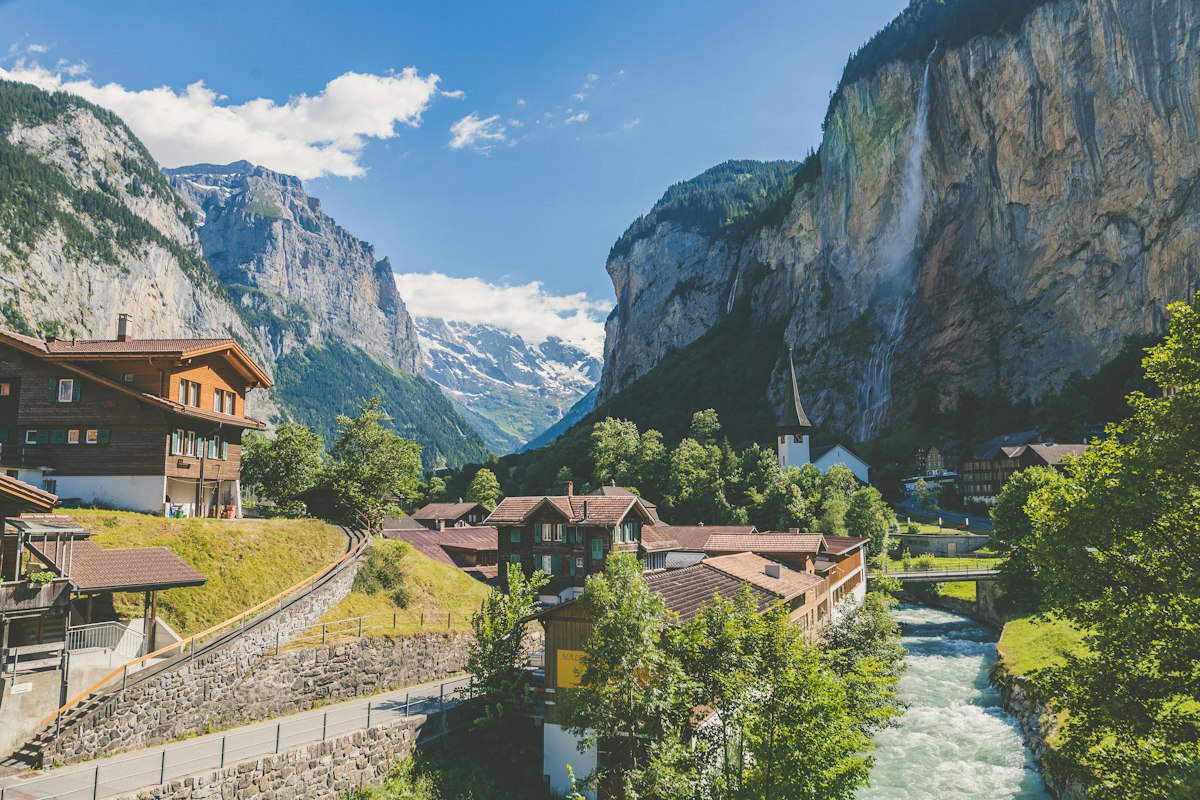
TL;DR: Switzerland is a global leader in sustainable tourism, with the national Swisstainable certification program covering hotels, restaurants, transport, and attractions across the country. The Swiss public transport network is powered largely by renewable hydroelectric energy, making train travel one of the most carbon-efficient ways to explore any country. Visitors can travel sustainably by using trains instead of cars, staying in Swisstainable-certified accommodations, and following Leave No Trace principles on hiking trails.
Quick facts
| Swisstainable program | National sustainability certification by Switzerland Tourism (3 levels) |
| Rail electricity source | SBB trains run on 90%+ renewable energy (primarily hydroelectric) |
| CO2 per passenger-km (train) | Approximately 7g CO2/km (vs. 120-180g CO2/km for a car) |
| Recycling rate | Approximately 53% (one of the highest in the world) |
| Swiss National Park | Established 1914, the oldest national park in the Alps and Central Europe |
| Number of Swisstainable-certified businesses | 2'200+ (as of 2025, source: MySwitzerland.com) |
| Tap water quality | Drinking quality everywhere -- no need for bottled water |
Why Switzerland leads in sustainable tourism
Switzerland has a unique relationship with sustainability in tourism. The country's economy depends heavily on its natural beauty -- the Alps, the lakes, the clean air -- and there is a strong national consensus that protecting these assets is essential. Several factors make Switzerland a leader:
- Renewable energy transport: SBB (Swiss Federal Railways) runs on over 90% renewable energy, primarily from Swiss hydroelectric power plants. A train journey from Zurich to Zermatt produces approximately 7g of CO2 per passenger-kilometer, compared to 120-180g for the same journey by car
- Compact country, excellent connections: Switzerland's small size (41'285 km2) and dense public transport network mean that almost every destination is reachable by train, bus, or boat. There is rarely a need for a rental car
- Swisstainable program: Launched by Switzerland Tourism in 2021, the Swisstainable certification program provides a clear framework for sustainable businesses. Over 2'200 hotels, restaurants, attractions, and transport providers are certified at three levels
- Mountain community stewardship: Many Swiss mountain communities have implemented car-free policies (Zermatt, Wengen, Murren, Saas-Fee, Braunwald) and invest in renewable energy and waste management
- Water quality: Swiss tap water is safe and delicious everywhere. The 1'200+ public drinking fountains eliminate the need for plastic bottles
The Swisstainable program explained
Swisstainable is Switzerland Tourism's national sustainability program, launched in 2021. It certifies tourism businesses at three levels based on their commitment to environmental, social, and economic sustainability.
Three levels of certification
| Level | Name | Requirement | What It Means for Visitors |
|---|---|---|---|
| Level 1 | Committed | Business has made a formal sustainability commitment and begun implementing measures | Entry-level; the business is on a sustainability journey |
| Level 2 | Engaged | Business has implemented significant sustainability measures verified through an external audit or recognized certification | Genuine sustainability practices in place |
| Level 3 | Leading | Business holds a recognized sustainability certification (e.g., ibex fairstay, ISO 14001, EU Eco-label, Bio Suisse) and demonstrates leadership | Top-tier sustainability; independently verified |
How to find Swisstainable businesses
- MySwitzerland.com: Use the Swisstainable filter when searching for hotels, restaurants, and activities
- Look for the logo: Swisstainable-certified businesses display the Swisstainable logo (a green heart with the Swiss cross) at their premises and on their websites
- Switzerland Tourism app: The official app highlights Swisstainable-certified options
Examples of Swisstainable-certified businesses
| Business | Location | Level | Sustainability Highlights |
|---|---|---|---|
| Youth Hostel Interlaken | Interlaken | Level 3 | Solar panels, regional food sourcing, car-free access incentives |
| Whitepod Eco-Luxury Hotel | Monthey (Valais) | Level 3 | Geodesic dome hotel, minimal environmental footprint, Alpine setting |
| Hotel Schweizerhof | Lenzerheide | Level 3 | Zero-waste kitchen, regional supply chain, energy self-sufficiency |
| BLS Navigation (Lake Thun/Brienz) | Bernese Oberland | Level 2 | Fuel-efficient fleet, waste reduction, local partnerships |
| Jungfrau Railways | Bernese Oberland | Level 2 | Renewable energy, visitor management, Alpine conservation |
Carbon-neutral transport
Train travel: Switzerland's greenest option
Swiss trains are among the most sustainable in the world:
- 90%+ renewable energy: SBB trains run primarily on hydroelectric power from Swiss power plants
- CO2 comparison: A Zurich-to-Interlaken trip by train produces approximately 2 kg CO2 per person. The same journey by car produces approximately 20-25 kg CO2
- Frequency and coverage: Trains run every 30-60 minutes on most routes, connecting virtually every town in the country. The timetable is integrated with buses and boats for seamless connections
Sustainable transport tips:
- Use the Swiss Travel Pass for unlimited train, bus, and boat travel -- this naturally encourages public transport over car rental
- Take the Gotthard Base Tunnel (57 km, the world's longest rail tunnel) instead of driving over the Gotthard Pass -- it saves fuel and 2 hours of driving
- Use PostBus for last-mile connections to mountain villages -- the yellow buses reach places trains cannot
- Consider the night train from neighboring countries (e.g., Nightjet from Vienna, Munich, or Hamburg to Zurich) instead of flying
Car-free destinations
Several Swiss mountain villages have banned private cars, relying instead on electric vehicles, cable cars, and walking:
| Destination | Car-Free Since | How to Get There | Notes |
|---|---|---|---|
| Zermatt | Always car-free | Train from Visp or Tasch (park car at Tasch, CHF 16/day) | Electric taxis and horse-drawn carriages within village |
| Wengen | Always car-free | Train from Lauterbrunnen (WAB railway) | Only accessible by train |
| Murren | Always car-free | Cable car from Stechelberg or train from Lauterbrunnen via Grutschalp | Perched on a cliff edge above Lauterbrunnen valley |
| Saas-Fee | Always car-free | PostBus from Visp/Stalden (park car at village entrance) | Electric vehicles only within village |
| Braunwald | Always car-free | Funicular from Linthal (Glarus) | Small village above the Linth valley |
| Riederalp / Bettmeralp | Always car-free | Cable car from Morel or Betten (Valais) | Gateway to Aletsch Glacier (UNESCO) |
E-bike and cycling
Switzerland has invested heavily in cycling infrastructure:
- Rent e-bikes through the national network at train stations via SBB (PubliBike) or local rental shops
- National cycling routes: Switzerland has 12 national cycling routes totaling over 3'300 km, signposted and maintained by SchweizMobil (schweizmobil.ch)
- E-bike rental prices: Approximately CHF 45-65 per day for an e-bike (2026 prices)
- Bike transport on trains: Bikes can be transported on most SBB trains (CHF 14 for a day bike ticket or free on some regional trains)
Eco-friendly accommodation
Types of sustainable accommodation
| Type | Price Range | Sustainability Features |
|---|---|---|
| Swiss Youth Hostels | CHF 35-55 (dorm) | Many have solar panels, local food sourcing, waste reduction programs. Over 30 locations certified Swisstainable |
| Whitepod Eco-Luxury | CHF 350-600 per pod | Geodesic dome hotel in the Valais Alps. Minimal environmental footprint, wood-heated, Alpine cuisine from local producers |
| Bio-hotels | CHF 150-350 per room | Certified organic food, natural building materials, chemical-free housekeeping |
| Agrotourism (farm stays) | CHF 60-120 per room | Sleep on a working Swiss farm. Breakfast with farm-fresh products. Book through schlaf-im-stroh.ch (sleep in straw) or MySwitzerland.com |
| SAC Mountain Huts | CHF 40-65 per person (half-board) | Swiss Alpine Club huts run on solar/hydro power, serve local food, and practice waste management at altitude |
| ibex fairstay certified hotels | Varies | The ibex fairstay label certifies Swiss hotels for sustainability across five categories: management, environment, social, economy, and regional engagement |
Sleep in Straw (Schlaf im Stroh)
One of Switzerland's most unique sustainable accommodation experiences: sleeping on a straw bed in a working farm barn. Over 200 farms across Switzerland participate.
- Price: CHF 35-45 per person including farm breakfast (2026 prices)
- Season: May to October (most farms)
- Booking: schlaf-im-stroh.ch
- What to expect: A clean, thick bed of straw in a farm barn. Shared facilities. A hearty breakfast with farm-fresh milk, bread, cheese, and jam. An authentic connection to Swiss agricultural tradition
Responsible hiking and outdoor practices
Leave No Trace principles in Switzerland
Switzerland's 65'000 km of hiking trails pass through fragile Alpine ecosystems. Following these principles protects the landscape for future visitors:
- Stay on marked trails. Swiss hiking trails are meticulously maintained and signed. Leaving the trail damages vegetation and contributes to erosion, especially in alpine meadows
- Take all waste with you. There are no trash bins on mountain trails. Carry a small bag for all your waste, including apple cores and banana peels (they decompose slowly at altitude)
- Do not pick wildflowers. Many alpine flowers are protected by law. Edelweiss, alpine gentian, and several orchid species are legally protected. Admire and photograph, but do not pick
- Respect wildlife. Keep a safe distance from ibex, chamois, marmots, and birds. Do not feed wild animals. In areas with ground-nesting birds (marked on some trails), keep dogs on a leash
- No drones in nature reserves. Drone flying is prohibited in the Swiss National Park and most nature reserves. Check FOCA regulations before flying anywhere
- Use designated fire pits. Open fires are only permitted at designated fire pits (Feuerstellen) in forests and mountains. During dry periods, forest fire bans are common -- check local regulations
- Protect water sources. Do not use soap or detergent in or near streams, lakes, or mountain springs
Sustainable hiking tips
- Refill water from mountain springs: Many trails pass drinking-water springs. Carry a reusable bottle and refill for free rather than buying plastic bottles
- Use public transport to trailheads: Most Swiss hiking trailheads are accessible by train, bus, or cable car. The SBB app shows connections to trailheads
- Hike in the shoulder season: May-June and September-October have fewer hikers, reducing trail erosion and pressure on mountain huts
- Support local mountain huts: Staying at SAC huts (Swiss Alpine Club) and buying meals at mountain restaurants directly supports local mountain communities
Reducing your carbon footprint as a visitor
Getting to Switzerland sustainably
| Mode | CO2 per Passenger | From London | From Paris | From Munich |
|---|---|---|---|---|
| Train | ~30g/km | Eurostar + TGV to Basel/Zurich (8-9h) | TGV Lyria to Geneva/Zurich (3-4h) | EC/ICE to Zurich (3.5h) |
| Flight | ~150-250g/km | 1h 30min to Zurich or Geneva | 1h 15min to Geneva | 1h to Zurich |
| Savings | Train uses 80-90% less CO2 than flying for European routes |
Night trains to Switzerland:
- Nightjet (OBB): Vienna to Zurich, Hamburg to Zurich, Berlin to Zurich. Sleeper, couchette, and seated options from approximately EUR 30-150
- TGV Lyria: Paris to Geneva (3h 5min), Paris to Zurich (4h 5min). Multiple daily departures
Offsetting what you cannot avoid
If you fly to Switzerland, consider carbon offsetting through reputable programs:
- myclimate.org (Swiss-based, one of the most respected carbon offset organizations)
- Typical offset cost: CHF 20-40 for a European return flight
Daily sustainable choices
| Choice | Impact |
|---|---|
| Take the train instead of renting a car | 90% less CO2 per journey |
| Eat at restaurants using local ingredients | Lower food transport emissions; supports local agriculture |
| Drink tap water | Eliminates plastic bottle waste (Swiss tap water is excellent) |
| Choose Swisstainable-certified businesses | Supports businesses investing in sustainability |
| Walk or cycle for short distances | Zero emissions, best way to explore cities and villages |
| Decline daily hotel room cleaning | Saves water, energy, and detergent |
| Buy local products as souvenirs | Supports local artisans; lower transport footprint than imported goods |
| Recycle properly | Switzerland has one of the world's highest recycling rates -- participate |
Sustainable food and dining
Eating sustainably in Switzerland
- Seasonal and local: Swiss restaurants increasingly highlight seasonal, locally sourced menus. Look for menus that mention regional producers or seasonal specials
- Organic (Bio): Switzerland has a high density of organic farms. Products labeled "Bio Suisse" (the Knospe/Bud label) or "Demeter" meet strict organic standards. Coop has an extensive organic line (Coop Naturaplan)
- Farm-to-table restaurants: Many mountain restaurants source ingredients from nearby farms. Restaurants in the Emmental, Appenzell, and Engadine regions are particularly strong on local sourcing
- Reduce food waste: Order portions you can finish. Swiss restaurants typically serve reasonable portions, but if in doubt, ask about portion sizes before ordering
- Vegetarian and vegan options: Reducing meat consumption is one of the most effective ways to lower your food-related carbon footprint. Hiltl in Zurich (the world's oldest vegetarian restaurant) and the Tibits chain offer excellent plant-based meals
Swiss products to support
| Product | What It Is | Why It Matters |
|---|---|---|
| AOP cheeses | Geographically protected cheeses (Gruyere, Emmentaler, etc.) | Supports traditional, small-scale farming in specific regions |
| Bio Suisse products | Certified organic food products | Higher environmental standards than conventional farming |
| Local wines | Swiss wines (98% consumed domestically) | Extremely low food miles; supports vineyard communities |
| Alpine cheese (Alpkase) | Cheese produced in Summer on mountain pastures | Supports alpine farming tradition and mountain biodiversity |
| Swiss chocolate | Locally produced chocolate | Shorter supply chain than imported alternatives (though cocoa is still imported) |
Nature conservation in Switzerland
Swiss National Park (Graubunden)
Switzerland's only national park (established 1914, the oldest in the Alps) covers 170 km2 in the Lower Engadine. It is a strict nature reserve where no human activities are permitted off the marked trails -- no camping, no picking plants, no fires, and no drones.
| Location | Lower Engadine, Graubunden (between Zernez and the Italian border) |
| Entry | Free |
| Season | Trails open June to October |
| Getting there | Train to Zernez (2h 30min from Zurich), then PostBus to trailheads |
| Visitor center | National Park Centre in Zernez (CHF 9 entry, 2026 prices) |
| Rules | Stay on marked trails; no camping; no drones; no picking plants or disturbing wildlife; no dogs |
UNESCO Biosphere Reserves and natural heritage sites
| Site | Location | Status | Access |
|---|---|---|---|
| Swiss Alps Jungfrau-Aletsch | Valais / Bernese Oberland | UNESCO World Heritage (Natural) | Cable cars from Riederalp, Bettmeralp; trains via Interlaken |
| Swiss Tectonic Arena Sardona | Glarus / St. Gallen / Graubunden | UNESCO World Heritage (Natural) | Hiking trails from Elm and Flims |
| Entlebuch Biosphere Reserve | Lucerne | UNESCO Biosphere | PostBus from Lucerne (45 minutes) |
| Val Mustair Biosphere Reserve | Graubunden | UNESCO Biosphere | PostBus from Zernez |
Budget estimates for sustainable travel
Sustainable travel in Switzerland does not have to cost more:
| Sustainable Choice | Cost | Conventional Alternative | Cost |
|---|---|---|---|
| Swiss Travel Pass (8 days, 2nd class) | CHF 418 | Car rental (8 days) + fuel + parking | CHF 600-900 |
| Swiss Youth Hostel (dorm, per night) | CHF 40-55 | Budget hotel | CHF 100-150 |
| Farm stay (Schlaf im Stroh) | CHF 35-45 | Budget hotel | CHF 100-150 |
| Tap water (refillable bottle) | Free | Bottled water (per day) | CHF 3-5 |
| Supermarket organic meal | CHF 10-15 | Restaurant meal | CHF 25-40 |
| E-bike rental (per day) | CHF 45-65 | Taxi / car rental (per day) | CHF 80-150 |
| Night train from Paris | From CHF 50 | Flight + airport transfer | CHF 100-200 |
Frequently Asked Questions
Is Switzerland really sustainable?
Switzerland ranks consistently among the world's most sustainable countries, with over 90% renewable energy for rail transport, one of the highest recycling rates globally (53%), strict environmental regulations, and a culture that values conservation. The Swisstainable program is one of the most comprehensive national sustainable tourism initiatives in the world. That said, Switzerland's high consumption levels and imported goods mean there is always room for improvement.
What is the Swisstainable label?
Swisstainable is Switzerland Tourism's national sustainability certification program, launched in 2021. It certifies tourism businesses at three levels (Committed, Engaged, Leading) based on their environmental, social, and economic sustainability practices. Over 2'200 businesses are certified. Look for the Swisstainable logo (green heart with Swiss cross) when choosing hotels, restaurants, and activities.
Do I need a car to visit Switzerland?
No. Switzerland has one of the densest and most efficient public transport networks in the world. Trains, buses, and boats connect virtually every destination, including remote mountain villages. A car is unnecessary for the vast majority of tourist itineraries and is actively discouraged in car-free destinations like Zermatt, Wengen, and Murren. Using public transport is also the most sustainable way to travel.
How can I reduce my carbon footprint when visiting Switzerland?
The biggest impact choices are: take a train instead of flying to Switzerland (saves 80-90% CO2 for European routes), use the Swiss Travel Pass for all internal travel by train (90%+ renewable energy), stay in Swisstainable-certified accommodations, drink tap water (eliminating plastic bottle waste), and eat local, seasonal food. If you must fly, offset your emissions through myclimate.org (a Swiss carbon offset organization).
Is tap water really safe to drink in Switzerland?
Yes, without exception. Swiss tap water is among the cleanest in the world, meeting or exceeding all EU drinking water standards. All 1'200+ public fountains in Swiss cities dispense drinkable water. Mountain springs along hiking trails are also generally safe to drink (though avoid water downstream from active farmland). You never need to buy bottled water in Switzerland.
What is the Swiss National Park and is it worth visiting?
The Swiss National Park in the Lower Engadine (Graubunden) is the oldest national park in the Alps, established in 1914. It covers 170 km2 of pristine wilderness where nature has been allowed to develop without human intervention for over a century. It is home to ibex, chamois, golden eagles, and bearded vultures. For nature lovers, it is one of the most rewarding destinations in Switzerland. Entry is free; the park is accessible by PostBus from Zernez (2h 30min from Zurich by train). Trails are open June to October.
Are there eco-friendly hotels in Switzerland?
Yes, many. Look for the Swisstainable label (over 2'200 certified businesses) or the ibex fairstay certification (which evaluates hotels across five sustainability categories). Specific eco-friendly options include Whitepod Eco-Luxury Hotel (Valais, geodesic dome hotel), Swiss Youth Hostels (many with solar panels and local sourcing), and Schlaf im Stroh farm stays (sleeping on straw in working farm barns, CHF 35-45 per person). Bio-hotels throughout the country offer organic food and natural housekeeping.
Source: ch.tours | Last updated: March 2026 | Data from MySwitzerland.com (Swisstainable program), SBB, Swiss National Park (nationalpark.ch), myclimate.org, Switzerland Cheese Marketing, SchweizMobil