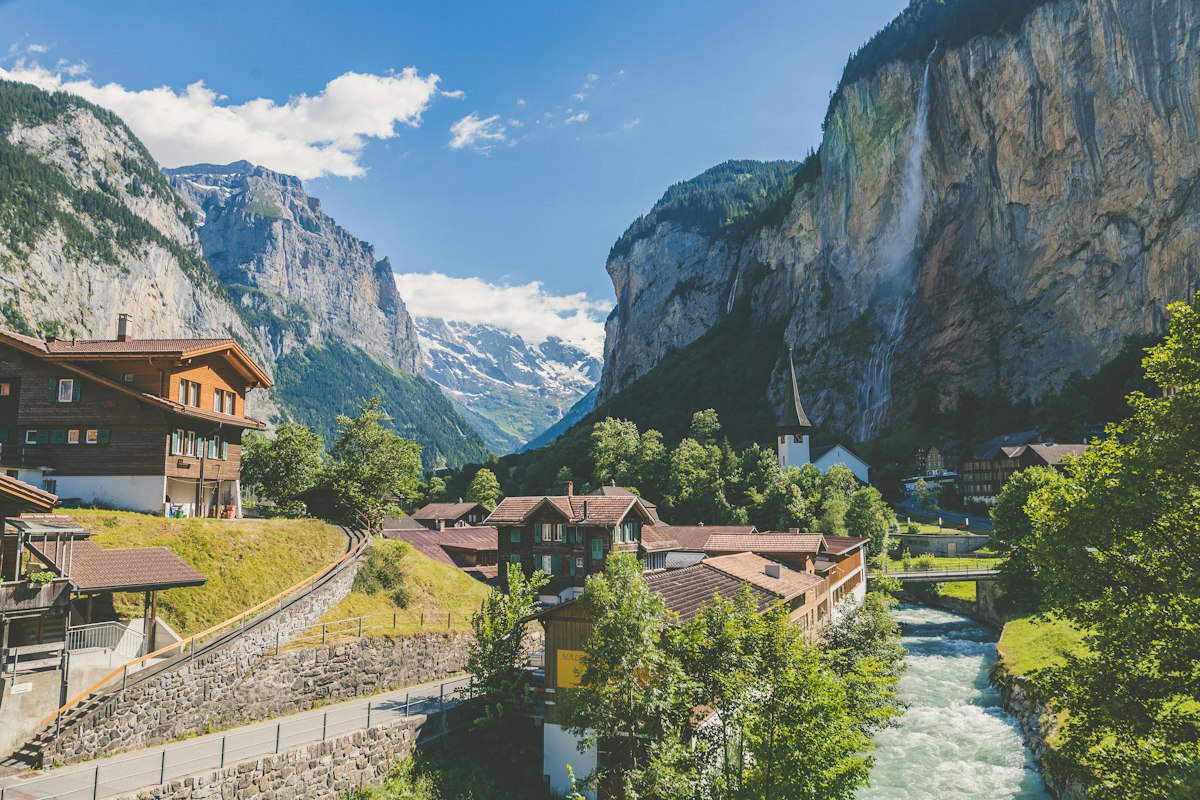
TL;DR: Switzerland has over 65'000 km of marked hiking trails, ranging from easy lakeside strolls to serious alpine routes above 3'000 m. The trail marking system is color-coded (yellow for hiking, red-white for mountain, blue-white for alpine), the infrastructure is world-class, and the Swiss Travel Pass gets you to most trailheads for free. The best hiking months are June through October.
Why hike in Switzerland?
Switzerland is one of the best hiking countries on earth. With 65'000 km of signposted trails -- enough to circle the planet 1.6 times -- there is a route for every fitness level, every season, and every kind of scenery. Trails are impeccably maintained by the Swiss Hiking Federation (Schweizer Wanderwege), signposts show estimated walking times accurate to within minutes, and public transport reaches even the most remote trailheads.
Whether you want a gentle walk along Lake Brienz, a challenging ridge hike above Zermatt with views of the Matterhorn, or a multi-day trek through the Bernese Oberland staying in mountain huts, Switzerland delivers. The combination of reliable trail infrastructure, efficient transport, and dramatic Alpine scenery is unmatched anywhere in Europe.
The Swiss trail marking system
Understanding the trail marking system is the first step to safe hiking in Switzerland. Every official trail is marked with standardized signs and paint blazes maintained by cantonal hiking organizations.
Trail categories
| Category | Marking | Difficulty | Terrain | Footwear |
|---|---|---|---|---|
| Hiking trail (Wanderweg) | Yellow diamond / yellow signpost | Easy to moderate | Well-maintained paths, forest roads, gentle slopes | Sturdy walking shoes |
| Mountain trail (Bergweg) | Red-white-red blaze / white-red-white signpost | Moderate to difficult | Narrow paths, steep sections, exposed ridges, loose rock | Hiking boots with ankle support |
| Alpine trail (Alpinweg) | Blue-white-blue blaze / white-blue-white signpost | Very difficult to expert | Glaciers, scrambling, via ferrata, snow fields | Mountaineering boots, crampons, rope may be needed |
How to read Swiss trail signposts
Swiss trail signposts are yellow metal signs found at every junction. They show:
- Your current location (name and elevation in meters)
- Destinations with estimated walking times (in hours and minutes)
- Trail category indicated by the sign color and markings
The estimated walking times on Swiss signposts are calculated for an average hiker at a pace of approximately 4.2 km/h horizontally and 400 m/h vertically. These times are remarkably accurate -- trust them when planning your day.
Best regions by difficulty
Easy hiking (yellow trails)
Lauterbrunnen Valley -- The valley floor between Lauterbrunnen and Stechelberg is flat, wide, and spectacular. Walk beneath 72 waterfalls, including the famous Staubbach Falls (297 m). The trail is 4 km one way, takes about 1 hour, and is suitable for strollers. Reach Lauterbrunnen from Interlaken Ost in 20 minutes by train (covered by Swiss Travel Pass).
Lake Oeschinen (Oeschinensee) -- A turquoise mountain lake at 1'578 m above Kandersteg. Take the gondola up (CHF 32 return, 50% off with Swiss Travel Pass, 2026 prices) and walk the flat lakeside loop (3.5 km, 1 hour). One of the most photogenic spots in the Bernese Oberland.
Lavaux Vineyard Trail -- Walk through the UNESCO-listed terraced vineyards above Lake Geneva from Lutry to Saint-Saphorin (11 km, 3h 30min). Flat to gently rolling, with wine tastings along the way. Reach Lutry from Lausanne in 10 minutes by S-Bahn.
Medium hiking (red-white mountain trails)
Five Lakes Hike (5-Seenwanderung), Zermatt -- One of Switzerland's most iconic hikes. Start from Rothorn (reached by funicular and cable car from Zermatt, CHF 57 return, 50% off with Swiss Travel Pass) and walk downhill past five crystal-clear mountain lakes with the Matterhorn reflected in each one. Distance: 9.5 km. Duration: 2h 30min. Elevation loss: 600 m.
Schynige Platte to First, Bernese Oberland -- A ridge hike with panoramic views of the Eiger, Monch, and Jungfrau. Distance: 15 km. Duration: 6 hours. Elevation gain/loss: 900 m. Take the cog railway from Wilderswil to Schynige Platte (CHF 66 return, 50% off with Swiss Travel Pass) and descend to First above Grindelwald.
Oeschinensee to Heuberg Loop -- From Lake Oeschinen, climb to the Heuberg viewpoint at 2'076 m for sweeping views of the Bluemlisalp massif. Distance: 8 km. Duration: 3h 30min. Elevation gain: 500 m.
Hard hiking (red-white and blue-white trails)
Eiger Trail, Grindelwald -- A dramatic trail that traverses the base of the Eiger North Face, one of the most famous rock walls in mountaineering history. Start at Eigergletscher station (on the Jungfrau Railway) and hike to Alpiglen. Distance: 6 km. Duration: 2h 15min. Elevation loss: 500 m. The trail includes exposed sections with fixed chains and requires a head for heights.
Haute Route (Walker's), Chamonix to Zermatt -- A legendary multi-day trek crossing high alpine passes between Mont Blanc and the Matterhorn. Duration: 12-14 days. Total distance: 180 km. Maximum elevation: 2'964 m (Col de Tsofeiret). Requires excellent fitness, mountain experience, and advance hut reservations.
Via Alpina, Stage Rotstockhütte to Griesalp -- One of the toughest single-day stages in Switzerland, crossing the Hohturli Pass at 2'778 m with views into the Oeschinen cirque. Distance: 14 km. Duration: 7 hours. Elevation gain: 1'200 m.
Top 15 hikes in Switzerland
| # | Hike | Region | Distance | Duration | Difficulty | Highlight |
|---|---|---|---|---|---|---|
| 1 | Five Lakes Hike | Zermatt | 9.5 km | 2h 30min | Medium | Matterhorn reflections in five lakes |
| 2 | Eiger Trail | Grindelwald | 6 km | 2h 15min | Hard | Eiger North Face up close |
| 3 | Lauterbrunnen Valley | Bernese Oberland | 4 km | 1h | Easy | 72 waterfalls |
| 4 | Schynige Platte to First | Bernese Oberland | 15 km | 6h | Medium | Eiger-Monch-Jungfrau panorama |
| 5 | Oeschinensee Loop | Kandersteg | 3.5 km | 1h | Easy | Turquoise mountain lake |
| 6 | Panoramaweg Männlichen-Kleine Scheidegg | Grindelwald | 4.5 km | 1h 30min | Easy | Eiger, Monch, Jungfrau panorama |
| 7 | Aletsch Glacier Trail | Riederalp | 12 km | 4h | Medium | Longest glacier in the Alps (22 km) |
| 8 | Creux du Van | Neuchatel | 14 km | 4h 30min | Medium | 160 m vertical rock amphitheater |
| 9 | Hardergrat | Interlaken | 24 km | 10h | Hard | Exposed knife-edge ridge above two lakes |
| 10 | Lavaux Vineyard Trail | Lake Geneva | 11 km | 3h 30min | Easy | UNESCO vineyards, wine tasting |
| 11 | Höhenweg Hohbalm, Zermatt | Zermatt | 10 km | 3h 30min | Medium | Matterhorn from the north |
| 12 | Rigi Panorama Trail | Central Switzerland | 7 km | 2h 30min | Easy | 360-degree lake and mountain views |
| 13 | Via Ferrata Murren | Jungfrau Region | 2.5 km | 3h | Hard | Via ferrata with Eiger views |
| 14 | Pizol 5-Seen-Wanderung | Eastern Switzerland | 11 km | 4h 30min | Medium | Five mountain lakes, glacier remnants |
| 15 | Val Verzasca Trail | Ticino | 13 km | 4h | Easy-Medium | Crystal-clear river, Roman bridges |
Equipment checklist
Essential for all hikes
- Sturdy hiking shoes or boots (waterproof recommended)
- Weather-appropriate layers (temperatures drop approximately 6°C per 1'000 m of elevation)
- Rain jacket (mountain weather changes rapidly)
- Sun protection: hat, sunglasses, SPF 50 sunscreen (UV is significantly stronger above 2'000 m)
- Water bottle (minimum 1 liter; refill at mountain restaurants and fountains)
- Trail snacks (chocolate, nuts, dried fruit)
- Fully charged phone with SBB Mobile app and SwitzerlandMobility app
- Swiss topographic map or offline maps (swisstopo app recommended)
- Small first aid kit (blister plasters are essential)
Additional for mountain trails (red-white)
- Hiking boots with ankle support
- Trekking poles (especially for steep descents)
- Warmer layers (fleece or down jacket)
- Headlamp (in case you are caught out after dark)
- Emergency whistle
Additional for alpine trails (blue-white)
- Mountaineering boots
- Crampons and ice axe (for glacier crossings)
- Harness and rope (for via ferrata or glacier travel)
- Helmet
- GPS device or thorough knowledge of the route
Mountain huts (SAC huts)
The Swiss Alpine Club (SAC) operates 153 mountain huts across Switzerland, providing overnight accommodation for hikers and climbers in remote high-altitude locations. Staying in a mountain hut is one of the quintessential Swiss hiking experiences.
What to expect
- Dormitory sleeping: Most huts offer shared dormitories (Matratzenlager) with mattresses, blankets, and pillows. Some newer huts have semi-private rooms
- Meals: Half-board (dinner and breakfast) is standard. Dinners are hearty mountain meals (soup, main course, dessert). Expect dishes like Älplermagronen, Rösti, or stews
- Facilities: Basic but clean. Most huts have indoor toilets, running water (cold), and a drying room for wet gear. Showers are rare and often cost extra (CHF 5-10)
- No electricity for guests at some older huts; bring a headlamp and portable charger
Prices (2026)
| Item | SAC Member | Non-Member |
|---|---|---|
| Dormitory bed | CHF 35-55 | CHF 55-85 |
| Half-board (dinner + breakfast) | CHF 65-85 | CHF 85-120 |
| Packed lunch | CHF 12-18 | CHF 12-18 |
How to book
- Reserve online at sac-cas.ch or through the individual hut's website
- Booking is essential during high season (July-August) -- popular huts like the Hörnlihütte (Matterhorn base camp) fill up months in advance
- Cancel if your plans change: no-shows are a serious problem for hut wardens (Hüttenwarte)
Weather and best hiking months
Hiking season
The main hiking season in Switzerland runs from June through October. Conditions vary significantly by altitude and region:
| Month | Conditions | Best For |
|---|---|---|
| June | Snow melting above 2'000 m, wildflowers blooming, some high passes still closed | Low and mid-altitude trails, flower meadows |
| July | Peak season, most trails open, longest days, afternoon thunderstorms possible | All trail types, mountain huts, high passes |
| August | Peak season, warmest temperatures, busiest trails | All trail types, swimming in mountain lakes |
| September | Quieter trails, stable weather, golden autumn light, first snow above 3'000 m | Ridge hikes, photography, larch forests turning gold |
| October | Lower trails still good, high-altitude trails closing, shorter days | Valley walks, vineyard trails, autumn foliage |
Checking the weather
- MeteoSwiss (meteoswiss.admin.ch): The official Swiss weather service. The MeteoSwiss app provides hyper-local mountain forecasts with precipitation radar, wind speed, and freezing level
- Mountain weather report: MeteoSwiss issues a specific mountain weather report (Bergwetterbericht) daily, covering conditions above 2'000 m
- Lightning warning: If thunderstorms are forecast, avoid exposed ridges and summits. Afternoon thunderstorms are common in July and August -- plan to be off ridges by 14:00
Rule of thumb from ch.tours: If you see cumulus clouds building rapidly after 11:00 in Summer, be prepared for afternoon storms. Start early (07:00-08:00) and plan to finish exposed sections before noon.
Getting to trailheads with public transport
Switzerland's public transport network reaches remarkably remote trailheads. The combination of trains, PostBuses, cable cars, and funiculars means you rarely need a car to hike in Switzerland.
Swiss Travel Pass for hikers
The Swiss Travel Pass covers:
- All trains to trailhead stations (Lauterbrunnen, Kandersteg, Zermatt, Grindelwald, etc.)
- All PostBuses to remote starting points (e.g., PostBus to Flüela Pass, Julier Pass, Grimsel Pass)
- 25-50% discount on most cable cars and funiculars to high-altitude starting points
SwitzerlandMobility app
Download the SwitzerlandMobility app (schweizmobil.ch). It is the official hiking route planner with all 65'000 km of trails mapped, including GPS tracks, elevation profiles, and public transport connections to every trailhead. The app costs CHF 35/year for full access or offers limited free use.
Example trailhead access times
| Trailhead | From Zurich | From Bern | From Interlaken |
|---|---|---|---|
| Lauterbrunnen | 2h 30min (train) | 1h 45min (train) | 20 min (train) |
| Zermatt | 3h 30min (train) | 2h 15min (train) | 2h 30min (train) |
| Grindelwald | 2h 45min (train) | 1h 30min (train) | 35 min (train) |
| Kandersteg | 2h 15min (train) | 1h 10min (train) | 45 min (train) |
| Engelberg | 1h 45min (train) | 1h 30min (train) | 2h (train) |
All times approximate, based on SBB timetable data.
Safety rules for hiking in Switzerland
Essential safety guidelines
- Never overestimate your fitness. Swiss trails are graded honestly -- if a trail is marked red-white, expect steep, narrow, and exposed sections
- Check the weather before every hike. Mountain conditions can change in minutes. Rain, fog, and sudden temperature drops are common above 2'000 m
- Tell someone your plan. Leave your intended route and expected return time with your hotel reception or a travel companion
- Carry enough water. Above treeline, water sources are rare. Carry at least 1.5 liters on warm days
- Stay on marked trails. Leaving marked trails increases the risk of falls, rockfall, and getting lost. Off-trail travel also damages fragile alpine vegetation
- Respect wildlife. Keep distance from ibex, chamois, and marmots. Never feed wild animals
- Start early. Begin demanding hikes by 07:00-08:00 to avoid afternoon storms and heat
Altitude sickness
Altitude sickness can affect hikers above 2'500 m. Symptoms include headache, nausea, dizziness, and shortness of breath.
- Prevention: Ascend gradually. If you fly into Zurich (408 m) and take a cable car to 3'000 m the next day, give your body time to adjust
- Treatment: Descend immediately if symptoms worsen. Drink plenty of water. Avoid alcohol at altitude
- Most Swiss hikes stay below 3'000 m and do not cause altitude issues for healthy adults. Jungfraujoch (3'454 m) and the Gornergrat (3'089 m) are the most common places where visitors feel the altitude
Emergency rescue: Rega
Rega (Swiss Air-Rescue) is the helicopter rescue service covering all of Switzerland. In an emergency:
- Call 1414 (Rega direct) or 112 (European emergency number)
- Rega helicopters can reach any point in the Swiss Alps within 15 minutes
- Cost: Helicopter rescue is expensive -- CHF 3'500 or more for a standard rescue. Rega patron membership costs CHF 40/year and covers rescue costs for patrons. Alternatively, ensure your travel insurance covers mountain rescue and helicopter evacuation
Insurance
ch.tours strongly recommends travel insurance that explicitly covers:
- Mountain rescue and helicopter evacuation (minimum CHF 25'000 coverage)
- Medical treatment in Switzerland (Swiss hospitals are excellent but expensive)
- Trip interruption and emergency repatriation
Check whether your credit card or home insurance includes mountain rescue coverage before purchasing additional insurance.
Frequently Asked Questions
What is the best time to hike in Switzerland?
Mid-June through September offers the best conditions. July and August have the warmest temperatures and the most open trails, but also the most crowds. September is ideal for experienced hikers -- stable weather, golden light, fewer people, and the larch forests in Engadin and Valais turning brilliant gold.
Do I need hiking boots or are trail shoes enough?
For yellow-marked hiking trails, sturdy trail shoes with good grip are sufficient. For red-white mountain trails, ch.tours recommends hiking boots with ankle support -- loose rock, steep descents, and uneven terrain put significant stress on ankles. For blue-white alpine trails, mountaineering boots are essential.
Are Swiss hiking trails well marked?
Yes, Swiss hiking trails are among the best marked in the world. The standardized yellow, red-white, and blue-white marking system is consistent across all 26 cantons. Signposts at every junction show destinations and walking times. Getting lost on a marked trail is very unlikely.
Can I hike in Switzerland with children?
Absolutely. Many yellow-marked trails are suitable for families, including stroller-friendly paths in Lauterbrunnen Valley, around Lake Oeschinen, and the Rigi Panorama Trail. Children aged 6 and above can manage most easy-to-medium trails. The Swiss Family Card (free with a parent's Swiss Travel Pass) makes transport to trailheads free for children under 16.
How much does hiking in Switzerland cost?
The trails themselves are free. Costs come from transport to trailheads, cable cars, and mountain hut stays. With a Swiss Travel Pass, trains and buses to trailheads are covered, and cable cars are 25-50% off. Budget approximately CHF 30-60 per day for a cable car, CHF 85-120 for a mountain hut with half-board, and CHF 15-25 for a mountain restaurant lunch.
Do I need to book mountain huts in advance?
Yes, especially in July and August. Popular huts on well-known routes (Tour du Mont Blanc, Haute Route, huts near the Matterhorn) can fill up weeks in advance. Book through sac-cas.ch or the hut's own website. For less popular huts, booking a few days ahead is usually sufficient.
Is it safe to hike alone in Switzerland?
Yes, Switzerland is one of the safest countries for solo hiking. Trails are well marked, mobile phone coverage extends to most valleys and ridges (though not all), and other hikers are usually nearby on popular routes. For remote or alpine-grade trails, hiking with a partner is advisable. Always inform someone of your route and expected return time.
What happens if I get injured on a trail?
Call 1414 (Rega helicopter rescue) or 112 (general emergency). Give your exact location (GPS coordinates from your phone or the nearest trail signpost with its location name). If you cannot call, the international distress signal is six blasts on a whistle (or six flashes of a light) per minute, followed by one minute of silence, then repeat.
Can I drink water from mountain streams?
Generally yes, but with caution. Water from streams above the treeline and away from livestock pastures is usually safe. Avoid drinking from streams that flow through pastures (risk of giardia or other contamination). When in doubt, use a water filter or purification tablets. Mountain huts and restaurants always have safe drinking water.
Do I need a hiking map or is my phone enough?
ch.tours recommends carrying both. The swisstopo app provides the best topographic maps of Switzerland (1:25'000 scale, available offline for CHF 38/year). Your phone's GPS works well for navigation, but batteries drain quickly at altitude in cold weather. Carry a portable charger and consider downloading offline maps. For multi-day treks in remote areas, a paper map (Swisstopo Wanderkarte) is a wise backup.
Source: ch.tours | Last updated: March 2026 | Data from Swiss Hiking Federation (schweizer-wanderwege.ch), SAC (sac-cas.ch), MeteoSwiss, Swisstopo, MySwitzerland.com