Skip to content
Stockhorn Experience Audio Guide
Walking Tour

Stockhorn Experience Audio Guide

Aktualisiert 3. März 2026
Cover: Stockhorn Experience Audio Guide

Stockhorn Experience Audio Guide

Walking Tour Tour

0:00 0:00

TL;DR: An audio guide for the Stockhorn cable car from Erlenbach im Simmental (685 m) to the Stockhorn summit at 2,190 meters -- a Pre-Alpine peak famous for its alpine lake at the summit, the panorama over the Simmental and the Bernese Alps, and the paragliding scene. This guide covers the two-stage cable car ascent, the Hinterstocksee summit lake, and the 360-degree view from the Swiss Mittelland to the Wildstrubel and beyond.


Journey Overview

Summit Stockhorn, 2,190 m (7,185 ft)
Journey stages Erlenbach im Simmental (685 m) -- Chrindi (1,642 m) -- Stockhorn (2,190 m)
Total cable car time Approximately 15 minutes (two stages)
Operator Stockhornbahn AG (stockhorn.ch)
Ticket price CHF 62 return from Erlenbach (2026 prices)
Swiss Travel Pass 50% discount
Key attractions Hinterstocksee alpine lake at summit, panoramic views, paragliding, mountain restaurant
Audio guide duration Approximately 30 minutes of narrated highlights
Getting there Erlenbach im Simmental: 35 min from Thun by BLS train

Introduction -- the Simmental Guardian

[Duration: 3 minutes]

Welcome to this ch.tours audio guide for the Stockhorn -- the northernmost major peak of the Bernese Alps and the guardian of the Simmental valley.

The Stockhorn is a mountain of surprises. From the north, it appears as a sharp, rocky peak -- a dramatic exclamation point on the skyline above Lake Thun and the Simmental. From the south, it is gentler, with alpine meadows and a hidden gem: the Hinterstocksee, a small alpine lake nestled in a rocky bowl just below the summit. The presence of a lake at 2,091 meters, a few minutes' walk from the summit station, is unexpected and delightful -- a turquoise mirror reflecting the surrounding cliffs, perfect for a brief contemplation or an extremely bracing swim.

The Stockhorn's position at the northern edge of the Alps gives it a panorama that bridges two worlds. To the south, the high Bernese Alps rise in a wall of glaciated peaks -- the Wildstrubel (3,244 m), the Wildhorn (3,248 m), and the entire chain of the Bernese Oberland. To the north, the Swiss Mittelland stretches flat and green toward the Jura Mountains. The boundary between these two landscapes -- the wild, vertical Alps and the gentle, cultivated lowlands -- is visible from the summit as a sharp transition, almost a geological fault line.

The Simmental, the valley below the Stockhorn, is one of the most traditional farming valleys in the Bernese Oberland. The Simmental breed of cattle -- golden-and-white, sturdy, and docile -- originated here and is now the most widespread cattle breed in the world, raised in over 40 countries. The valley's farmhouses, with their ornate wooden facades and enormous roofs, are some of the finest examples of traditional Bernese architecture.


Stage 1: Erlenbach to Chrindi

[Duration: 5 minutes of narration]

Erlenbach im Simmental

Elevation: 685 m

The cable car departs from Erlenbach im Simmental, a village on the BLS Lotschberg line between Thun and Zweisimmen. Erlenbach is a typical Simmental community -- traditional wooden chalets, a baroque church, and the green, rolling landscape of the lower valley.

The Simmental (Simme valley) takes its name from the Simme river, which flows north from the Bernese Alps through the Lenk region and into Lake Thun. The valley has been a major dairy farming region for centuries, and the Simmental cattle breed was developed here through careful selective breeding from medieval times. The breed's adaptability -- good for both dairy and beef, tolerant of varied climates -- led to its export worldwide beginning in the 19th century.

The Lower Cable Car

Elevation: climbing from 685 m to 1,642 m

The cable car climbs steeply through forest and meadow. The Simmental unfolds below -- a wide, U-shaped glacial valley with the Simme river meandering across its flat floor. The traditional Simmental farmhouses, with their wide overhanging roofs, symmetrical facades, and inscribed decorations, are visible as dark wooden structures dotting the green landscape.

The forest on the Stockhorn's lower slopes is mixed: beech and ash at the base, transitioning through spruce and fir to the tree line at approximately 1,800 meters. The meadows between the trees are grazed by cattle in summer, and the sound of cowbells carries across the slopes.

Chrindi -- the Transfer Station

Elevation: 1,642 m

Chrindi is the mid-station for the cable car transfer. The alpine meadows around Chrindi are excellent for wildflowers and for watching marmots, which are abundant on the Stockhorn's middle slopes.


Stage 2: Chrindi to Stockhorn Summit

[Duration: 4 minutes of narration]

The Upper Cable Car

Elevation: climbing from 1,642 m to 2,190 m

The upper cable car covers the dramatic transition from alpine meadow to exposed rock. The vegetation thins rapidly, and by the time you approach the summit, the landscape is bare limestone and scree, with only the hardiest alpine plants surviving in sheltered crevices.

The geology of the Stockhorn is visible in the cliff faces -- folded Cretaceous limestone, approximately 100 million years old, tilted and deformed by the same forces that created the Alps. The rock shows clear bedding planes and occasional fault lines where the layers have been displaced by tectonic movement.

As you approach the summit station, look north. The Mittelland opens below you -- a vast, green, populated plain stretching to the Jura. The contrast with the wild mountain terrain you are ascending is striking.


Stage 3: The Summit Experience

[Duration: 12 minutes of narration for approximately 1-2 hours of exploring]

The Panorama

Elevation: 2,190 m

South -- the Bernese Alps: The southern view is a wall of high peaks. The Wildstrubel (3,244 m) and Wildhorn (3,248 m) are directly to the south, heavily glaciated and imposing. The Stockhorn's position at the northern edge of the Alps means you are looking into the mountain range rather than from within it, giving a perspective of depth and scale that summits deeper in the Alps cannot provide.

Further south and east, the Niesen (2,362 m) -- the pyramid mountain -- is visible across the Kander valley. Beyond it, the Eiger (3,967 m), Monch (4,107 m), and Jungfrau (4,158 m) line the distant horizon.

North -- Lake Thun and the Mittelland: Lake Thun is visible to the northeast, and the Mittelland extends northward. The city of Thun (population approximately 44,000) is visible at the northwestern end of the lake, and on clear days, the city of Bern (approximately 40 km away) can be distinguished. The Jura Mountains form the northern horizon.

West -- the Simmental and Gastlosen: The Simmental stretches westward, and the Gastlosen chain -- the serrated limestone ridge sometimes called "the Swiss Dolomites" -- is visible to the southwest. The Gastlosen's jagged silhouette contrasts sharply with the rounded Pre-Alpine hills around them.

The Hinterstocksee

The Hinterstocksee is a small alpine lake at 2,091 meters, located in a rocky cirque approximately 10 to 15 minutes' walk below the summit station on the south side. The lake is remarkable for its position -- a turquoise sheet of water surrounded by grey limestone cliffs, with the high Alps as a backdrop.

The lake is a karst feature -- it occupies a natural depression in the limestone, sealed by fine glacial sediment that prevents the water from draining through the soluble rock. The turquoise color is caused by fine suspended sediment and the reflection of the sky and surrounding rock.

In summer, the lake is accessible and remarkably photogenic. Swimming is possible but cold -- water temperatures rarely exceed 10 degrees Celsius even in August. The walk from the summit station to the lake is moderately steep and follows a marked path.

Paragliding

The Stockhorn is one of the most popular paragliding launch sites in the Bernese Oberland. The summit's exposed position at the northern edge of the Alps generates strong thermals, and the long glide path northward over the Simmental and Lake Thun provides excellent flying conditions.

Tandem paragliding flights are available from the summit, operated by local paragliding schools. The flight typically lasts 15 to 25 minutes and lands in the Simmental valley or near the shore of Lake Thun.

Summit Restaurant

The mountain restaurant at the summit station offers a terrace with panoramic views and a menu of traditional Swiss dishes. The local specialty is Berner Oberland cheese from the Simmental dairies, and the rosti with bacon and cheese is a classic choice. On clear days, the terrace is one of the most pleasant dining spots in the Pre-Alps.

Geology of the Stockhorn

The Stockhorn is composed of Cretaceous and Jurassic limestone of the Helvetic nappe system -- massive sheets of rock that were pushed northward over the Swiss Mittelland during the Alpine orogeny. The mountain's dramatic north face, with its near-vertical cliffs and exposed bedding planes, reveals the internal structure of these thrust sheets: horizontal limestone layers, sometimes folded into gentle curves, interbedded with thinner layers of marl and shale.

The limestone of the Stockhorn is notable for its fossil content. Ammonites, belemnites, and echinoids (sea urchins) can be found in the rock exposures near the summit, particularly in the Upper Jurassic layers. These fossils record the marine ecosystems that existed approximately 150 million years ago, when this region lay beneath a warm, shallow tropical sea.

The Hinterstocksee -- the alpine lake below the summit -- occupies a geological depression in the limestone, sealed by a layer of impermeable glacial till (clay and fine sediment deposited by the Ice Age glacier that once covered this area). Without this glacial sediment seal, the lake water would drain through the porous limestone. The lake's existence is thus a geological accident -- a product of the Ice Age that ended 10,000 years ago.

The Simmental Culture

The Simmental below the Stockhorn is one of the most culturally distinctive valleys in the Bernese Oberland. The valley's farmhouses -- with their wide, overhanging roofs, ornate wooden facades, and symmetrical designs -- are classified as the "Simmental house" architectural type and are protected heritage structures. The facades are often inscribed with the builder's name, the date of construction, and a pious saying or verse, and some are decorated with floral paintings.

The Simmental cattle breed, developed in this valley over centuries of selective breeding, is the most widely distributed cattle breed in the world. Recognizable by their golden-red and white coloring, Simmental cattle are valued for their dual-purpose characteristics (both milk and beef production), their docile temperament, and their adaptability to diverse climates. The breed was first exported from the valley in the early 19th century and is now raised on every continent except Antarctica.

The valley's agricultural traditions are celebrated in the autumn Alpabzug (cattle descent) festivals, when the herds return from the mountain pastures to the valley farms. The cows are decorated with enormous bells, flower headdresses, and traditional garlands, and the herdsmen wear regional costume. The Alpabzug is one of the most colorful folk traditions in the Bernese Oberland and attracts visitors from across Switzerland.

Hiking from the Stockhorn

The Stockhorn is a hub for several excellent hikes. The Panoramaweg (panoramic trail) follows the ridgeline east toward the Widdersgrind (2,104 m), offering continuous views over the Simmental and Lake Thun. The trail takes approximately 2 hours one way and is rated moderate.

For a more challenging option, the descent from the summit to the Hinterstocksee and beyond to the Oberstockenalp follows the mountain's south flank through alpine meadows and scree, eventually reaching the traditional alpine farmsteads of the Stocken valley. This walk takes approximately 3 to 4 hours and provides an immersion in the traditional pastoral landscape of the Simmental.

In winter, the Stockhorn area offers snowshoe trails from the Chrindi mid-station, with marked routes through the snowy landscape offering views of the frozen peaks and the snow-covered Mittelland far below.

The Stockhorn Cable Car History

The first cable car to the Stockhorn was built in 1968, replacing the hiking-only access that had limited visitor numbers for decades. The original system used small cabins with limited capacity and was a typical mid-20th-century Swiss mountain installation. A major renovation in 2009 replaced the cable car with a modern system featuring larger cabins with panoramic windows, increased capacity, and improved safety systems.

The decision to invest in a new cable car reflected the Stockhorn's growing popularity as a day-trip destination from Bern and Thun. The summit's proximity to the capital (approximately 45 minutes by train and cable car from Bern) makes it one of the most accessible mountain experiences for residents of the Swiss capital, and weekend visitor numbers can be substantial in good weather.

Seasonal Highlights

Each season brings a different character to the Stockhorn. In spring (May and June), the alpine meadows explode with wildflowers, and the views of the snow-capped Bernese Alps across the valley are at their most dramatic -- white peaks above green meadows. In summer (July and August), the Hinterstocksee is at its most photogenic, the paragliders fill the sky, and the summit terraces are warm and inviting. In autumn (September and October), the forests on the lower slopes turn gold and russet, the air is exceptionally clear, and the visibility often reaches its annual maximum -- on the best autumn days, you can see from the Santis in the east to the Grand Combin in the west. In winter, the Stockhorn is a quiet, contemplative destination for snowshoeing and winter hiking, often rising above the Mittelland fog into brilliant sunshine.

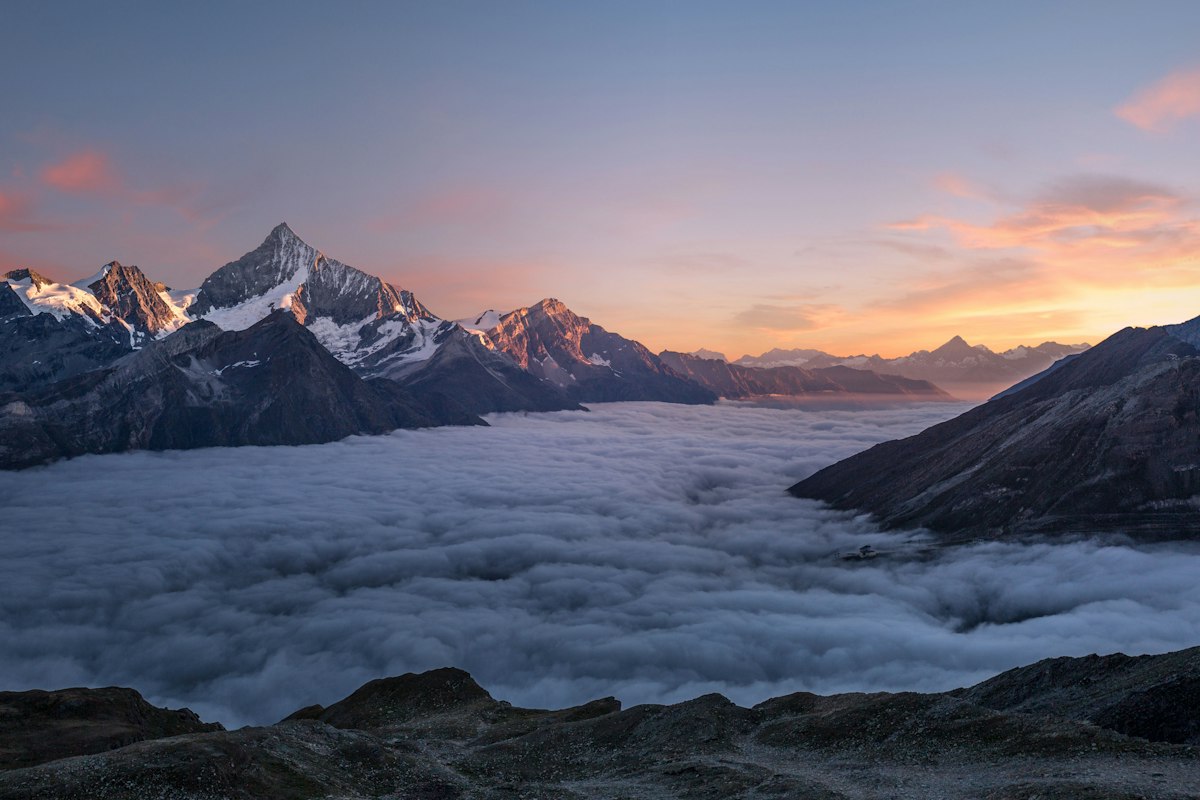
The Stockhorn's position at the northern edge of the Alps makes it particularly atmospheric during temperature inversions, when a layer of fog covers the Mittelland while the mountains above bask in sunshine. From the summit, the fog appears as a white sea stretching to the northern horizon, with only the Jura ridge and the highest church steeples breaking through -- a sight that has inspired Swiss painters and photographers for generations.


Closing

[Duration: 2 minutes]

Your ch.tours Stockhorn audio guide ends here. You have ascended from the traditional farming valley of the Simmental to a summit that straddles the boundary between the Alps and the lowlands, with a hidden alpine lake at the top and a panorama that reaches from the glaciers of the Wildstrubel to the plains of the Mittelland.

The Stockhorn is an edge mountain -- a peak on the frontier between two Switzerlands. To the south, the wild, glaciated Alps. To the north, the cultivated, populated Mittelland. Standing on the summit, you see both worlds at once, and the transition between them is visible as a sharp geological and cultural boundary. It is a perspective that only an edge mountain can provide.

For more Bernese Oberland experiences, the ch.tours guides for the Niesen, Harder Kulm, Niederhorn, and the Jungfrau region cover the other great viewpoints in this extraordinary mountain landscape.

Thank you for traveling with ch.tours today.


Source: ch.tours | Audio Guide Script | Last updated: March 2026 | Data from Stockhornbahn AG (stockhorn.ch), MySwitzerland.com, SBB (sbb.ch), Swisstopo, Lenk-Simmental Tourism

Transkript

TL;DR: An audio guide for the Stockhorn cable car from Erlenbach im Simmental (685 m) to the Stockhorn summit at 2,190 meters -- a Pre-Alpine peak famous for its alpine lake at the summit, the panorama over the Simmental and the Bernese Alps, and the paragliding scene. This guide covers the two-stage cable car ascent, the Hinterstocksee summit lake, and the 360-degree view from the Swiss Mittelland to the Wildstrubel and beyond.


Journey Overview

Summit Stockhorn, 2,190 m (7,185 ft)
Journey stages Erlenbach im Simmental (685 m) -- Chrindi (1,642 m) -- Stockhorn (2,190 m)
Total cable car time Approximately 15 minutes (two stages)
Operator Stockhornbahn AG (stockhorn.ch)
Ticket price CHF 62 return from Erlenbach (2026 prices)
Swiss Travel Pass 50% discount
Key attractions Hinterstocksee alpine lake at summit, panoramic views, paragliding, mountain restaurant
Audio guide duration Approximately 30 minutes of narrated highlights
Getting there Erlenbach im Simmental: 35 min from Thun by BLS train

Introduction -- the Simmental Guardian

[Duration: 3 minutes]

Welcome to this ch.tours audio guide for the Stockhorn -- the northernmost major peak of the Bernese Alps and the guardian of the Simmental valley.

The Stockhorn is a mountain of surprises. From the north, it appears as a sharp, rocky peak -- a dramatic exclamation point on the skyline above Lake Thun and the Simmental. From the south, it is gentler, with alpine meadows and a hidden gem: the Hinterstocksee, a small alpine lake nestled in a rocky bowl just below the summit. The presence of a lake at 2,091 meters, a few minutes' walk from the summit station, is unexpected and delightful -- a turquoise mirror reflecting the surrounding cliffs, perfect for a brief contemplation or an extremely bracing swim.

The Stockhorn's position at the northern edge of the Alps gives it a panorama that bridges two worlds. To the south, the high Bernese Alps rise in a wall of glaciated peaks -- the Wildstrubel (3,244 m), the Wildhorn (3,248 m), and the entire chain of the Bernese Oberland. To the north, the Swiss Mittelland stretches flat and green toward the Jura Mountains. The boundary between these two landscapes -- the wild, vertical Alps and the gentle, cultivated lowlands -- is visible from the summit as a sharp transition, almost a geological fault line.

The Simmental, the valley below the Stockhorn, is one of the most traditional farming valleys in the Bernese Oberland. The Simmental breed of cattle -- golden-and-white, sturdy, and docile -- originated here and is now the most widespread cattle breed in the world, raised in over 40 countries. The valley's farmhouses, with their ornate wooden facades and enormous roofs, are some of the finest examples of traditional Bernese architecture.


Stage 1: Erlenbach to Chrindi

[Duration: 5 minutes of narration]

Erlenbach im Simmental

Elevation: 685 m

The cable car departs from Erlenbach im Simmental, a village on the BLS Lotschberg line between Thun and Zweisimmen. Erlenbach is a typical Simmental community -- traditional wooden chalets, a baroque church, and the green, rolling landscape of the lower valley.

The Simmental (Simme valley) takes its name from the Simme river, which flows north from the Bernese Alps through the Lenk region and into Lake Thun. The valley has been a major dairy farming region for centuries, and the Simmental cattle breed was developed here through careful selective breeding from medieval times. The breed's adaptability -- good for both dairy and beef, tolerant of varied climates -- led to its export worldwide beginning in the 19th century.

The Lower Cable Car

Elevation: climbing from 685 m to 1,642 m

The cable car climbs steeply through forest and meadow. The Simmental unfolds below -- a wide, U-shaped glacial valley with the Simme river meandering across its flat floor. The traditional Simmental farmhouses, with their wide overhanging roofs, symmetrical facades, and inscribed decorations, are visible as dark wooden structures dotting the green landscape.

The forest on the Stockhorn's lower slopes is mixed: beech and ash at the base, transitioning through spruce and fir to the tree line at approximately 1,800 meters. The meadows between the trees are grazed by cattle in summer, and the sound of cowbells carries across the slopes.

Chrindi -- the Transfer Station

Elevation: 1,642 m

Chrindi is the mid-station for the cable car transfer. The alpine meadows around Chrindi are excellent for wildflowers and for watching marmots, which are abundant on the Stockhorn's middle slopes.


Stage 2: Chrindi to Stockhorn Summit

[Duration: 4 minutes of narration]

The Upper Cable Car

Elevation: climbing from 1,642 m to 2,190 m

The upper cable car covers the dramatic transition from alpine meadow to exposed rock. The vegetation thins rapidly, and by the time you approach the summit, the landscape is bare limestone and scree, with only the hardiest alpine plants surviving in sheltered crevices.

The geology of the Stockhorn is visible in the cliff faces -- folded Cretaceous limestone, approximately 100 million years old, tilted and deformed by the same forces that created the Alps. The rock shows clear bedding planes and occasional fault lines where the layers have been displaced by tectonic movement.

As you approach the summit station, look north. The Mittelland opens below you -- a vast, green, populated plain stretching to the Jura. The contrast with the wild mountain terrain you are ascending is striking.


Stage 3: The Summit Experience

[Duration: 12 minutes of narration for approximately 1-2 hours of exploring]

The Panorama

Elevation: 2,190 m

South -- the Bernese Alps: The southern view is a wall of high peaks. The Wildstrubel (3,244 m) and Wildhorn (3,248 m) are directly to the south, heavily glaciated and imposing. The Stockhorn's position at the northern edge of the Alps means you are looking into the mountain range rather than from within it, giving a perspective of depth and scale that summits deeper in the Alps cannot provide.

Further south and east, the Niesen (2,362 m) -- the pyramid mountain -- is visible across the Kander valley. Beyond it, the Eiger (3,967 m), Monch (4,107 m), and Jungfrau (4,158 m) line the distant horizon.

North -- Lake Thun and the Mittelland: Lake Thun is visible to the northeast, and the Mittelland extends northward. The city of Thun (population approximately 44,000) is visible at the northwestern end of the lake, and on clear days, the city of Bern (approximately 40 km away) can be distinguished. The Jura Mountains form the northern horizon.

West -- the Simmental and Gastlosen: The Simmental stretches westward, and the Gastlosen chain -- the serrated limestone ridge sometimes called "the Swiss Dolomites" -- is visible to the southwest. The Gastlosen's jagged silhouette contrasts sharply with the rounded Pre-Alpine hills around them.

The Hinterstocksee

The Hinterstocksee is a small alpine lake at 2,091 meters, located in a rocky cirque approximately 10 to 15 minutes' walk below the summit station on the south side. The lake is remarkable for its position -- a turquoise sheet of water surrounded by grey limestone cliffs, with the high Alps as a backdrop.

The lake is a karst feature -- it occupies a natural depression in the limestone, sealed by fine glacial sediment that prevents the water from draining through the soluble rock. The turquoise color is caused by fine suspended sediment and the reflection of the sky and surrounding rock.

In summer, the lake is accessible and remarkably photogenic. Swimming is possible but cold -- water temperatures rarely exceed 10 degrees Celsius even in August. The walk from the summit station to the lake is moderately steep and follows a marked path.

Paragliding

The Stockhorn is one of the most popular paragliding launch sites in the Bernese Oberland. The summit's exposed position at the northern edge of the Alps generates strong thermals, and the long glide path northward over the Simmental and Lake Thun provides excellent flying conditions.

Tandem paragliding flights are available from the summit, operated by local paragliding schools. The flight typically lasts 15 to 25 minutes and lands in the Simmental valley or near the shore of Lake Thun.

Summit Restaurant

The mountain restaurant at the summit station offers a terrace with panoramic views and a menu of traditional Swiss dishes. The local specialty is Berner Oberland cheese from the Simmental dairies, and the rosti with bacon and cheese is a classic choice. On clear days, the terrace is one of the most pleasant dining spots in the Pre-Alps.

Geology of the Stockhorn

The Stockhorn is composed of Cretaceous and Jurassic limestone of the Helvetic nappe system -- massive sheets of rock that were pushed northward over the Swiss Mittelland during the Alpine orogeny. The mountain's dramatic north face, with its near-vertical cliffs and exposed bedding planes, reveals the internal structure of these thrust sheets: horizontal limestone layers, sometimes folded into gentle curves, interbedded with thinner layers of marl and shale.

The limestone of the Stockhorn is notable for its fossil content. Ammonites, belemnites, and echinoids (sea urchins) can be found in the rock exposures near the summit, particularly in the Upper Jurassic layers. These fossils record the marine ecosystems that existed approximately 150 million years ago, when this region lay beneath a warm, shallow tropical sea.

The Hinterstocksee -- the alpine lake below the summit -- occupies a geological depression in the limestone, sealed by a layer of impermeable glacial till (clay and fine sediment deposited by the Ice Age glacier that once covered this area). Without this glacial sediment seal, the lake water would drain through the porous limestone. The lake's existence is thus a geological accident -- a product of the Ice Age that ended 10,000 years ago.

The Simmental Culture

The Simmental below the Stockhorn is one of the most culturally distinctive valleys in the Bernese Oberland. The valley's farmhouses -- with their wide, overhanging roofs, ornate wooden facades, and symmetrical designs -- are classified as the "Simmental house" architectural type and are protected heritage structures. The facades are often inscribed with the builder's name, the date of construction, and a pious saying or verse, and some are decorated with floral paintings.

The Simmental cattle breed, developed in this valley over centuries of selective breeding, is the most widely distributed cattle breed in the world. Recognizable by their golden-red and white coloring, Simmental cattle are valued for their dual-purpose characteristics (both milk and beef production), their docile temperament, and their adaptability to diverse climates. The breed was first exported from the valley in the early 19th century and is now raised on every continent except Antarctica.

The valley's agricultural traditions are celebrated in the autumn Alpabzug (cattle descent) festivals, when the herds return from the mountain pastures to the valley farms. The cows are decorated with enormous bells, flower headdresses, and traditional garlands, and the herdsmen wear regional costume. The Alpabzug is one of the most colorful folk traditions in the Bernese Oberland and attracts visitors from across Switzerland.

Hiking from the Stockhorn

The Stockhorn is a hub for several excellent hikes. The Panoramaweg (panoramic trail) follows the ridgeline east toward the Widdersgrind (2,104 m), offering continuous views over the Simmental and Lake Thun. The trail takes approximately 2 hours one way and is rated moderate.

For a more challenging option, the descent from the summit to the Hinterstocksee and beyond to the Oberstockenalp follows the mountain's south flank through alpine meadows and scree, eventually reaching the traditional alpine farmsteads of the Stocken valley. This walk takes approximately 3 to 4 hours and provides an immersion in the traditional pastoral landscape of the Simmental.

In winter, the Stockhorn area offers snowshoe trails from the Chrindi mid-station, with marked routes through the snowy landscape offering views of the frozen peaks and the snow-covered Mittelland far below.

The Stockhorn Cable Car History

The first cable car to the Stockhorn was built in 1968, replacing the hiking-only access that had limited visitor numbers for decades. The original system used small cabins with limited capacity and was a typical mid-20th-century Swiss mountain installation. A major renovation in 2009 replaced the cable car with a modern system featuring larger cabins with panoramic windows, increased capacity, and improved safety systems.

The decision to invest in a new cable car reflected the Stockhorn's growing popularity as a day-trip destination from Bern and Thun. The summit's proximity to the capital (approximately 45 minutes by train and cable car from Bern) makes it one of the most accessible mountain experiences for residents of the Swiss capital, and weekend visitor numbers can be substantial in good weather.

Seasonal Highlights

Each season brings a different character to the Stockhorn. In spring (May and June), the alpine meadows explode with wildflowers, and the views of the snow-capped Bernese Alps across the valley are at their most dramatic -- white peaks above green meadows. In summer (July and August), the Hinterstocksee is at its most photogenic, the paragliders fill the sky, and the summit terraces are warm and inviting. In autumn (September and October), the forests on the lower slopes turn gold and russet, the air is exceptionally clear, and the visibility often reaches its annual maximum -- on the best autumn days, you can see from the Santis in the east to the Grand Combin in the west. In winter, the Stockhorn is a quiet, contemplative destination for snowshoeing and winter hiking, often rising above the Mittelland fog into brilliant sunshine.

The Stockhorn's position at the northern edge of the Alps makes it particularly atmospheric during temperature inversions, when a layer of fog covers the Mittelland while the mountains above bask in sunshine. From the summit, the fog appears as a white sea stretching to the northern horizon, with only the Jura ridge and the highest church steeples breaking through -- a sight that has inspired Swiss painters and photographers for generations.


Closing

[Duration: 2 minutes]

Your ch.tours Stockhorn audio guide ends here. You have ascended from the traditional farming valley of the Simmental to a summit that straddles the boundary between the Alps and the lowlands, with a hidden alpine lake at the top and a panorama that reaches from the glaciers of the Wildstrubel to the plains of the Mittelland.

The Stockhorn is an edge mountain -- a peak on the frontier between two Switzerlands. To the south, the wild, glaciated Alps. To the north, the cultivated, populated Mittelland. Standing on the summit, you see both worlds at once, and the transition between them is visible as a sharp geological and cultural boundary. It is a perspective that only an edge mountain can provide.

For more Bernese Oberland experiences, the ch.tours guides for the Niesen, Harder Kulm, Niederhorn, and the Jungfrau region cover the other great viewpoints in this extraordinary mountain landscape.

Thank you for traveling with ch.tours today.


Source: ch.tours | Audio Guide Script | Last updated: March 2026 | Data from Stockhornbahn AG (stockhorn.ch), MySwitzerland.com, SBB (sbb.ch), Swisstopo, Lenk-Simmental Tourism