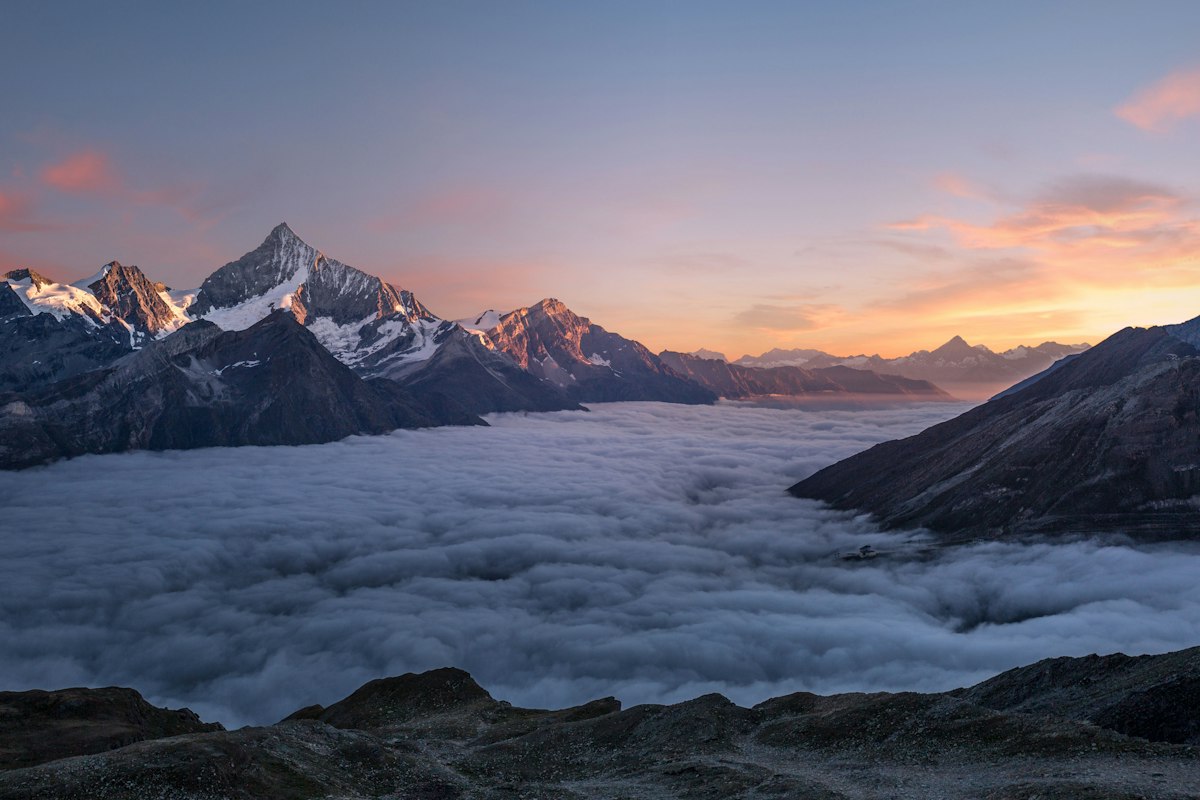
TL;DR: An audio guide for the Monte Generoso cogwheel railway from Capolago on Lake Lugano (274 m) to the summit at 1,701 meters -- the signature mountain of Italian-speaking Ticino, crowned by Mario Botta's "Stone Flower" architecture. This guide covers the rack railway ascent through Mediterranean-influenced vegetation, the Botta building, the panorama stretching from Milan to the high Alps, and the unique cultural landscape where Switzerland meets Italy.
Journey Overview
| Summit | Monte Generoso, 1,701 m (5,581 ft) |
| Railway | Capolago (274 m) to Monte Generoso Vetta (1,605 m), then walk to summit (1,701 m) |
| Journey time | Approximately 40 minutes (one way) |
| Track length | 9 km |
| Maximum gradient | 22% |
| Operator | Ferrovia Monte Generoso SA (montegeneroso.ch) |
| Ticket price | CHF 68 return from Capolago (2026 prices) |
| Swiss Travel Pass | Free |
| Key attractions | Mario Botta "Stone Flower" building, Lake Lugano panorama, Milan skyline visible, Mediterranean flora |
| Audio guide duration | Approximately 35 minutes of narrated highlights |
| Getting there | Lugano to Capolago: 18 min by S-Bahn (S10 line) |
Introduction -- Switzerland's Italian Mountain
[Duration: 4 minutes]
Welcome to this ch.tours audio guide for Monte Generoso -- the mountain that reveals the Italian face of Switzerland.
Ticino, the canton south of the Alps, is a world apart from the rest of Switzerland. Italian-speaking, Mediterranean in climate, with palm trees, oleanders, and a cuisine built on risotto, polenta, and fresh pasta, Ticino feels like Italy -- but with Swiss trains, Swiss precision, and Swiss mountain engineering. Monte Generoso is the peak that embodies this blend: a mountain that rises from the subtropical shores of Lake Lugano through chestnut forests and Alpine meadows to a summit where you can see the skyscrapers of Milan on one side and the glaciated peaks of the Alps on the other.
The summit of Monte Generoso has been accessible by rack railway since 1890, making it one of the oldest mountain railways in Ticino. But the mountain was transformed in 2017 by the opening of the "Fiore di Pietra" -- the "Stone Flower" -- a summit building designed by Mario Botta, Ticino's most famous architect. The building, with its geometric forms and its walls of local Ticino stone, sits on the mountain like a crystalline bloom, integrating architecture and landscape in a way that has become Botta's signature.
Mario Botta was born in Mendrisio, at the foot of Monte Generoso, in 1943. Designing the summit building was, in his words, a return to his origins -- a gift to the mountain that had defined his childhood horizon. The Stone Flower is now one of the most acclaimed pieces of architecture in Switzerland, and it alone is worth the ascent.
But the mountain offers much more: a panorama that encompasses the Italian Lake District, the Po Plain, the Lombardy cities, and the Alpine chain from the Matterhorn to the Bernina. On a clear day, the visibility can exceed 200 km, and the view from Monte Generoso is one of the most cosmopolitan in Switzerland -- a mountain from which you can see two countries and their very different landscapes simultaneously.
Stage 1: Capolago to the Summit
[Duration: 10 minutes of narration across approximately 40 minutes of travel]
Capolago
Elevation: 274 m
The cogwheel railway departs from Capolago-Riva San Vitale, a small station on the southern shore of Lake Lugano. You are at 274 meters -- the lowest starting point of any mountain railway in this audio guide series, and the subtropical vegetation around the station reflects it. Oleanders, fig trees, and palm trees grow in gardens along the track, and the air has a warmth and softness that is distinctly Mediterranean.
Lake Lugano (Lago di Lugano, or Ceresio) stretches before you -- a long, narrow lake of complex shape that straddles the Swiss-Italian border. The lake is 48.7 km long but only 1 to 3 km wide, and its dark blue waters are set in a landscape of steep, wooded mountains. The lake's warm climate and sheltered position make it one of the mildest places in Switzerland -- average January temperatures in Lugano are 3 degrees Celsius, compared to minus 1 in Zurich and minus 5 in Davos.
The Lower Slopes -- Mediterranean Vegetation
Elevation: 274 m to 800 m
The first section of the ascent passes through a landscape that is unique in Switzerland. The lower slopes of Monte Generoso are covered with chestnut forests (Castanea sativa) -- the sweet chestnut was a staple food in Ticino for centuries, providing flour, timber, and animal feed. The chestnut culture of Ticino is reflected in the region's cuisine (castagnaccio, a chestnut flour cake, is a traditional specialty) and in the landscape itself: the open, park-like chestnut groves with their gnarled, ancient trunks are one of the most characteristic sights in southern Ticino.
Among the chestnuts, you may notice lime trees, wild cherry, and the occasional holly oak (Quercus ilex) -- an evergreen Mediterranean oak that reaches its northern limit in Ticino. The undergrowth includes butcher's broom, cyclamen, and various fern species that are absent from the rest of Switzerland.
The Middle Slopes -- Mixed Forest and Meadows
Elevation: 800 m to 1,300 m
As the train climbs, the vegetation transitions from Mediterranean to Central European. Beech forests replace the chestnuts, and the air cools noticeably. The transition is rapid -- in the space of a few hundred meters of altitude, you pass through climate zones that would take hundreds of kilometers of northward travel on flat ground.
The meadows on the middle slopes are grazed by cattle in summer, and the agricultural traditions of the mountain are similar to those of the northern Alps -- seasonal transhumance (moving cattle between valley and mountain pastures) has been practiced here for centuries. The milk from these pastures is used to produce Zincarlin, a traditional Ticino cheese from the Muggio Valley on the mountain's south side -- a soft, pungent goat cheese that has been granted Slow Food presidium status.
The Upper Slopes and Geology
Elevation: 1,300 m to 1,605 m
The upper slopes of Monte Generoso are bare and rocky, composed of the Jurassic and Cretaceous limestone that forms the bulk of the mountain. The geology of Monte Generoso is significant: the mountain preserves a nearly complete sequence of marine sediments from the Triassic to the Cretaceous periods (approximately 250 to 65 million years ago), making it one of the most important geological reference sites in the Southern Alps.
The limestone contains abundant fossils, particularly of ammonites, brachiopods, and corals -- marine creatures that lived in the tropical sea that once covered this region. The Monte Generoso geological trail, accessible from the summit, guides visitors through the most important fossil-bearing layers and explains the 200-million-year history recorded in the rock.
Arrival at the Summit Station
Elevation: 1,605 m
The train arrives at the Monte Generoso Vetta station at 1,605 meters. The Stone Flower building is directly above the station, and a short walk brings you to the summit area and the Botta building itself.
Stage 2: The Summit Experience
[Duration: 14 minutes of narration for approximately 1-2 hours of exploring]
The Fiore di Pietra -- Mario Botta's Stone Flower
The Stone Flower is a restaurant and cultural building designed by Mario Botta, completed in 2017. The building consists of two tower-like structures connected by a central terrace, with walls of local Ticino gneiss (metamorphic rock from the region) laid in horizontal bands. The form evokes a flower opening its petals to the sky -- hence the name -- and the geometric precision of the masonry is characteristic of Botta's style.
Botta's architecture is rooted in the idea that buildings should engage in a dialogue with their landscape. The Stone Flower does this powerfully: its stone walls reference the rock of the mountain, its form echoes the peak's profile, and its terraces frame the panorama like a series of living paintings. The building houses a restaurant (offering Ticino cuisine -- risotto, polenta, local wines) and an event space used for concerts, exhibitions, and cultural programs.
Mario Botta's other notable works include the San Francisco Museum of Modern Art (1995), the Tinguely Museum in Basel (1996), and the Mineral Bath at Rigi Kaltbad (2012). His work on Monte Generoso, completed when he was 74, is considered one of his most personal projects.
The Panorama
The view from Monte Generoso is a study in contrasts between the alpine north and the Mediterranean south.
South -- the Po Plain and Milan: The most striking view is southward, across the Italian border. The Po Plain (Pianura Padana) stretches to the horizon -- the largest plain in Italy, flat and hazy, extending from the foot of the Alps to the Apennines. On clear days, the skyscrapers of Milan are visible approximately 60 km to the south, including the distinctive Pirelli Tower and the modern CityLife towers. The city of Como, on the southern end of Lake Como, is visible closer, approximately 20 km away.
The juxtaposition is startling: behind you, the Alps; before you, one of the most densely populated and industrialized plains in Europe. Monte Generoso sits precisely on the boundary between two worlds.
North -- Lake Lugano and the Alps: To the north, Lake Lugano stretches below you, and beyond it, the peaks of the Alps rise. The Gotthard massif is visible to the north, and on clear days, the peaks of the Bernese Oberland and the Valais line the northern horizon. The Monte Rosa massif (4,634 m) and the Matterhorn (4,478 m) are occasionally visible to the northwest.
West -- Lake Como and the Lombardy Pre-Alps: Lake Como (Lago di Como) is partially visible to the west, its distinctive Y-shape partially obscured by intervening ridges. The Lombardy Pre-Alps extend westward.
East -- the Bernina and the Graubunden Alps: To the east, the peaks of the Bernina group may be visible on clear days, and the valleys of the Ticino extend toward the Gotthard.
The Geological Trail
The Monte Generoso geological trail (Sentiero Geologico) is a marked path that descends from the summit through the most important geological formations on the mountain. The trail takes approximately 1 to 1.5 hours and passes through rocks spanning 200 million years of geological history.
The highlight is the Triassic-Jurassic boundary -- the transition between two geological periods that records one of the major extinction events in Earth's history (approximately 201 million years ago). The boundary is visible in the rock as a change in color and composition, and the fossils above and below it tell the story of a world that was transformed.
The Bear's Cave (Grotta dell'Orso)
Near the summit, the Bear's Cave is a small karst cave that was excavated in the 19th century and found to contain the remains of Pleistocene cave bears (Ursus spelaeus), along with other Ice Age fauna. The cave is marked by an information panel but is not open to public entry. Cave bears, which became extinct approximately 24,000 years ago, were significantly larger than modern brown bears and were widespread across the Alps during the Ice Ages.
The Muggio Valley
The south side of Monte Generoso descends into the Valle di Muggio -- one of the most authentic and least touristed valleys in Ticino. The valley preserves traditional Ticino architecture, agriculture, and culture in a form that has largely disappeared from the more developed lakeside areas. Stone houses with slate roofs (known as "rustici"), terraced agricultural plots, and chestnut groves characterize the landscape.
The Muggio Valley is the home of Zincarlin cheese -- a soft, pungent goat cheese produced in small quantities by local farmers using methods that have changed little in centuries. The cheese is ripened in natural caves and has a strong, complex flavor that reflects the wild herbs grazed by the goats on the valley's steep slopes. Zincarlin has been recognized as a Slow Food presidium, indicating its importance as a heritage food product worthy of protection.
The Mulino di Bruzella, a restored water mill in the valley, demonstrates traditional grain milling and chestnut flour production. The mill is open to visitors and offers demonstrations during the summer months.
Flora and Fauna
Monte Generoso's range of altitudes -- from the subtropical lake shore at 274 meters to the summit at 1,701 meters -- creates an exceptional diversity of vegetation zones within a small area. The lower slopes host the northernmost populations of several Mediterranean plant species, including the Montpellier maple (Acer monspessulanum), the manna ash (Fraxinus ornus), and the hop hornbeam (Ostrya carpinifolia). The chestnut forests of the middle slopes are home to a distinctive understorey of cyclamen, hellebore, and wild asparagus.
Above the tree line, the limestone meadows support a Pre-Alpine flora that includes several orchid species, gentians, and the rare Insubrian bellflower (Campanula raineri) -- a species endemic to the limestone mountains of the Insubrian region (the area around the Italian lakes and southern Ticino) and found nowhere else in the world.
The birdlife of Monte Generoso reflects its southern position. Species that are rare or absent in northern Switzerland are common here, including the Eurasian crag martin (Ptyonoprogne rupestris), the blue rock thrush (Monticola solitarius), and the Alpine swift (Apus melba). The mountain's cliff faces provide nesting habitat for peregrine falcons (Falco peregrinus), and golden eagles are regularly spotted from the summit terraces.
Closing
[Duration: 3 minutes]
Your ch.tours Monte Generoso audio guide ends here. You have traveled from the subtropical shores of Lake Lugano to a summit crowned by one of Switzerland's finest contemporary buildings, looking out across the Italian plain toward the skyscrapers of Milan while the Alps rise behind you.
Monte Generoso is the mountain that reveals Switzerland's Mediterranean dimension. The chestnut forests, the Ticino stone, the risotto at the summit restaurant, the Italian language on the signs -- all of it reminds you that Switzerland is not one culture but four, and that the southern face of the Alps belongs as much to the olive and the fig as to the pine and the edelweiss.
Mario Botta's Stone Flower brings the story full circle. An architect born in the shadow of this mountain returns to crown it with a building that speaks the language of the landscape -- stone, geometry, and the dialogue between human craft and natural form. It is architecture as mountain, and mountain as architecture.
For more Ticino experiences, the ch.tours guides for Lugano, Locarno, and the Gotthard cover the full range of southern Swiss destinations.
The railway that carried you here has been making this journey since 1890 -- over 135 years of continuous service. In that time, Ticino has transformed from one of the poorest regions in Switzerland to a vibrant, cosmopolitan canton. But the mountains have not changed, and the view from Monte Generoso -- the Po Plain, the lakes, the Alps, the extraordinary collision of north and south -- is as powerful today as it was when the first tourists rode the cogwheel train to the summit over a century ago.
Thank you for traveling with ch.tours today.
Source: ch.tours | Audio Guide Script | Last updated: March 2026 | Data from Ferrovia Monte Generoso (montegeneroso.ch), Lugano Tourism (luganoregion.com), MySwitzerland.com, SBB (sbb.ch), Swisstopo